• Recently the man himself, Vinnie from Russian River, gave Embrace the Funk a few minutes out of his ultra busy schedule to answer a few questions. I’m a big fan of the Russian River line up and what Vinnie’s brewery has done for the American Craft Beer scene so this is quite a treat from me!

    ETF- What was the first sour beer you remember tasting and loving? 

    VC-Cantillon for sure, and it was at their brewery, I was 20 years old.

    ETF-What is your most ambitious sour project to date?

    VC-They are all ambitious as we are doing them in the same building(s) as we make our non-funky beers.  There is always the risk of a cross contamination.

    ETF-For homebrewers just starting down the sour road what would be your top 2 pieces of advice for them to be successful?

    VC-Two pieces of advice for starters:

    1- have at least two of everything, that is, keep your non-funky and your funky parts separate.  This includes everything, buckets, tubing, pumps (if you use one), etc…

    A second piece of advice would be to not set your expectations to high.  If your first sour/barrel beer is drinkable, I think that is a great accomplishment.

    ETF-What do you think is a good beer to introduce people to the sour/wild category of beers and why?

    VC-If you are talking about a RRBC beer I would say Sanctification, this is our 100% Brett fermented blonde beer that we also add Lacto and Pedio to.  It is not so over the top sour as some of our barrel beers that stay in oak for 6 to 12 months.  Also, I would say try a Berliner Weisse or Gose Beer, they are both mildly sour and great start sour beers.

    ETF- Can you give us the scoop on what the next new bottled sour offering might be? 

    VC-Our next sour / barrel beer (other than our standard Temptation, Supplication, & Consecration) is our Breast Cancer awareness fund raising beer, Framboise for a Cure, it is only sold at our brewpub and will be out sometime in October.

    *Side note on Framboise For a Cure.. .It is an event during Breast Cancer Awareness month that Russian River kindly puts on to raise money to help fight cancer. Even if you can’t make it out to their brewpub and purchase a bottle, you can still help by donating to such places as the Susan G Komen center.

    Again big thanks to Vinnie for taking the time to do the interview. I really appreciate it. The Russian River beers are all worth seeking out and I hear the pizza at the brew pub is simply awesome! I hope to bring you more interviews with professional sour brewers soon! If you have read this far then here is a special treat for you….the Sanctification Clone recipe directly from  Vinnie in an email awhile back that goes well with this article. He is truly one of the best in the beer world.  Stock up on Sanctification from RR and then compare your version with his… Enjoy!

    You could easily homebrew this beer at home as it is fermented in stainless steel and none of it goes into oak barrels.

    Here are some basics:

    85% 2-row Malt
    5% Vienna Malt
    5% Wheat Malt
    5% Acidulated Malt

    OG: 1.058
    TG: 1.006-1.010
    ABV: 6.25%
    BU’s: 25ish

    Hops:
    Styrian Golding 90 minute – beginning of boil
    Sterling 15 minutes to go in boil

    The yeast is a mix of Brettanomyces and bacteria’s.
    50% Brett Brux.
    10% Brett Claus.
    10% Brett Lambicus
    30% Russian River Brewing “Funky Bunch” house yeast culture- mix of Brett, Lacto, Pedio, & other wild yeast

    The RRBC house culture we call the “Funky Bunch” could be cultured from a bottle of Beatification.

    You’ll see a long lag phase at the start of fermentation and then a slowing of fermentation when it gets to 1.020, from there it has to sit for a couple of months before it gets down to the gravity listed above. Depending on if you bottle or not you will need to make a decision on the final gravity. If you do bottle it has to be bottled at 1.010 or so, but, not above that or the bottles will over carbonate and the bottles might explode.

    Good luck,

    Vinnie
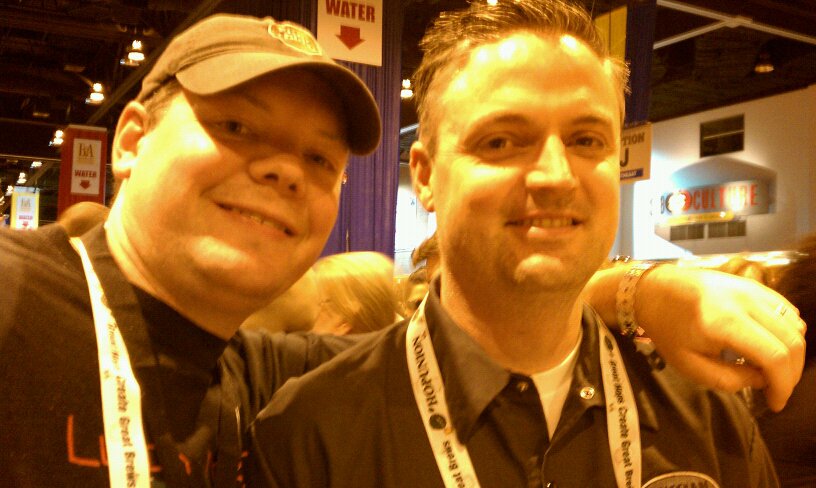
    Me and Vinnie during GABF 2010
  • Beer Must Be Sick To Be Stronger After

    Awesome words spoken by Jean Van Roy of Cantillon that every brewer of sour beers should know.

    What happens when a beer gets sick? To quote Dr. Evil “It got weird didn’t it?” That is what happens when a beer goes sick…. It gets weird. The awesome sour beer you last tasted is suddenly ropey, buttery, slick, and oily. It can happen in the fermenter, the bottle, or it can happen during both. Yes the beer can get sick twice.

    What can cause the sickness? Pediococcus can give off the buttery/diacetyl/ropiness. Technically a Polysaccharide will form as a layer in the beer.

    Due to my dumb luck I haven’t been ready to drink one of my sour beers when it has gone into the sick phase, until recently. All of my batches had gotten sick in the carboy and that was it. This happened on the second carboy of Berliner Weisse that I bottled up. A carboy that had sat around 4 months longer than the first one. The beer was wonderful as it went into the bottling bucket and every bit as good as the first bottled carboy. But a few weeks later, it got weird real weird. It got sick in the bottles.

    Luckily I didn’t panic and start dumping bottles of beer. My good friend Brett came to the rescue. Brettanomyces is one of the best friends a sour brewer can have. Not only does Brett give us the awesome flavor we love, but it can metabolize polysaccharides. 2 months later I’m happy to report the beer is well again and better than before. The beer I thought was “wonderful as it went into the bottling bucket” is now even better. What perfect timing as we head into the dog days of summer!

    It’s a good time to remind that the beer will always make the schedule. Especially when it comes to sour brewing which will test your patience. In most cases brewing a sour beer is a slow paced process that will reward ten fold in the end. 

  • Quick post…. I’ll be giving a presentation on beer color at the Beer 101 tent during the night session. I’m also bringing a few bottles of sours to share at the Music City Brewers homebrewing club tent. Stop by to try some of the funk.

  • Brewing a beer for a special occasion or life event is always fun. When my daughter was born last year I wanted to brew something different and something that would not only keep until she turns 21 but hopefully get better. I decided to brew an Old Ale but of course because I am me I needed to go “old school” and make sure it had a brettanomyces character in it.  I lucked out too! Wyeast was going to release their Old Ale blend the following month. I didn’t get a chance to use that blend when it was released in 2009 but I had heard some very good things about it.

    I wanted to have a traditional base to this beer, but I also wanted something a bit bigger than the 1.090 style limit OG and something drier the 1.015 FG style limit (I detest sweetness in beers). So the recipe I came up with ended up as a Specialty beer…more of a hybrid Old Ale.

    ‘Lil Nugget Old Ale (10 gallons finished/packaged) Oaked version 13.3% ABV & Un-Oaked  12.9% ABV

    The beer sat in my 15 gallon Demi John for 4 months. 5 gallons was bottled and the other 5 gallons was transferred into a co2 purged 5 gallon carboy with 1oz of oak cubes.
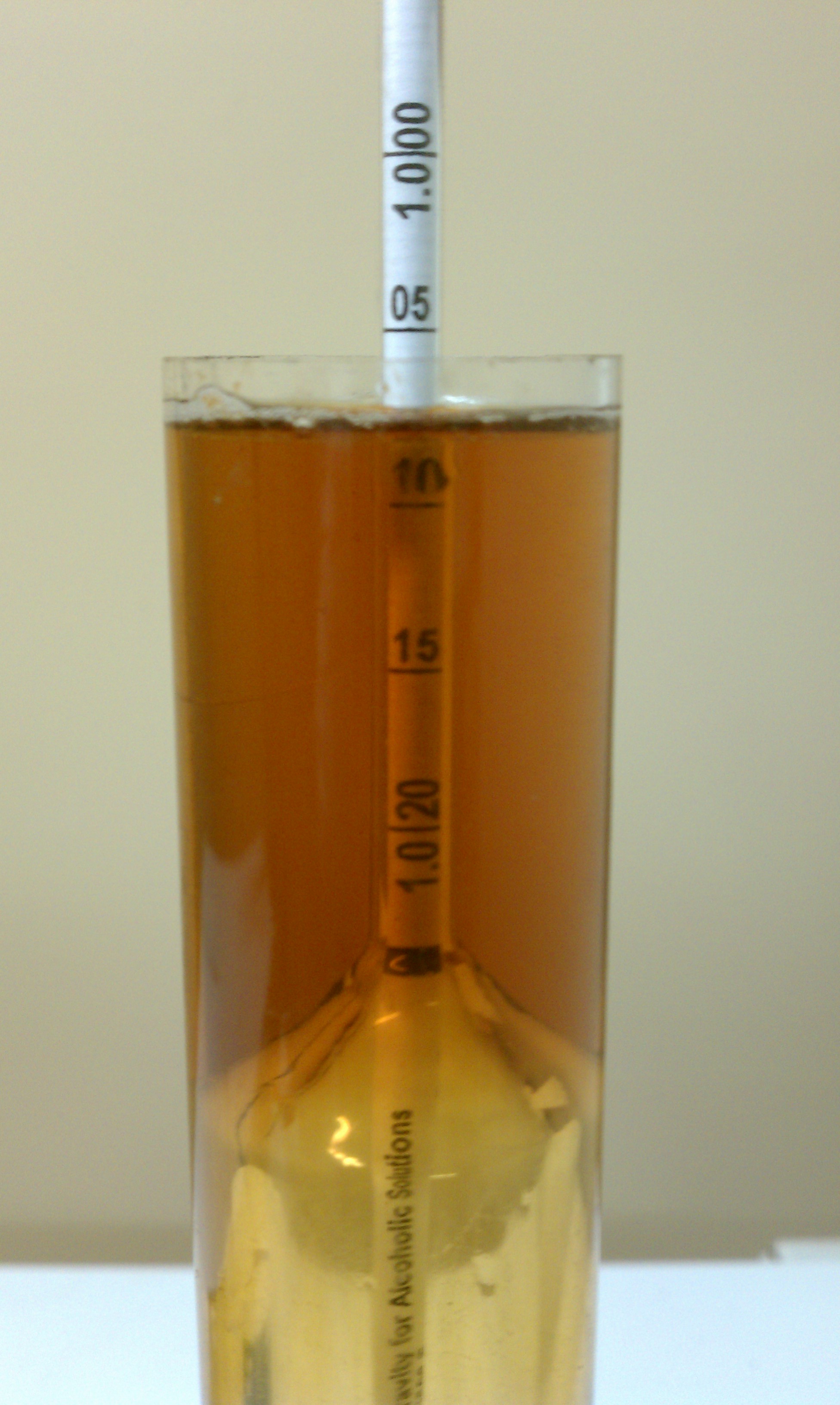
    I’m glad I split the batch like I did. I took a gravity reading on the oaked version last night and it had fermented down to 1.007. At secondary transfer time it was at 1.010. The oak and the Brett Lambicus in the blend are really meshing quite nicely. I did start cold crashing the oaked version last night too. I will probably let it sit for a week. I’ll post some tasting notes in a few weeks after bottling. You can get a good idea of the color on the gravity reading photo.

    The un-oaked version is fantastic right now and I really think it will hold up over the long haul. It has been bottled for around 6 weeks now (I did remember to save 8 bottles for 2031, they are sealed up in a box). I did bottle them with only priming sugar and let the Brett do it’s thing, no other yeast bottling yeast was used. So far the few bottles I have opened have carbed up nicely. Gravity at bottling time was 1.010.

    Aroma – Toffee, Smokey, Peppery, Classic Brett leather with the aroma of earthy piney Nugget hops.

    Flavor- Again the classic Brett funk first, but even with it’s low final gravity a malty nutty dark fruit comes in right behind. To back that up it finishes with a leathery cinnamon flavor on the tail end. It has some alcohol but it is by no means a harsh alcohol flavor. Just a nice warming layer.

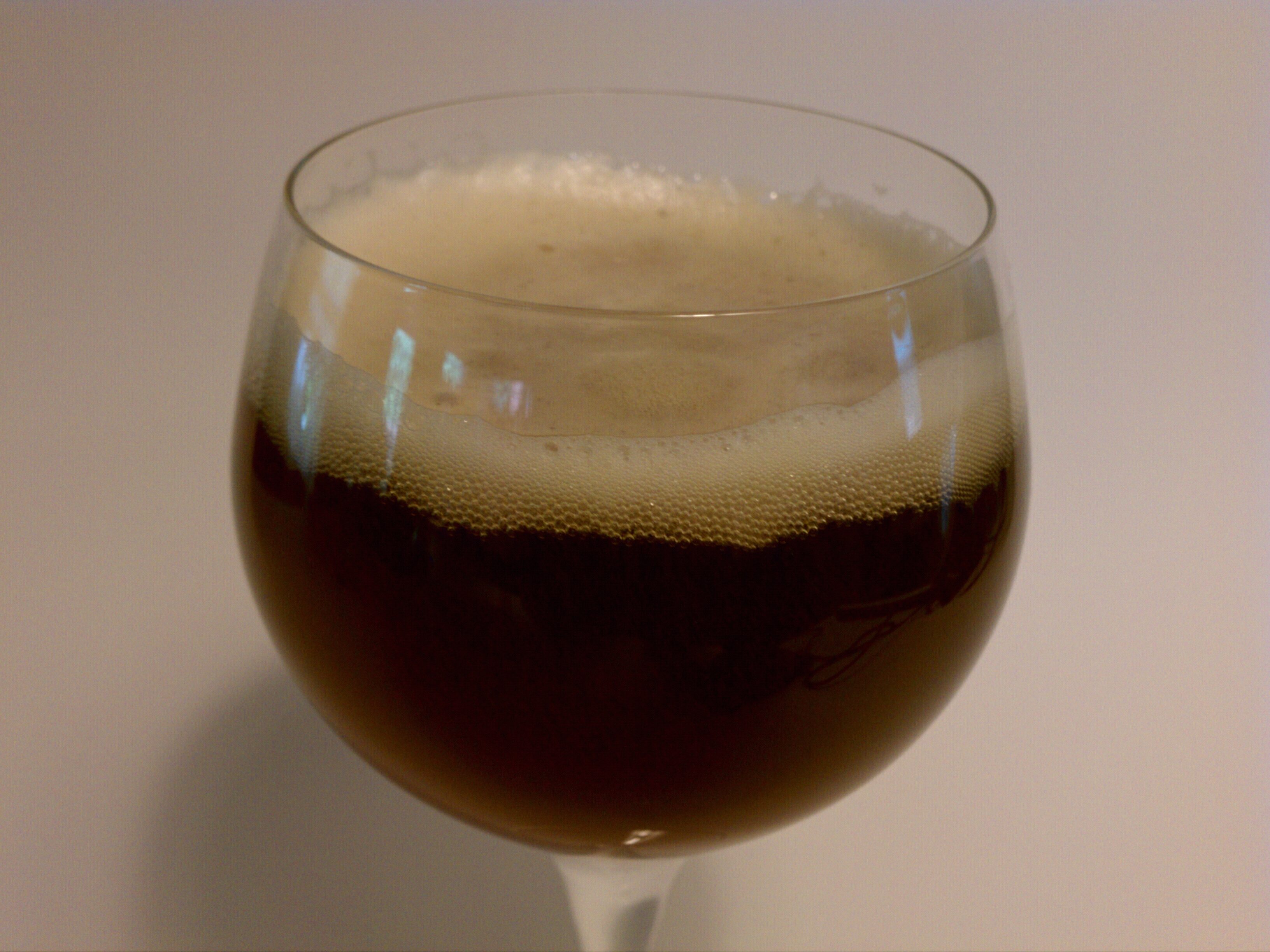
    Appearance– Copper/ruby in the glass. Tan head that stays intact for the entire drink. A medium amount of sticky lacking that hangs even when glass is empty.

    Something I would change for next time? I would probably go just a bit higher on the mash…. 152 or 153. It would still finish nice and dry, but I would like the Brett to have a bit more to chew on. In addition to the D-180 I would use some D-45 Amber syrup and back off the Demerara a pound. Those syrups are not just for Belgian beers!

    I accomplished what I wanted to with this batch: Something with a good solid base, changed up with some interesting simple adjuncts, Bretty, will hold up for many years, and most of all a project that will always re-mind me of a great time in my life I get to share with my sweet girl one day.


  • “Just call it a Belgian” or “Well add some fruit flavoring to it and now you have a Kriek.” I have heard those lines from some seemingly smart beer people. Poor things don’t realize how ignorant those statements are. There is a big difference between a Sour beer and a beer that is sour. Not to mention not all Belgian beers are sour!

    Sour beers are really no different from Saccharomyces cerevisiae only beers in the thought process and recipe design. You wouldn’t haphazardly add what ever dark malts happen to fall in a Stout or just reach in the fridge for whatever hop you might grab for a lager. Same with sour beers and the bacteria that goes into making them. Most breweries have a specific blend they like to use to get the desired flavors. Again not really any different than choosing hops for an IPA. Even the great storied Lambic breweries such as Cantillon that do wild fermentations know what what the air holds.

    It takes a lot of work to produce a good quality sour beer. In many cases it requires more time and energy than most other styles. Thinking years down the road to the flavors you will have requires quite a bit of knowledge and experience. While these beers are certainly wild and funky with bacteria, they are by no means beers without basis or second class. Lumping Belgian/French Ales and Belgian Strong Ales together with all Sour styles doesn’t do any of them justice.