• I guess this is the longest lapse in updating the website I’ve had, but wow has there been a lot going on! I’ve had some questions on what pre-filling procedures we use at Yazoo and since wood barrels are readily available to home brewers nowadays I thought we would go over our techniques.
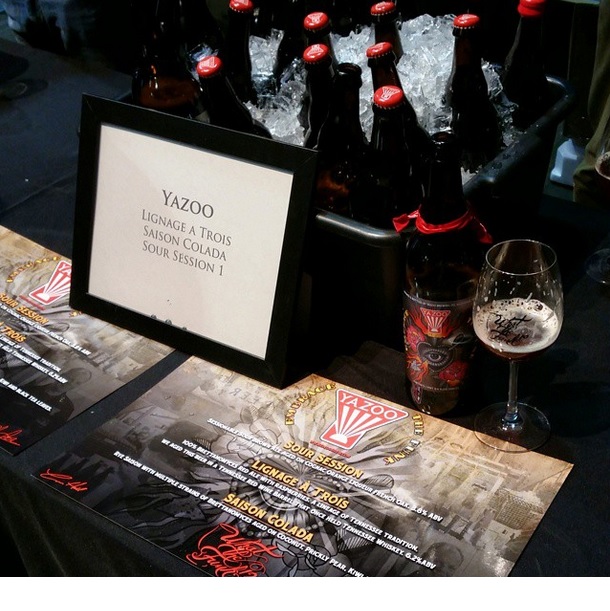
    etfwtfBut first let’s rewind the calendar to October 2nd, 2014 in Denver for yes…The Great American Beer Festival. The first night we were in town we served up 3 different beers at What The Funk? Once again it was an awesome night put on by Crooked Stave that gathered brewers from all over serving up their finest funky beers.

    We served Lignage A Trois (100% Brettanomyces Fermented Red Ale with Raspberries aged in barrels that once held Jack Daniels, then Arrington Vineyard’s Antebellum Red Wine then our beer.)  Saison Colada (Aged with Coconut, Prickly Pears, Kiwi and Black Tea Leaves). Session Sour 1 (3% Sour Brown Ale aged on Orange Liqueur French Oak).
    10644576_10204042332271568_8144281090404720437_n

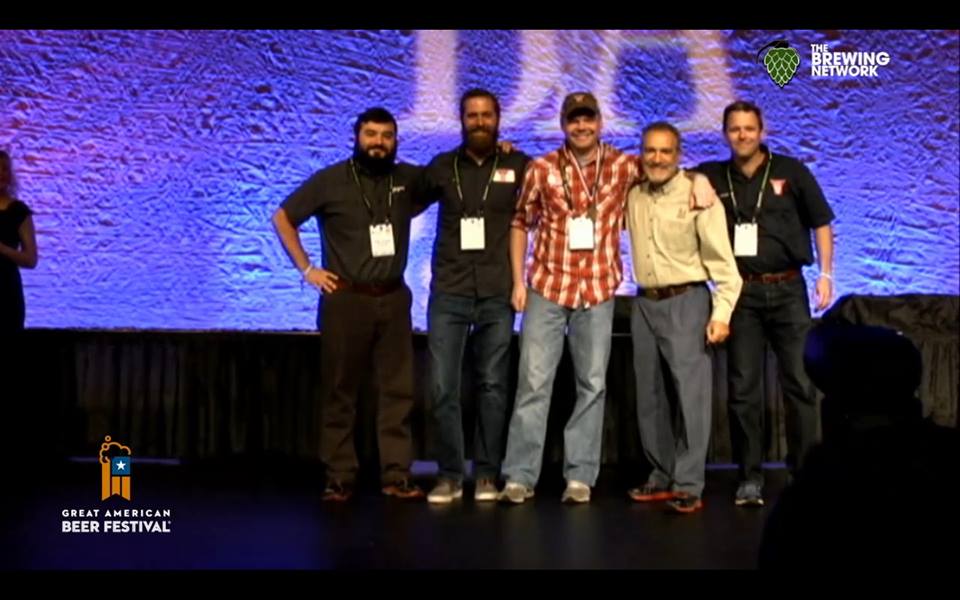
    By far the best day of the trip was Saturday morning at the GABF Awards ceremony. This was my first GABF where I’ve had a beer in the professional categories, I’ve had beers in the Pro-Am contest, but this was a different feeling. Linus, Neil, Josh and myself sat in the audience and anxiously awaited for our categories to come up. Then it finally happened: Category 26 – Wood and Barrel Aged Sour Beer Bronze “Yazoo Embrace The Funk Cherry Deux Rouges”.

    10408886_10204004574127638_4278082191456182567_n

    Whoa, I swear it felt like time slowed down for a few seconds. I thought back to sitting on my couch starting this website, to my first sour beer over 10 years ago, to all the homebrew comps and now there it is up on the big screen. Linus at this point leans over smiling and says “You’ve gotta get up, we need to head to the stage”. I tried to take a picture of the screen but I was so excited the pic was blurry as heck.

    Walking up to and across the GABF stage for the first time (hopefully not the last) to meet Charlie Papazian was something yeah of course I wanted to happen for years, but didn’t expect it would this soon. I could not have been more proud to be on that stage with Linus, Neil and Josh. Those guys and the rest of the crew at Yazoo are what makes our ETF program happen. FYI Deux Rouges Batch 2 has been in the barrels for about a year now. It’ll release in early 2015. We are brewing Batch 3 in a couple weeks.

    The barrel cellar build continues. We are expecting some more equipment this week, mainly another stainless Brite tank. We have a great variety of barrels full of beer (Sangiovese, Cognac, Bourbon, Merlot, Sherry, Rum etc…) Once we get a few more things on order over these I’ll have a full post on the facility.

    Now about the barrel filling. Last December I wrote this article about barrel fixes and repairs. What we are going to talk about stems from a few questions on filling barrels. You have 2 categories: Barrel Aging or 100% Barrel Fermentation. Barrel aging requires a bit more attention and care. Both have advantages/disadvantages and reasons why or why not to do them.
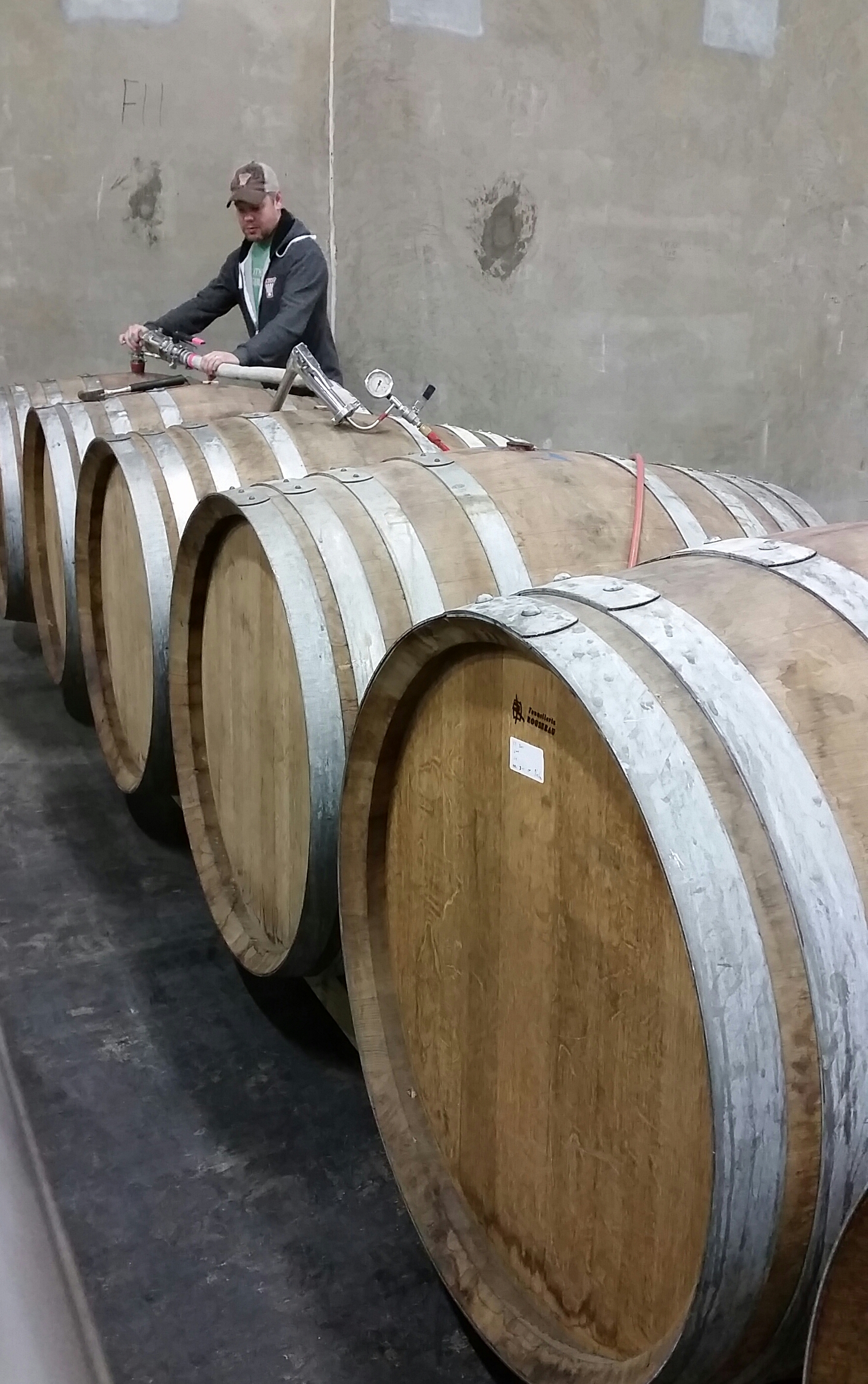
    20141121_200322-1
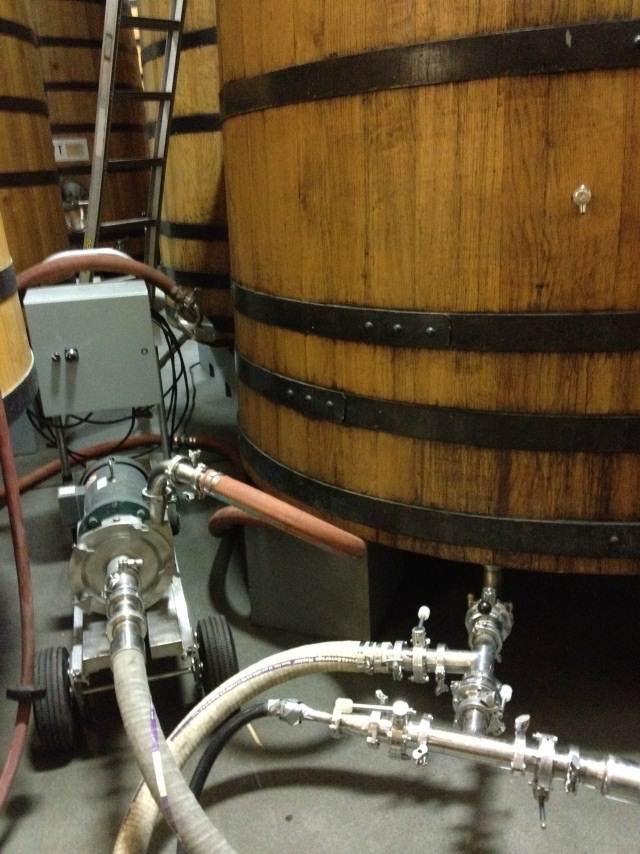
    Filling 165 gallon French Oak Casks

    Let’s start with Barrel Aging a beer. A lot of brewers will start a fermentation in stainless steel and once fermentation has finished or reached a certain gravity they transfer the beer into a barrel. This is a great technique since you have alcohol present it can cut down on the chance of a bacterial infection if you are brewing clean beers. It also gives you the control of doing a partial fermentation with a “clean” yeast then adding Brett/Bacterias upon transfer. But my favorite reason to start in stainless…less blow off clean up and less beer loss! Transferring a week or so into fermentation will still give some co2 production in the barrel that can help scrub out any o2. However you need to take a couple of steps before the beer hits the barrel to lessen o2 pick up.

    It’s really simple and that is to purge the barrel with co2 before filling. Its simple enough, but I’ve been a bit surprised to find out some production breweries don’t purge before fill.
    Co2 has a Molar20141201_122806 Mass of 44.01 g/mol  and our enemy at this point “Air” (made up of a number of components) adds up to a Molecular Mass of 28.97. So obviously c02 is heavier which will fall to the bottom and will push the “air” out from your barrel. A long tube such as a racking cane or a barrel filling gun will be most efficient. You will waste more c02 if you are filling from the top and possibly not evacuating all the air from the barrel. So you want to be as close to the bottom as possible.
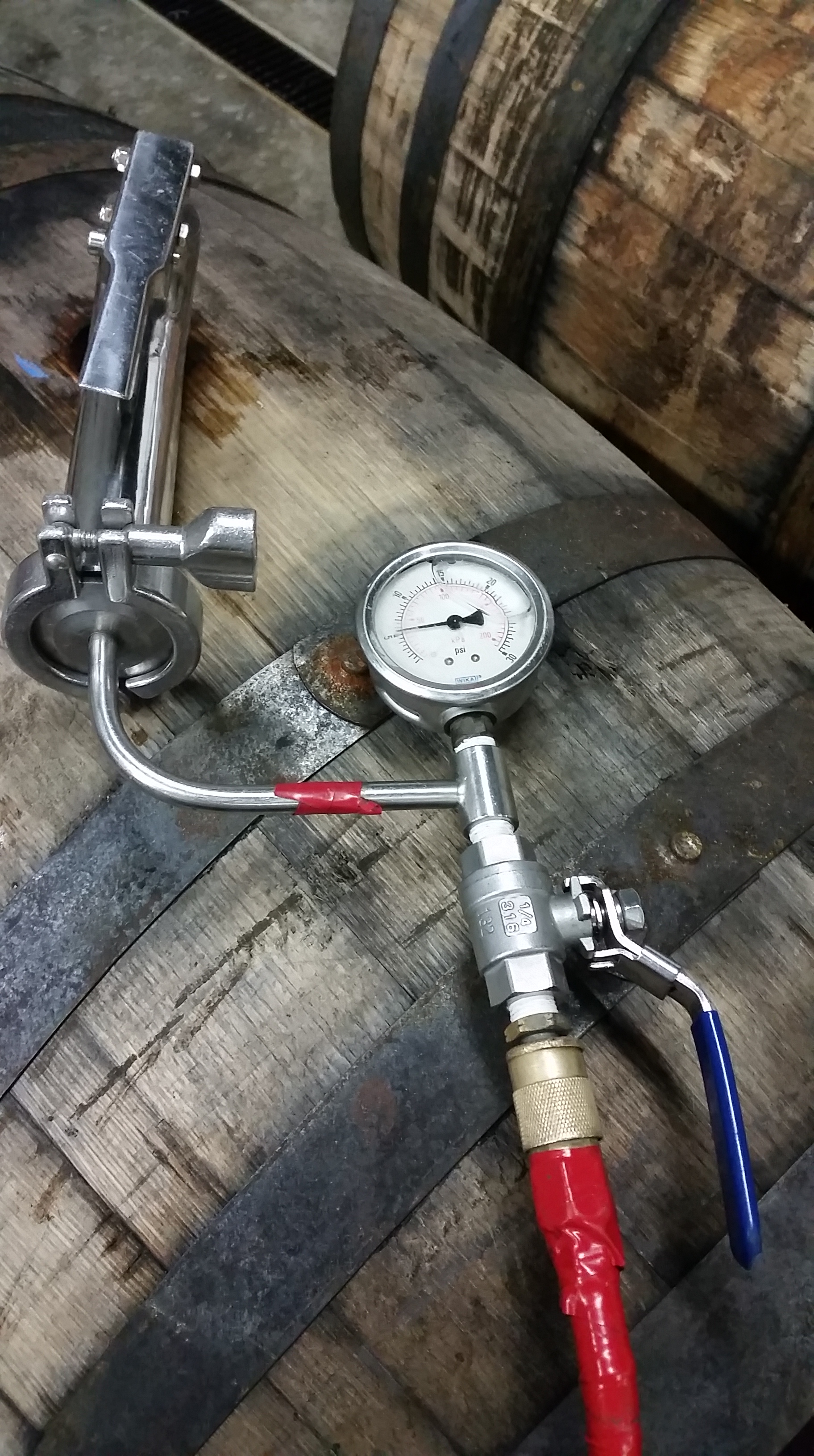
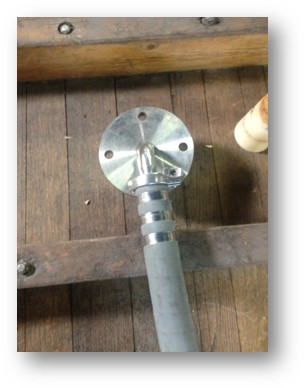
    The picture on the right shows how I hook up our barrel filling gun to the house co2 feed. For a 60 gallon barrel I like to run ours at about  4-5 psi for about 5 minutes a barrel. A steady slow fill will create a nice layer and less turbulence inside the barrel.

    PSA- When purging barrels and using a lot of Co2, make sure you are in a ventilated area.

    20141201_122454
    Top: Barrel Purging Bottom: Filling with fermented beer

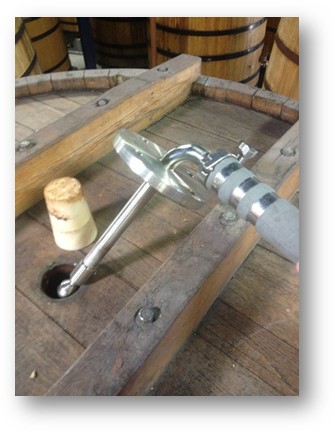
    When I fill our barrels and casks I typically use our Gas Transfer Tool which you can see in the picture on the left. It goes all the way to the bottom of the barrel or cask and has a pointed “pin” on the bottom that helps stabilize the cane. Again a nice slow roll into the barrel is key, even though you have purged the barrel with co2 its just a good idea to fill it slowly. Remember to leave just a little bit of space for the airlock or bung.

    If you are barreling a beer that is still fermenting I’d suggest an airlock, breathable bung like these or a blow off tube instead of hard bunging the barrel.  The co2 build up can cause leaks between the staves or blow outs…which is just more to clean up. As brewers we have enough to clean up as it is, so I prefer not adding to the list.

    When doing a 100% Barrel Fermentation oxygen pick up isn’t much of big of a deal. Most brewers will invite some o2 in the beginning for yeast health or for character development. When I’ve done 100% barrel fermentation I just use our barrel gun and no purging prior to filling. Blow off tubes are my preference, but again breathable bungs can work well.

    Cheers and as always thanks for the support!

  • In 2011 I wrote about a special beer I brewed called Lil Nugget. It is still one of my favorite homebrews and is holding up pretty well. Since I started at Yazoo it has always been in the back of my mind to brew this one on a commercial scale. Fast forward to January 2014 when my friend Skyler (who is also our barrel broker and owns Rocky Mountain Barrel Company) and I were talking about some new barrels he had a line on. While we were talking he brought up he had never heard of a barrel broker / brewery collaboration, I hadn’t either. So we figured what the heck, let’s do one!

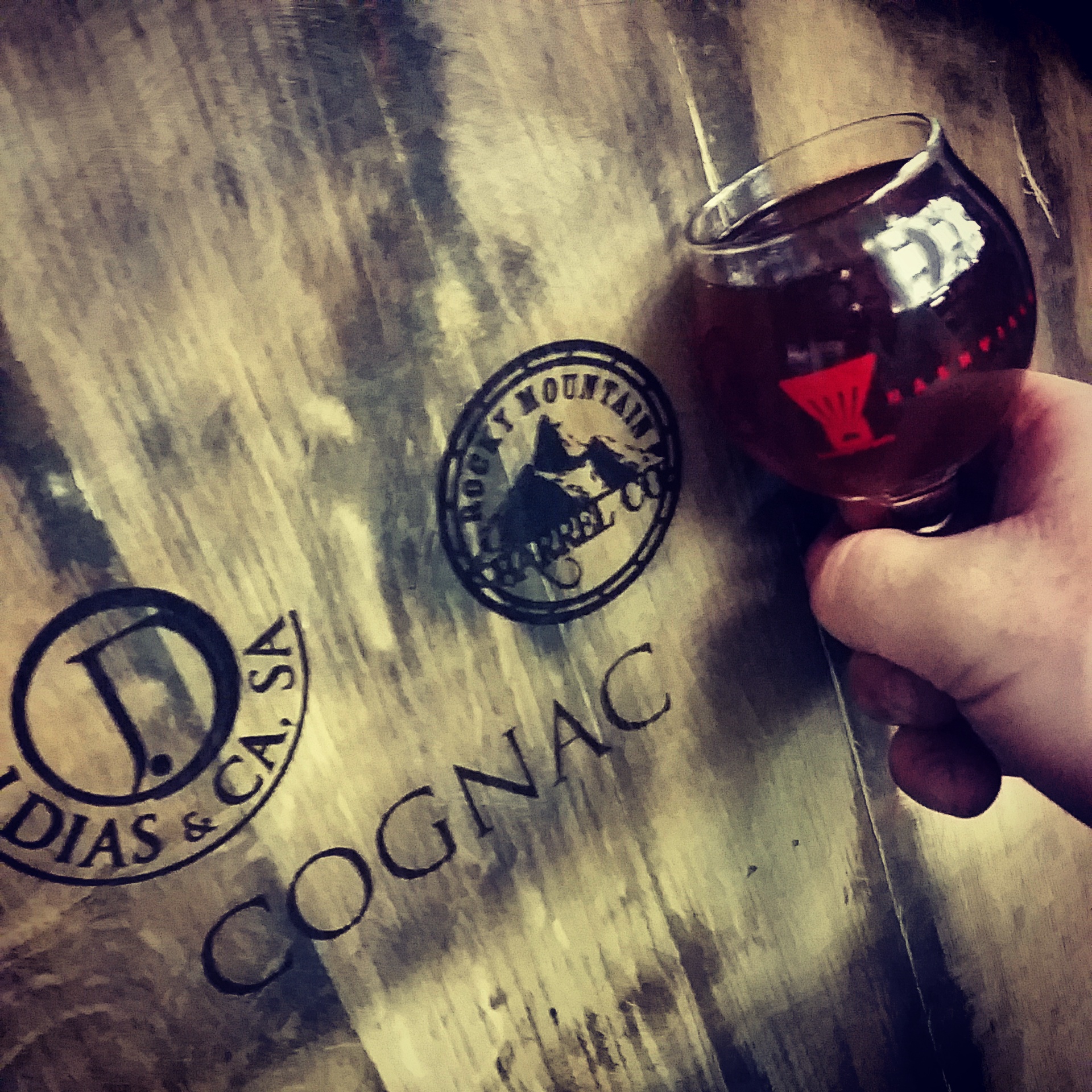
    rmbcAs I’ve said before I love to build recipes around microbes and unique barrels so this was like getting an early Christmas present. We spent the next few weeks talking about what barrels were going to be available and what styles I thought would really play to those barrels. When he told me that 40 year old XO Cognac barrels would be available I immediately thought about the oaked version of Lil Nugget which used Remy Martin soaked oak cubes. It did very well for me winning multiple awards in different competitions.

    So you can probably tell where this is going… We brewed an English Old Ale recipewpid-img_20140805_215432.jpg inspired by the OLN recipe. I had to tweak some things including making the gravity a bit lower due to mash tun constraints, I opted to use our house English Ale yeast and use 2 Bretts instead of the one in OLN. We did use the Fawcett Maris Otter malt as our base along with a small amount of dark caramel malt and Belgian Candi Syrup. Nugget and Kent Golding hops ? You bet!


    Now these barrels are 40-50 years old, which is awesome for the character we want from them. Pause for a second… Let that sink in…some of the greatest Cognac available has been going into these barrels for quite some time. That is just too cool that breweries have access to these now. However they did need some freshening up after that many years. So Skyler went to the cooperage in Portugal to work with them on re-hooping all the barrels he was purchasing and make sure all the staves were a tight seal. The pic below is pretty tell tell on how good these craftsman are…

    Before and After
    Before and After

    The timing on using these barrels was great. We had plenty of time to brew the beer and let it ferment at a cooler temp (60F) then warm it up to add our Brett strains in stainless.

    Transfer Time
    Transfer Time


    After a journey across the Atlantic Ocean the barrels arrived in Nashville on August 1st and were filled on August 5th. I’m really pleased with how the base beer turned out. It’s starting to develop some nice character from the 2 Brett strains. But wow are these barrels are going to take this beer to the next level. The toffee, honey, Crème brûlée notes of the barrel have me so excited about how all this will meld together.

    Since these barrels are so high quality I’m anticipating just a few months of barrel aging before releasing bottles. That is always subject to change, but just based on the aromas I’d say it will be a fairly short aging process compared to some of our other beers. This should be a great beer to help get Nashville and Denver through another cold winter!

    Thanks to Skyler and Rocky Mountain Barrel Company for teaming up with us on this collaborative effort at Yazoo. We had a great time getting this together. Hopefully we can get some of the RMBC crew out here for the release party .

    Me and Skyler in the Yazoo barrel aging area
      Skyler and me in the Yazoo barrel aging area.
  • “Have you ever danced with the devil in the pale moonlight? ” – The Joker

    If you are going to brew sour beer then be prepared to dump some down the drain. — I didn’t quote that because I honestly don’t remember who I heard say it.  I can tell you that any sour/wild brewer that is worth a flip probably knows it.
    Point is: Every time we brew with souring bacteria and wild yeast we do a dance, not just any dance…but a dance on the edge of a cliff. Most of the time we walk away having hit most of the moves, but sometimes we don’t walk away. Sometimes the dumbest little thing will trip you up and there you are face down.

    “If something goes wrong then who cares? You need to learn to dump it and figure out where it went wrong. The second you taste vinegar it needs to be dumped because it’s not getting any better… this is not Kombucha.” – Lauren Salazar (New Belgium)

     I have an idea but we never know what can happen with spontaneous fermentation and I will communicate about the beer only in case of success. ” Jean Van Roy ( Cantillon)

    So here is where I am going with this short blog post. Sour and wild brewing is…wild, especially when you have wood fermenting involved. You need to be in the mindset that something might go really wrong and this beer you spent a bunch of time on is junk. Don’t fool yourself, don’t try to fruit the heck out of it hoping to cover up some major flaw. If a beer went off course (acetobacter/acetone/etc…) do yourself and everyone a favor: DUMP IT. Yeah it sucks the hard work is going down the drain or the money spent on that batch was for nothing. But… We are in a era of brewing where many homebrewers and commercial breweries want to jump on the sour/wild train. There is nothing wrong with that…if it is done properly.  I’ve always said the more funk the better, but let’s make it good funk. Like George Clinton… not Rick Dees “Disco Duck”. Whatever we do as home brewers or commercial brewers can mean the difference between someone never trying wild/sour beer again to someone never picking up a bottle of a well made beer to falling in love with these wonderful styles.

    We are in a “Golden Age” of reach and discovery. No matter if it is home brew or the greatest historical commercial lambic… we have the chance to show how great these styles are.

    This blog post is brought to you by someone who forgot to top off the airlocks after spring on 10 gallons of his 2 year old / 5 gallons of his 3 year old home brew golden sour and just watched it go down the drain.

    The Good Carboy
    The Good Carboy


  • In December I wrote about tips on barrel repairs and maintenance. I was happy to hear the tips in the article had helped a few of my fellow brewers! A few weeks ago I was scrolling through some posts on a forum and came across a thread on barrel cleaning. Chase Healey of Prairie Artisan Ales made a comment along the lines of “5 different brewers will tell you 5 different ways.” He is absolutely right, everyone has their own process and there really is no right or wrong answer. The best way to clean or store barrels is the way that works for your brewery or home brewery. But with so many schools of thought…How do you get started figuring out what works best? I listed my process below and reached out to a few brewers I consider to be the best in the world at barrel brewing who graciously shared their advice.

    Eric Salazar (New Belgium Brewing)-

    I prefer to start with a cold water rinse to remove any debris. For Foeders I utilize a block and bleed matrix, pump, and high pressure spray-ball.

    • Fill partially with a water and Soda ash solution at 2 g/L… Recirculate, drain
    • Then a cool water rinse.
    • Fill partially with cold water and add Citric acid solution at (5 g/L)… Recirculate to neutralize, drain.
    • Rinse well

    •    Fill partially with cold water, add Potassium Metabisulfite – solution, 2 g/L.

    • Rinse and Use or fill to the tipy top with Potassium Metabisulfite solution at .2 g/l top for storage. Check and/or refill monthly

    image003 image006 image007

    (ETF- What are your thoughts on using hot water during this process? I assume there are cons with using hot water in your process. I notice you specifically say cold water in each step.)

    ERIC- I would first determine how well everything sits in the hoops. If gaps between staves are minimal then cool water should work fine. Warmer water will hydrate faster but you have to watch that you don’t go too hot for too long or you’ll degrade the cell structure of the wood itself. That’s a leak that can’t be repaired. I’ve seen recommendations for water as hot as 160°F but I usually keep it below 100°F. Again, if the staves are tight and the leaks minimal, cooler water works. That might take a bit longer but the risk is lower.

    Small barrels generally come in nice and tight. We really only deal with whiskey barrels from Leopold Brother’s and those are well kept and usually only dry for half a day before we fill them with beer.

    Vinnie Cilurzo (Russian River Brewing)- We actually never hold barrels empty.  If they are empty, we either fill them immediately or they go into the throw away pile.  I guess we have this advantage being in the middle of wine country with access to barrels.  I take this stance because even after cleaning a barrel with our pressure washer there is still some beer, bacteria, & alcohol left in the wood and as it is exposed to air the chance of the growth of acetic acid is greater.  Of course one can use sulfur sticks to eliminate the oxygen but again, when one has access to barrels like we do, it is just easier to grab some fresh barrels.

    Cantillon Steam Cleaning  Photo: dubman.com
    Cantillon Steam Cleaning
    Photo: dubman.com

    Jean Van Roy- (Brasserie Cantillon)- We clean our barrels first with steam and then a rotative head linked to high pressure water. Then with warm water and chains added into the barrel. For this last operation, we put the barrel on a rotative machine and we let it turn for 20 minutes.
    The barrels filled in the next 2-3 days are used fresh. For the ones we have to keep for more than 3 days, we burn a sulfur stick inside to avoid moisture.

    Ron Jeffries (Jolly Pumpkin Artisan Ales)- We try to avoid leaving them empty.  Ideally we fill them directly after emptying, or the next day.  If we do need to hold them empty longer, we just bung them up after cleaning – empty; and re clean before use.  Most holding solutions worry me, as they kill off our resident bugs, and soak into the wood.  Anyone who’s made a beer in a freshly dumped barrel can tell you what’s in the wood will come out into the next liquid put into the barrel, namely in this case replacing a bit of your beer with the holding solution.

    Now that you have heard from the incredible brewers above here is what I have been doing at Yazoo:

    Hot water fill off our HLT to check for major leaks or defects if a barrel looks suspect. If the barrels look good when I’m ready to use them, then many times I’ll just go right into the barrel so I can keep as much barrel character in the barrel as possible.
    If I’m emptying a barrel that had funky beer in it and I know it wont be used for a couple weeks then it gets a hot water rinse to clean out the left overs then a 1/4 to 1/3 full with warm water along with a mix Citric acid and Potassium Metabisulfite.
    About 1/4 cup of Citric and about a 1/3 cup of Potassium Metabisulfite per 12-14 gallons makes a nice holding solution or solution inside the barrel.

    Make sure you follow Embrace The Funk on Twitter and Facebook.


  • July 2011. I was sitting on the couch at my house waiting for the new season of Breaking Bad to begin. My wife was updating her Tea Blog she had started a few months earlier to help keep track of the unusual teas and blends she was doing. From time to time I thought about blogging or starting a website of some sort. I knew there were plenty of beer review sites and homebrew blogs out there, however most (with the exception of Mike’s) didn’t really cover sour/wild beer in depth. So I figured I would start a site to give tips on things I had learned, hopefully convert a few people to fans of these styles, dispel sour/wild beer myths and pass on some advice from the professional sour brewers I knew. Most of all just share with as many people as I could how great these styles can be.

    About a year later is when I got the chance to start and run a small program with my friend Linus who owns Yazoo. We’ve had a blast at the brewery creating some smaller batch funky beers for the area. Over the following months we grew the program in an upstairs corner of the brewery to house around 80 wood barrels, 40 volume barrels worth of stainless capacity, 8 barrels of bright tank and a bottling system all dedicated to funky beer.

    A few of you have visited the upstairs barrel room at Yazoo recently and have seen how tight the space has become. We are making a lot of funky beer which is a great thing! But being upstairs and inside a brewery that mainly produces non sour/wild beers is not the most ideal conditions. We’ve always run the program as careful as possible with dedicated separate equipment and have been very lucky NOT to have had QC issues on the “clean” side. This was however a great way for Linus and I to start this program, but we are out of storage room!

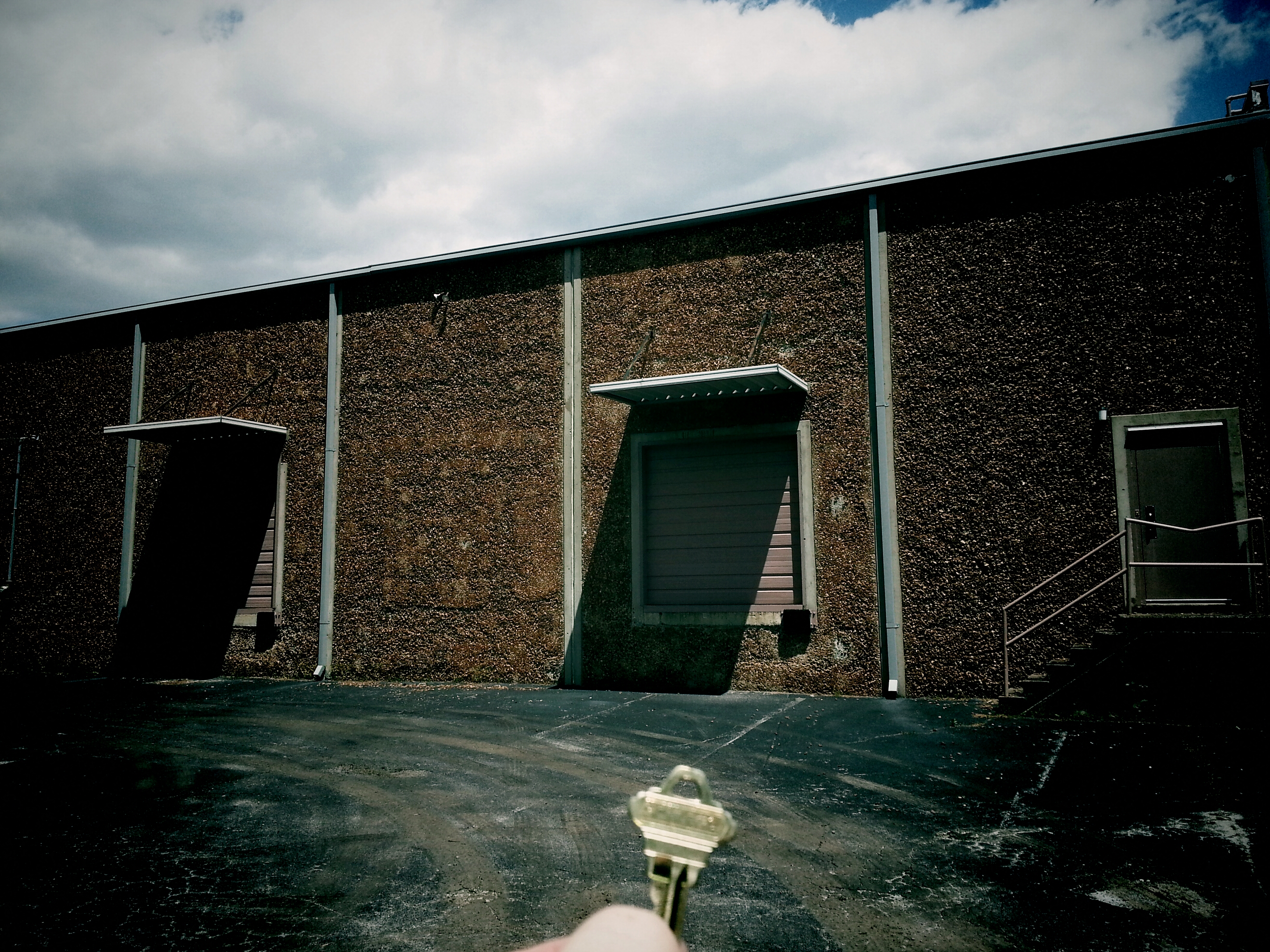
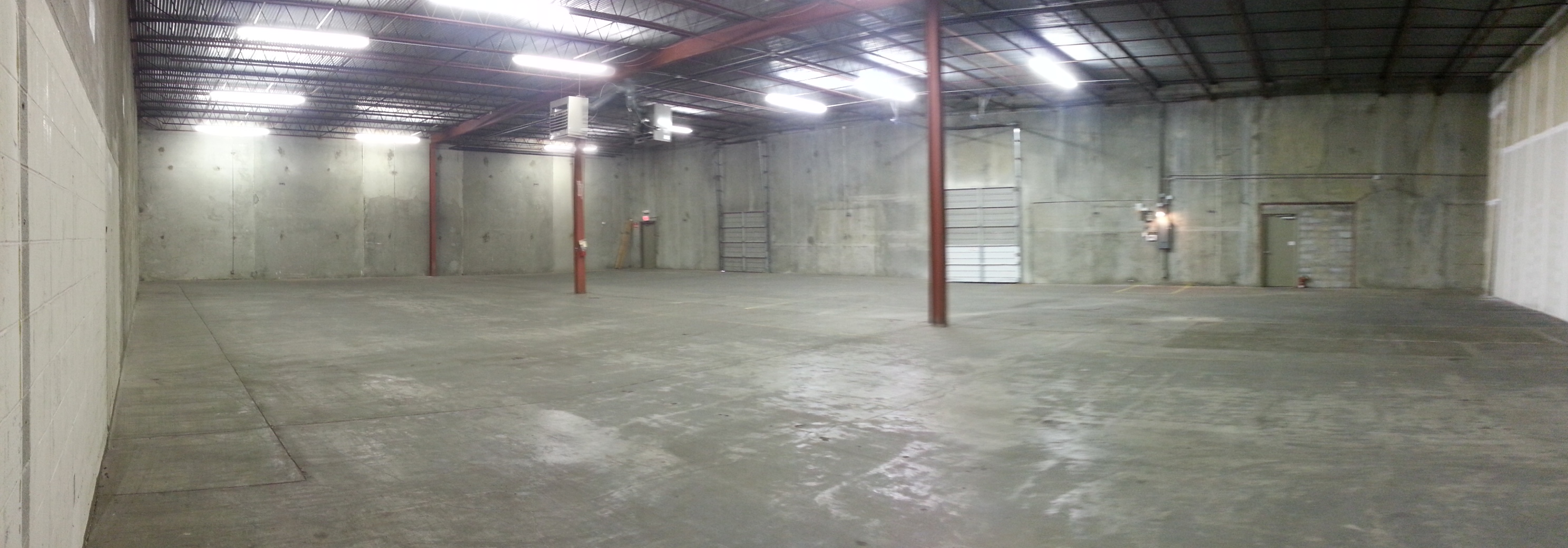
    Since late fall Linus and I have been looking for an off site location to move our barrels. We’ve known for a while that at a certain point we will need a larger more open space, better work flow and most importantly the best conditions possible for our barrels. Well after searching since late last year for the right place I am very excited to tell you that we signed a lease for a dedicated wild beer location. This location is around 7,000 sq feet with loading access and very thick walls. which will give us the temperature stability we need. We will continue to use the 40bbl brewhouse at Yazoo for wort production.

    Never thought I'd have the keys to something like this!
    Never thought I’d have the keys to something like this!

    At this time there are no plans to have any retail at this location. The ETF beers will still be available at the taproom on draft and bottle releases will still take place there for the time being. However with our expansion we will have the ability to offer more beer up around Yazoo’s distro area and produce a greater number of bottles.


    TTB is currently being submitted along with all the other usual paperwork suspects and our build out will begin soon. We still have a good bit of work and paperwork to complete, but this is the first step.

    Its hard to believe the things I wanted to accomplish with this website have taken it this far. I’m looking forward to showing everyone more pics as the build out takes place. Big thanks to everyone who supported our vision while we built a solid foundation and those fans of ETF. We are laying the funk down in Nashville and it’s going to rock!

    20140501_120349
    Our House of Funk

    I’m a big fan of Walt Disney and what he accomplished so I’ll leave you with this quote:

     When you believe in a thing, believe in it all the way, implicitly and unquestionable. – Walt Disney