
I have spoken to Johnathan Wakefield a few times over the past couple of years trying to work out beers trades, chatting about lacto, working out getting a few of his beers in Nashville for Funk Fest back in May. I knew I wanted to do a Q&A with him about his brewery aspirations and find out a little more about “Florida Weisse”. Yesterday JW started his official fundraising campaign to source the remaining money to fund Johnathan Wakefield Brewing. Last night JW and I chatted for this interview….
ETF: What was the beer or a moment where you said “I like these beers, these sour beers. I want to try my hand at brewing one” ?
WAKEFIELD: Oh yeah. Yeah, absolutely. It was definitely the Cantillon Lou Pepe. Yeah, Lou Pepe. That I want to say, in probably ’08, ’09. That kind of turned me onto those styles of beer. I could tell you what turned me onto brewing Berliners.
ETF: Yeah, go right ahead.
WAKEFIELD: That would’ve been Doug Dozark from Peg’s. He was still working at Cigar City, and I think he might’ve brewed it at Cigar City at the time, but he did that Rainbow Jelly Donut, but it was the very first edition he had every done. And it was unlike anything else I had ever tasted, and I was like, “Man, I’ve got to try making this. This is really good.” It really all started from there, that point.
ETF: Did he give you some advice on that style? Were you able to talk him out of any info?
WAKEFIELD: No, Doug always beats around the bush. haha…. I basically did my own homework and came up with my own formula and procedure of how to do things. Because when you talk to everybody and everybody does a Berliner different, whether it’s souring the wort or sour mash or trying to do it with a lacto starter. Everybody does it different. You can never really get a set idea, so I pretty much came up with my own and that’s how I’ve kept it, ever since probably three and a half years ago.
ETF: Before you developed your style of sour brewing and started all this, what were you doing and what’s your background in?
WAKEFIELD: My background is in accounting. I have a Master’s in accounting. But I really had a love and passion for cooking. I actually went to a lot of cooking schools, did stuff on the side, and had a bit of culinary background before I ever got into beer.
ETF: Do you think the cooking is what led you into better beer?
WAKEFIELD: Absolutely. For me it was always experimenting with new flavors, new flavor combinations, and trying new things. For me, it was an easy carryover, in my mind, to go to beer with that.
ETF:– So once you’ve had the beer at Cigar City, tell me about how you decided to brew at home, before Johnathan Wakefield Brewing ever popped into your mind.
WAKEFIELD: I had started really getting into beer about almost nine years ago now, gotten into craft beer – actually, I think I had tasted a Firestone Walker, that Union Jack, or Pale 31, they used to call it. That kind of blew my mind. It was hard to get any of that stuff in Florida at the time, but that kind of turned me around, and my wife bought me a Mr. Beer for Christmas. haha…
That’s where it all started. That lasted about one batch and I’m like, “Screw this, man. I need to make more than a gallon.” So I went out and purchased the eight-gallon pot and started with extract brewing, and it just blew up from there. About eight years ago it just all took off, after that Mr. Beer kit.
ETF: When did you start brewing/messing around with bacterias and wild yeast?
WAKEFIELD: Three and a half years now.
ETF: Okay, so we’re talking about ’09?
WAKEFIELD: Yeah.
ETF: Were you set on brewing Berliners from there, or did you do stuff like Flanders Reds or attempt Lambic style?
WAKEFIELD: Oh no, I actually brewed not only Berliners; I messed with a little bit of everything. When we had our last sour tasting, which was about three years ago, I took the dregs from a Cantillon Loerik bottle.
So I revived the dregs and basically cultivated the dregs out of that bottle, and did a whole – I think it was five separate Lambics that I made. Five experimental sours that I did. The first one I did was actually a Belgian Dark Strong Ale base that I aged. I actually did a full fermentation and then put it into a bourbon barrel with cherries and dumped the dregs in, and it kind of went from there. Then the next one, #2 was – I think that was a Flanders Red, the second one. And then the third one was a peach Lambic, and then the fourth was actually one that I actually did a sour with honey addition as well. The fifth was basically a Cuvee’ of three of them.
I loved messing with the sours. At that time, three and a half years ago, people liked sours, but it definitely didn’t have the push that it’s got now.
These people had to order it online from Europe or get it somewhere where the Shelton Brothers were distributing to. You couldn’t find the stuff. The sour market was very small, but the people that drank it were still as fervent or rampant about drinking it as they are now. It’s just now probably 20 times as large of a crowd.
ETF: Yeah. So at that point, you’ve brewed, you’ve gotten the taste for some things, you’ve got home experience with souring microbes. Walk me through what happens next when you get hooked up with Cigar City.
WAKEFIELD: Yeah. Cigar City… I’ve known Joey since they opened, and I pretty much was always there for every single bottle since the first year that they opened, and we hit it off. He actually had come down to my house to watch the Hurricanes play the Seminoles, and we had thrown a tasting and I had a couple beers on tap. He tasted them and said “Hey, we’re doing the very first Hunahpu Day, so why don’t you come up and brew some beers up there and we’ll put them on draft? Just a small pilot batch, and we’ll put them on draft for Hunahpu Day.” That’s when I went up and I brewed Pineapple Kolsch and the very first Dragon Fruit Passion Fruit Berliner.
ETF: And obviously people really enjoyed them.
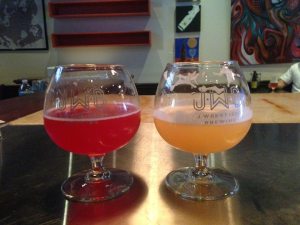 WAKEFIELD: Yeah, they didn’t last long. Doug had made them, but that release of the Dragon Fruit was what really kind of kicked off the whole Berliner Weisse craze, because that same year they asked me to come back and we released the Strawberry Rhubarb, more Dragon Fruit, and I think one other one. Later we released three more, and they flew off the handle again. It just was a repetition thing from then.
ETF: At that point, now you’ve produced beers at Cigar City, you’ve kind of built this name for yourself. Let’s fast forward to present day. You’ve done Berliner Bashes, your beer has been on at other places. Like I said, now you’ve got a name for yourself; let’s talk about your effort on CrowdBrewed.com. But at this point, how much money are you hoping to raise?
WAKEFIELD: Our initial goal was $55,000, but we may surpass that. If we do, great! I’m not going to be disappointed if we surpass it. The more the merrier, obviously. Really, the funds are for the bottling line and to finish all the touches and everything that I need for the tasting room. I’ve already ordered the brewhouse equipment and we’ve got the lease space. We’re going to start construction in a couple months. It’s basically to help with the final bit.
And really the biggest thing was to get the Beer Club out there. That was pretty much the whole point. To get the community involved. Instead of trying to seek it from private investors that would want equity, we figured why not try to get the people involved and offer them something in return?
ETF: When you say the Beer Club, you’re talking about the OG Club? Is that right?
WAKEFIELD: Yeah. That’s Taylor’s name. You can thank Taylor for the OG. Haha.
ETF: What size is the brewhouse again?
WAKEFIELD: It is a 15-barrel system with five fermenters and two bright tanks.
ETF: So your next project you said is the bottling line and taproom. Will you be doing 750s, 375s, capped, caged and corked?
WAKEFIELD: 750ml. Not cork and caged, just capped.
ETF: Will people be able to buy bottles at the taproom when you do get everything set up?
WAKEFIELD: Yes. And we are also looking into the plan of – I really need to talk to Ball, but at some point we’re probably going to do some canning as well. I’m a little hesitant on canning Berliner Weisse just because of the effect of the acidity on the lining. I need to check with Ball and if the lining of that can will hold up to a pH of 3.5 or lower.
ETF: Do you have any plans for Oak aging Berliners and other beers?
WAKEFIELD: Oh yeah, absolutely. I definitely want to go that route. That’s something I have not done yet, but it’s in the works. I definitely want to start barrel aging maybe even 100% fermentation, try a few of the Berliners that way, to inoculate the wood and everything else, to help along with that progress. I’ve already got pretty much a house strain going right now that I’ve built up over the last three years, and it’s a monster. But I think it would be even better inside some wood. And it would only lead to better things as far as doing other sour programs.
ETF: The other thing too I guess people want to know is you’re not going to be totally sours and wilds. You’re going to have “clean” beers?
WAKEFIELD: Oh yeah.
ETF: But how much of your business – or output I guess is probably the better word – do you project will be sour beers?
WAKEFIELD: I’m hoping I’m not overinflating, but I would like to shoot for 15% to 20% of total production will be sours. Which is still a pretty good chunk. The third run time on the Berliners was pretty decent, though, so it shouldn’t be too bad to flip them.
ETF: What are your plans for staff and output?
WAKEFIELD: Well, the only owner is me, but who I’m bringing on as well is Taylor and another guy, David Rodriguez. David’s basically going to be my assistant brewer.
But I’m going to have to hire other people for the tasting room, cellar men, packaging. I’m going to need probably three, four more guys. We’re trying to get out the gate and try to hit 2,000 barrels the first year.
***Update*** 30 hours after the fundraising began JWB surpassed their goal of $55,000. JW sent me the following statement this morning: It blows my mind, I never in a million years thought it would happen like that. I guess it just shows how generous the beer community is and how many fans there are out there. I am simply amazed and very very thankful.
ETF: You’ve kind of coined the term “Florida Weisse” – there’s been some debate, about the term. Why don’t you set it out there: what is a Florida Weisse? Why is it not just a Berliner Weisse?
WAKEFIELD: Classically, a Berliner Weisse has no fruit addition at all during the fermentation process. So classically you would add syrup to the glass. The way we screwed things up was we added fruit in the fermentation process. Whether people are adding it in the boil, whether they’re adding it secondary, some part along that line they are adding fruit to the fermentation instead of adding it to the glass. There’s no need for syrup; it’s already in your beer. People would argue it’s fruit beer or whatever, but base recipe is still classic Berliner Weisse, but with fruit in the fermentation process. It’s completely a whole new beer.
ETF: Does it still fall within the same ABV range?
WAKEFIELD: Yeah. Cigar City their Stiftung I think is 2%, which to me might be a little too low. Most of my stuff ends up around 3.6%. The stuff done with a wine must pushes close to 4% because of the additional sugars. But most of the stuff with the fruit ends up around 3.5%, 3.6%.
ETF: As far as mouthfeel and carbonation levels, are we talking still the same as classic Berliner?
WAKEFIELD: Yeah, I’m going to shoot high. I think over three volumes. I like to have a good bit of carbonation in there to help push out all the fruit and everything as well.
ETF: On the fruits once you’ve got a target date in mind when you need to serve this beer, how close to that are you adding the fruit? What’s your thoughts on that?
WAKEFIELD: Probably within 90 days. It’s funny to say that when I was bottling this stuff three years ago, I made a watermelon Berliner Weisse, and Diego Ganoza held onto a bottle of it and brought it to Hunahpu Day this year and opened it up, and the beer was sour as hell. Tasted great. But it definitely had lost that watermelon taste. Still very Berliner, but all the fruit was pretty much dropped out. I’ve had a couple that were four to five months old, and there’s some degradation of the fruit, but not too bad. So some of them are lasting four or five months. But you can hold onto them, because the beer itself is never going to really fade; you’re just going to drop the fruit out.
 ETF: This depends on which fruit we’re talking about, but how many pounds are we talking per gallon or per batch?
WAKEFIELD: Normally about anywhere between half a pound to a pound of fruit per gallon.
ETF: Is there a fruit you’ve come across and it’s like, “Whoa, that does not take a whole lot to get flavor in there”?
WAKEFIELD: Oh yeah. I would say guava and passion fruit, you definitely don’t need a whole lot, because it packs a lot of punch. I mean, passion fruit is just overwhelming if you use too much of it. And then people start to really mix it up because if you start to overload it, it carries too much citrus notes and doesn’t taste like passion fruit anymore.
ETF: So is that considered a half a pound addition?
WAKEFIELD: Maybe even a third of a pound for that fruit. But generally, yeah. I’ve learned with that and guava, since they pack a lot of punch, that you don’t need a whole heck of a lot. And rhubarb as well you don’t need a whole lot. But strawberries is on the other extreme where you may even have to go two pounds a gallon.
ETF: I guess we should establish this: you’re using all fresh fruits.
WAKEFIELD: Yes. It’s all flash-frozen. I get it fresh, cut it up, processed, and then I throw it in the freezer for flash-freeze, and then use it to try to be somewhat clean and septic, but I’m really against using aseptic purees and stuff, because I just think you rob so much out of the fruit, it’s crazy.
Being around Cigar City using aseptic puree, I don’t know. I don’t get it. I understand his point and he has a valid point, but for me it’s more about retaining all of that flavor that’s in the fruit, not cooking it out.
ETF: So basically when you are getting your fruit, you said that you’re getting it already – I don’t want to say processed, but de-skinned or whatever, and then it’s going in the freezer?
WAKEFIELD: Yeah. Or I have the guys at Homestead, where I’m getting my fruit from, they’ll process it and freeze it for me, bring it to me, and then I’ll use it.
ETF: You are around all these fruits, given your area. Talk a little bit about what inspires you to come up with your fruit combinations, your recipes, etc.
WAKEFIELD: That specifically goes back to my cooking background. That all directly goes back to cooking and all the flavor combinations. For me, it’s a lot of the pairings of fruit that I’ve done in the past for desserts or stuff like that. Strawberry Rhubarb, my grandmother made a great strawberry rhubarb pie. The Mango Guava Passion Fruit is pretty much all classic Latin Miami fruits that go very well together and play well together as far as flavors go.
Dragon Fruit Passion Fruit was kind of a leap out there because dragon fruit has a lot of color and has a pretty good brix content on it, but the flavor gets kind of lost. So I needed something to carry over some good fruit flavor, so I just thought “What the heck? I know passion fruit’s got a good flavor profile and would probably be a good combination with this.” I try to shoot for that on a lot of things, try to do a sweet and tart balance so the beers end up pretty decently balanced as far as that goes.
ETF: We talked a little bit earlier about some of the microbes. Are you still using or planning on transferring over what you have built up, and is that from the original, what you’re talking about are the Loerik bottles, or is that something that’s in the past?
WAKEFIELD: No, no, that’s not dead in the past. I still have that strain that I’m keeping alive, and I do a few sours here and there to keep it going and dump fresh wort on it and try to keep that rolling. But my house lacto I’m definitely carrying over to the brewery. As much as people might hate for me to do it or say I’m going to screw it up, I plan on pretty much keeping everything absolutely separate as far as that goes. Going to be in a separate part of the brewery, separate hoses, separate fermenter… I’m not too much worried about it being in the kettle, because all that dies off anyway after certain heat points. But I have my own house lacto strain that I’ve kept running for about three years now, and it does the job.
ETF: So that one, the house lacto, when you are doing the Florida Weisse, are they 100% lacto fermented?
WAKEFIELD: I would be lying to you if I said yes, because I would honestly have to go send it and get it lab tested. But at this point, I’ve never really ever tasted anything off out of any of the beers. I’ve never really gotten any acetobacter flavors or any pedio or any brett characteristics coming out of the beer from using that. I would have to believe it’s still pretty much 100%, but I’d be lying to you if I told you it was, because I really don’t know at this point. It might be mutated at this point.
ETF: In South Florida, definitely you guys have got some heat going on. What sort of temps are you looking at during pitching and during the fruit additions on the beers?
WAKEFIELD: With the fruit in the secondary fermentation, normally I like to keep it probably around 70. But the other ones, the primary and the growth of the lacto, I mean, the warmer the better. Anything above 90 degrees is shooting great for me.
ETF: Are there any fruits that you’ve come across lately that you’d like to get your hands on to work with?
WAKEFIELD: Yeah. I’d love to do something with some of our local Florida grapes, like the muscadine and – there’s another varietal that I can’t think of right now that has supposed to have wild brett on the skin. I’d like to play around with that a little bit. There’s so many – Mamey, Black Sapote. There’s that fruit down here called the cotton candy fruit. They’re these little berries that grow on this tree and they taste exactly like cotton candy. Stuff like that I’d like to play around with. It’s just an endless supply down here of this stuff. But a lot of that stuff, to me, may not carry over and taste that well in a tart sour beer either, so it’s really to me to try to get a sample of it, try it, and try to decide from there.
ETF: That’s the fun of pilot batches.
WAKEFIELD: Yeah, exactly. Lots of pilot batches.
Make sure you follow Embrace The Funk on Twitter and Facebook.
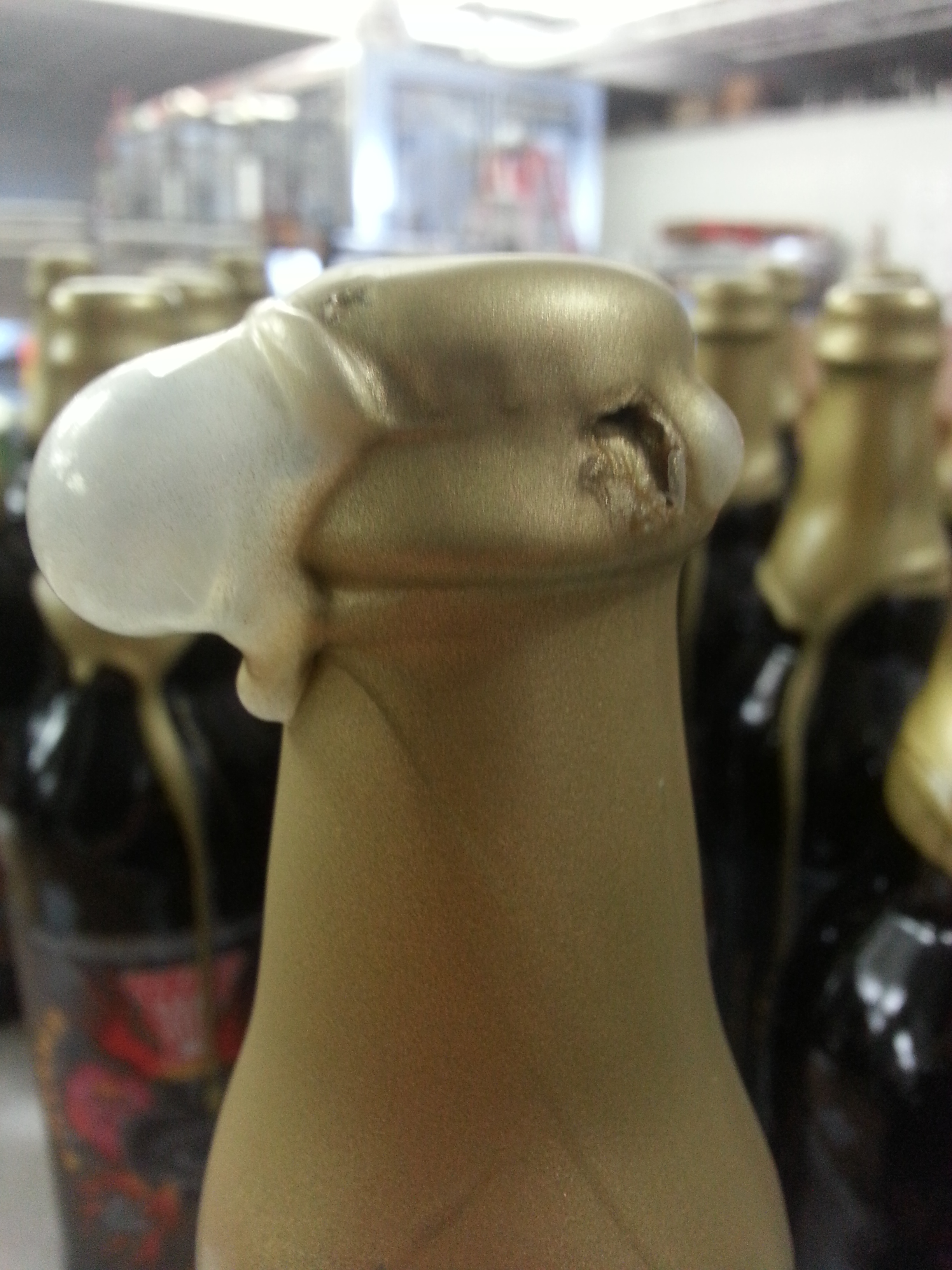
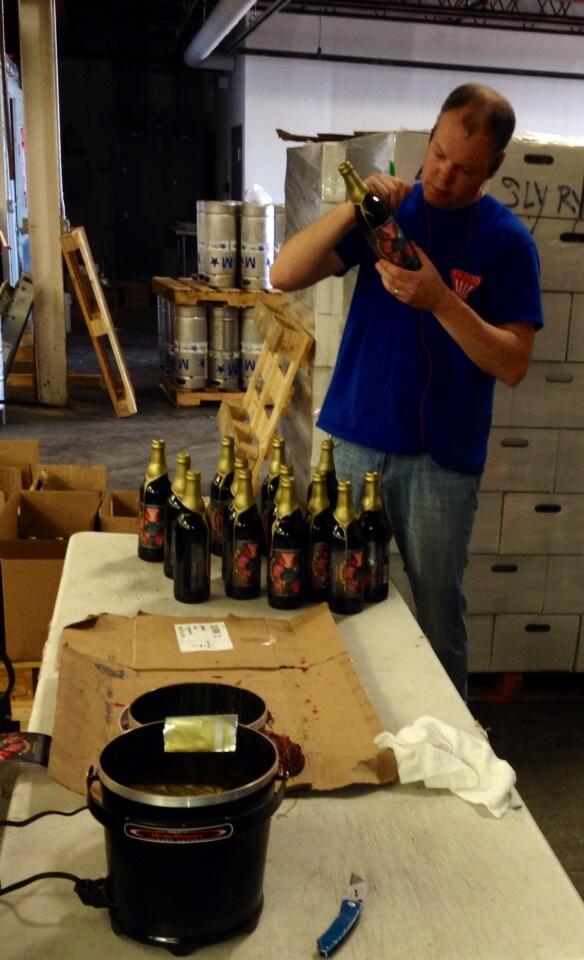
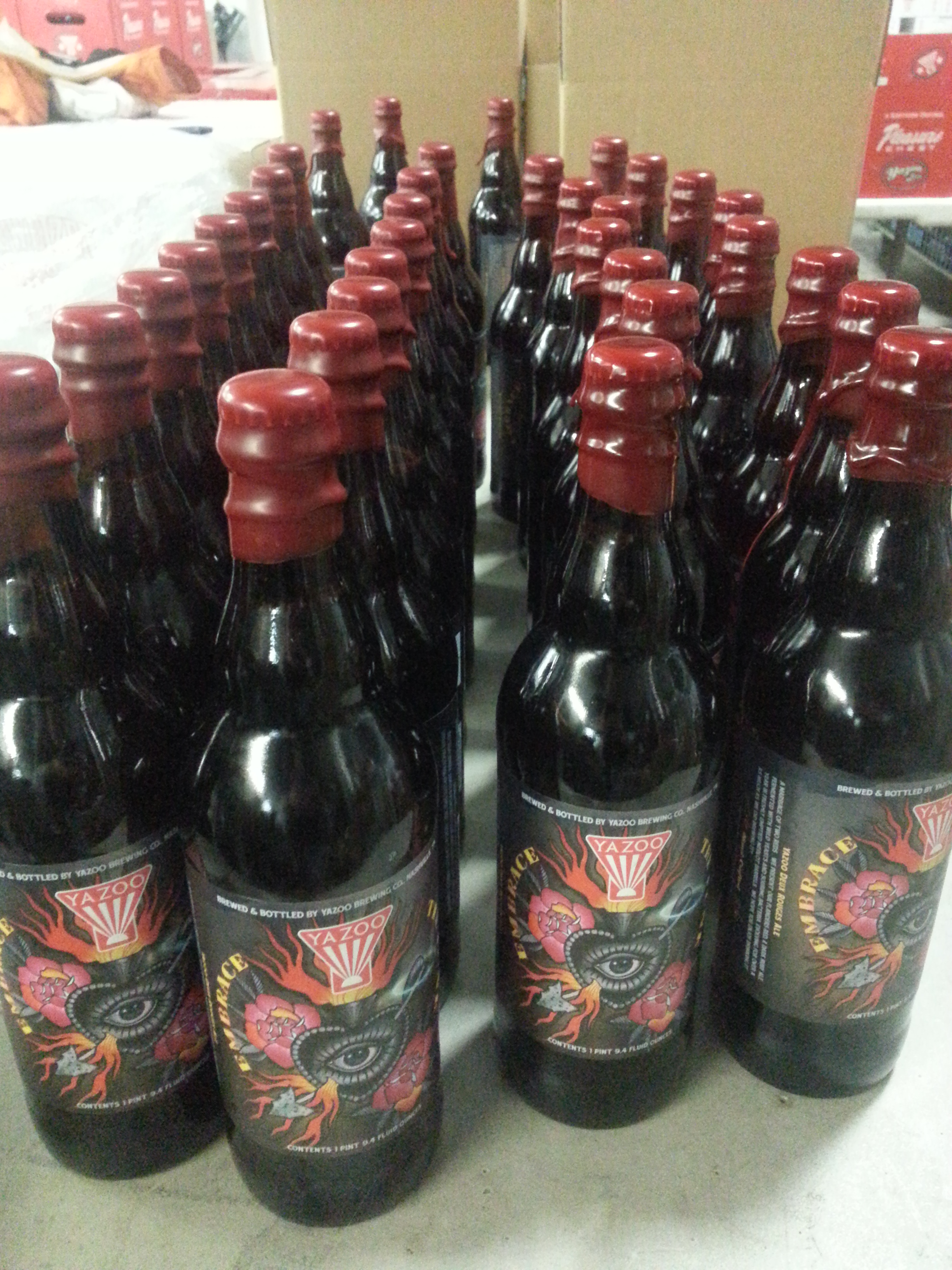
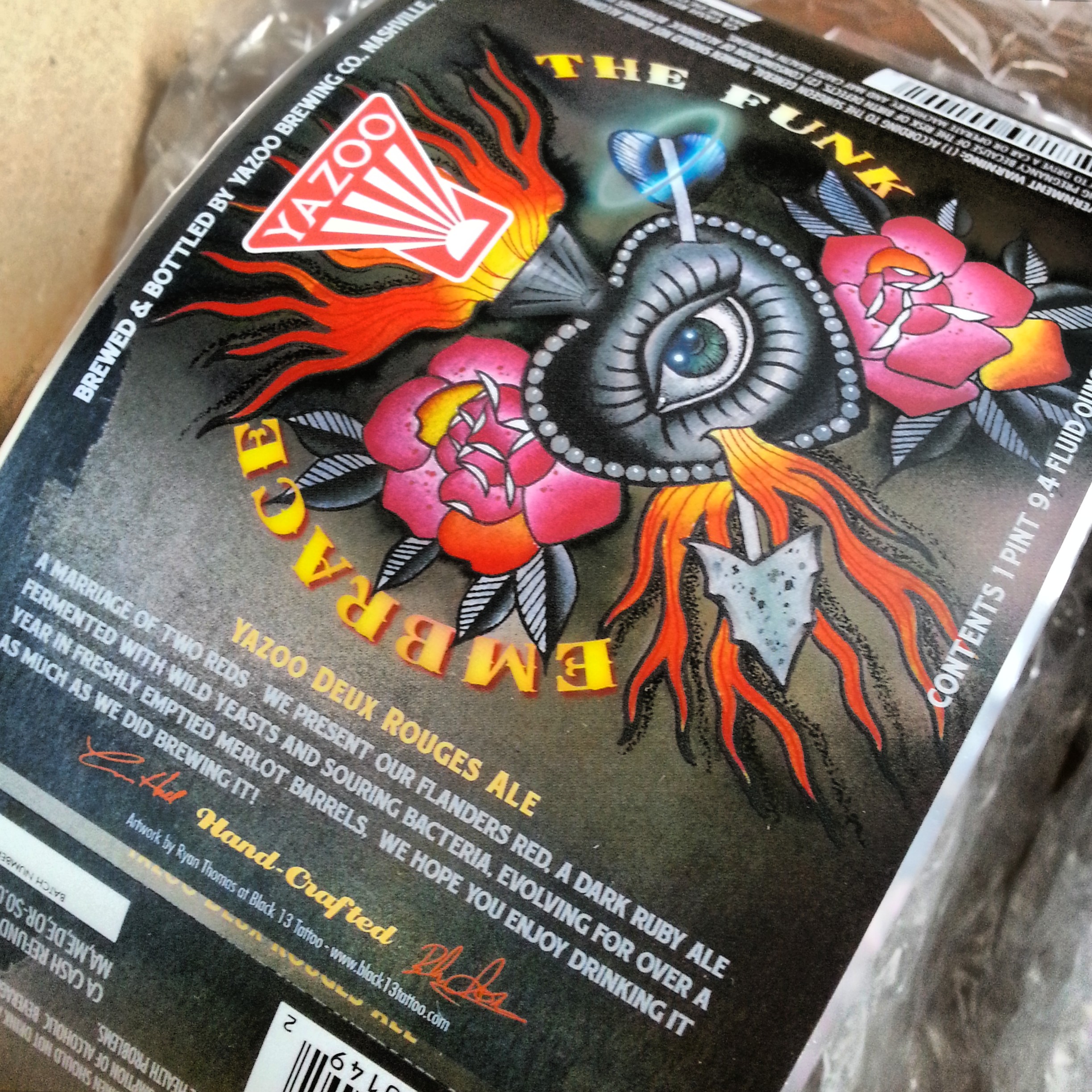
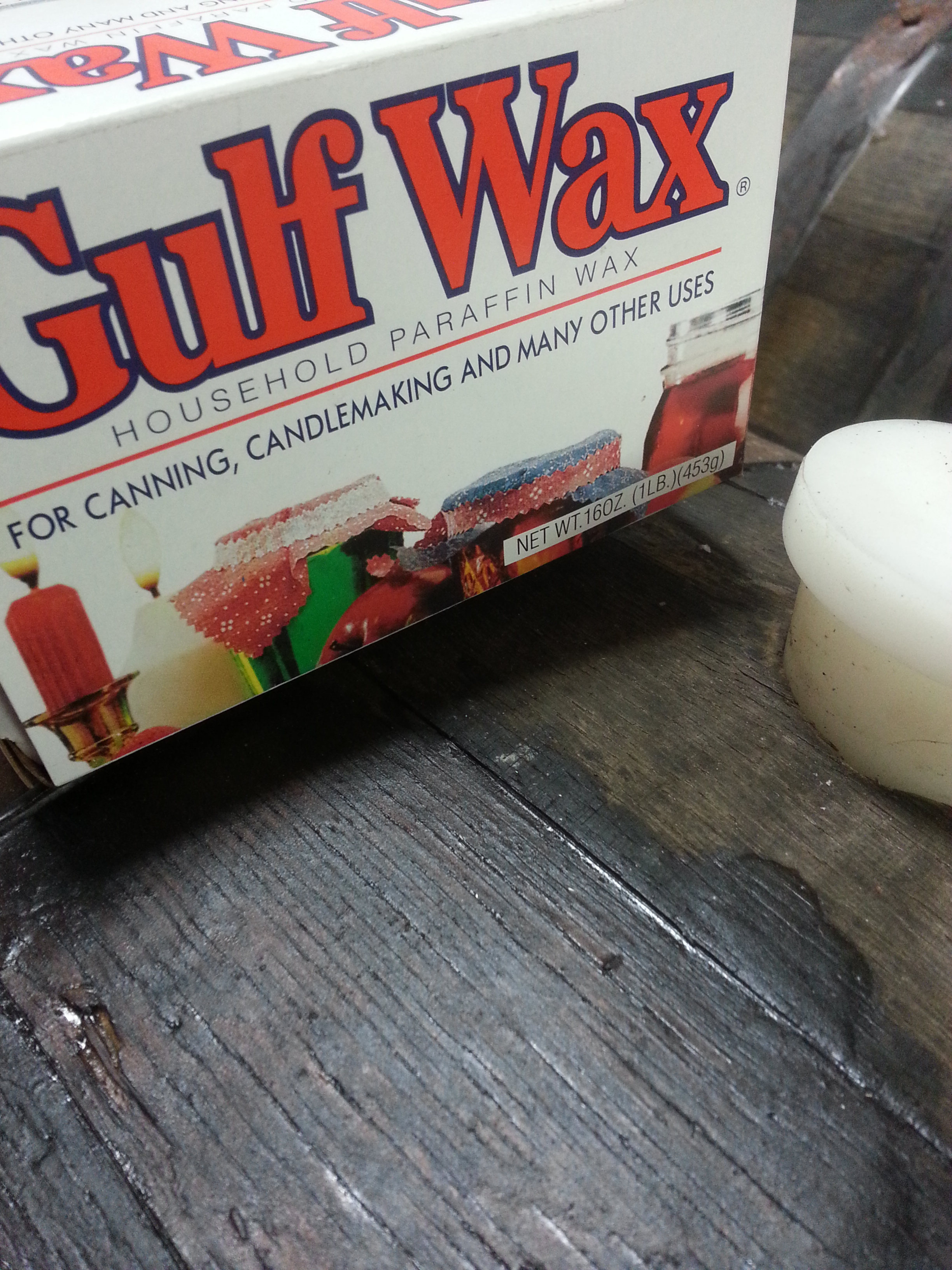
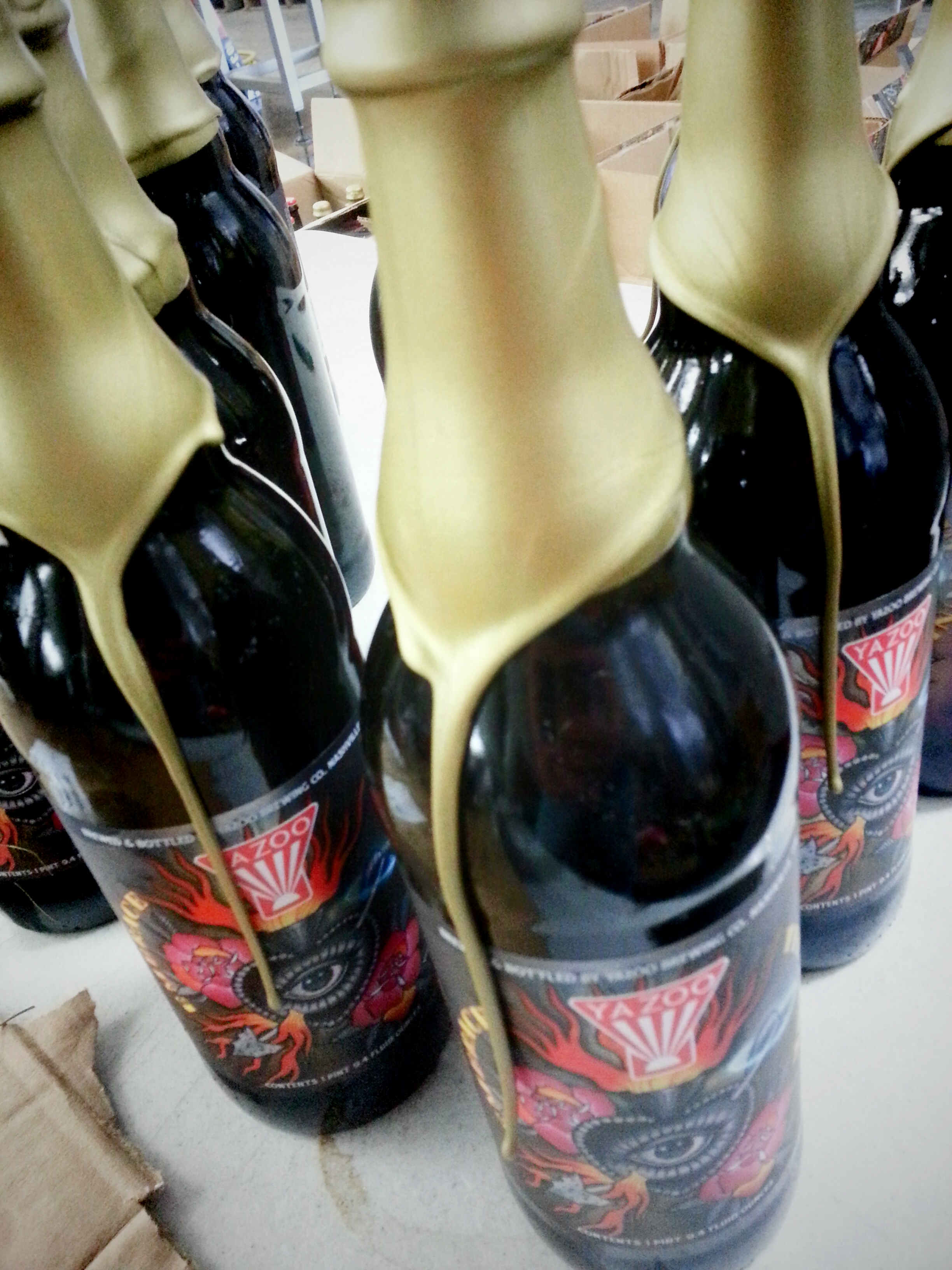 First we buy our waxes from a company called Blended Waxes Inc. They sell a true bottle sealing wax that many other breweries like Fifty Fifty (who gave us some great insight) use on their bottles. They do sell one pound blocks which homebrewers can buy, it might be a little expensive to ship just one or 2 so maybe ask your LHBS or do a group brew club buy. Depending on how far down the neck your go will determine how many pounds you need, but we get about 35-40 bottles off each pound of wax.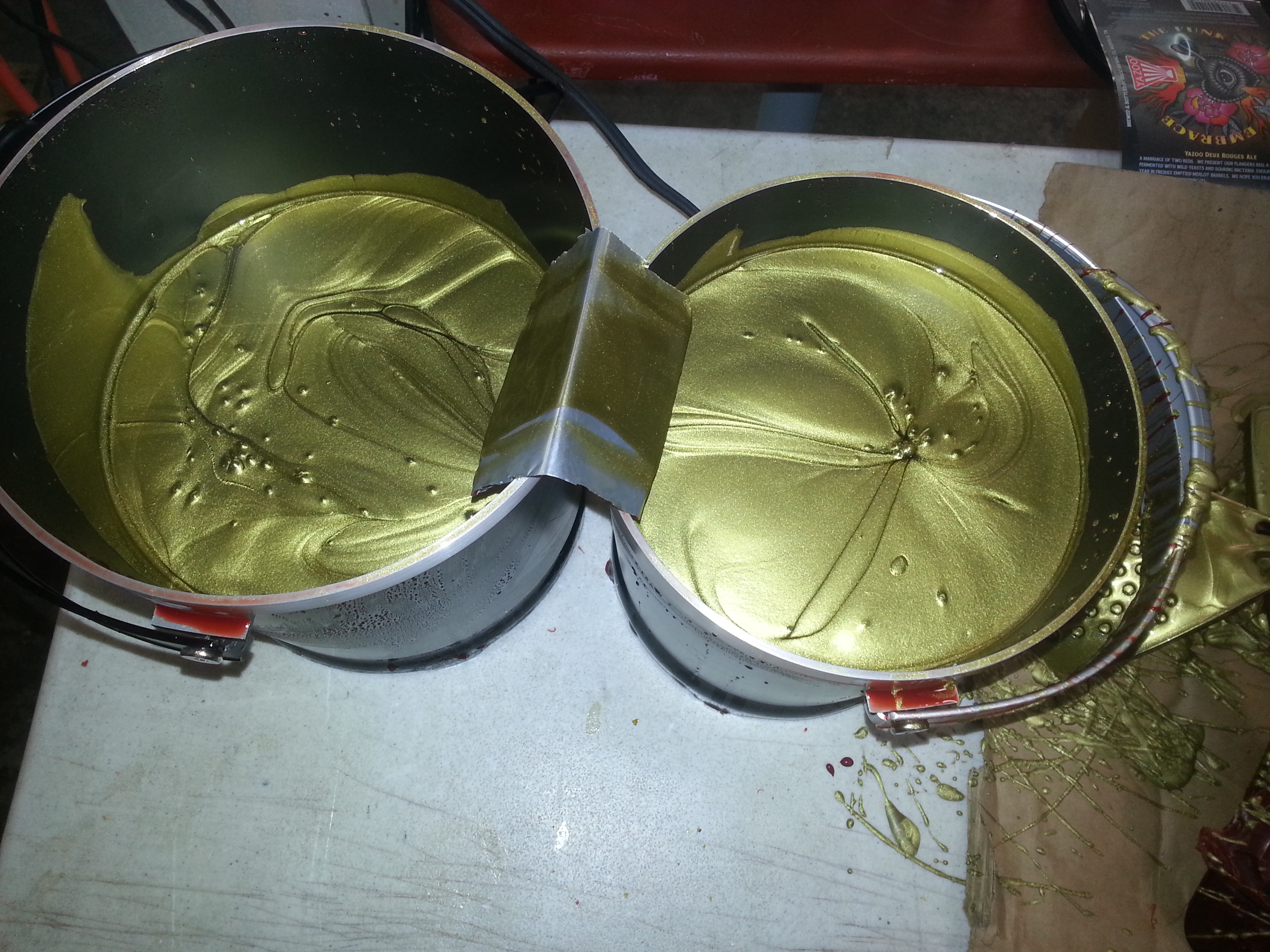






 Embrace The Funk