It’s been a minute since I’ve brewed anything mostly due to the numerous days of record breaking 105+ high temps in Nashville. That’s enjoying the beer I already brewed weather in my book! I am planning a few brew sessions later this month since I acquired a 15 gallon Rye Whiskey barrel from Corsair Artisan Distillery. I’m very much looking forward to sharing the beer this winter.
What I wanted to talk about is 2 offerings from Wyeast that I absolutely love using: Wyeast 3191 Berliner Weisse Blend and Wyeast 3726 Farmhouse Ale. Both of these are available right now through September as part of their Private Collection series.
Wyeast 3191-PC Berliner-Weisse Blend Beer Styles: Lambics, Geuze, Fruit Lambic, Flanders Red Ale Profile: This blend includes a German ale strain with low ester formation and a dry, crisp finish. The Lactobacillus included produces moderate levels of acidity. The unique Brettanomyces strain imparts a critical earthy characteristic that is indicative of a true Berliner Weisse. When this blend is used, expect a slow start to fermentation as the yeast and bacteria in the blend is balanced to allow proper acid production. It generally requires 3-6 months of aging to fully develop flavor characteristics. Use this blend with worts containing extremely low hopping rates.
WY3191 Berliner
The WY3191 is a killer blend that includes the perfect amount of Sacc, Lacto and a tiny amount of Brett. I’ve won quite a few awards with my Berliner Weisse using this blend, even advancing to the mini BOS at the National Homebrew Conference in 2011. I’d highly recommend grabbing this blend while you can, it’s bullet proof for your Berliner. *Side note: I do wish this blend was released earlier in the year so we could have the beer ready now for the hottest part of the summer. If you feel so inclined to message Wyeast, here is the contact form.
The other strain released is Wyeast 3726 which is long rumored to be the Brasserie Blaugies strain. This release doesn’t have any Brett or bacteria, but is fantastic on it’s own as a sole strain. It’s my go to Saison strain over WY3711 and WLP565. I’ve never had any attenuation problems with this strain, with most of my fermentations finishing almost as quickly as WY3711.
So here’s the wild/funky part(s)…Using this strain as the base with Brett Brux has given me one of my favorite “Brett Saisons”. I’m still a fan of WLP670, but something about the intense dry, tart, black pepper characteristics WY3726 lends blends so well with Brettanomyces Bruxellensis. If you wanted to get funky with this strain I imagine it would be a great one to use along with your favorite Brett variant and some Lacto. I’d skip the Pedio.
WY3726 Smack Pack
I know this was a short post, but I’m such a fan of these strains. I didn’t want anyone to miss the opportunity to use them. If you’ve used either of these strains in the past and enjoyed them send Wyeast a thanks for bringing them back. I’ve got 2 pieces of very exciting news I hope to share with you later this month! One still needs to be confirmed and the other just needs to happen. Stay tuned for those! I also should have another Q&A very soon…the interview won’t happen until next week, but it should be a good one with some great technical advice. Until then thanks for the support and keep spreading the good word about sour/wild beers!
Make sure you follow Embrace The Funk on Twitter and Facebook.
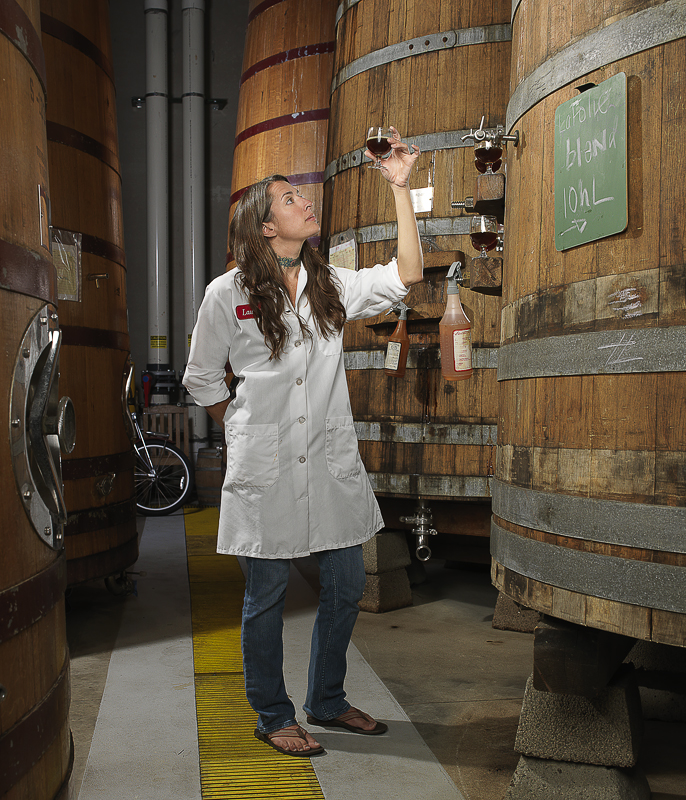
Good news everyone! (said in a Professor Farnsworth voice). After a month off that included a wonderful vacation with my family I’ve got a great Q&A session with Lauren Salazar of New Belgium Brewing. Lauren is the “Sensory Specialist” for NB and is regarded by many people as not only one of the greatest judges/tasters/blenders in the USA, but in the world! Since I’m a huge fan of Oud Bruin and Sour Brown beers I have to admit I was geeking out talking to the person who blends/creates one of my favorite beers in the world: La Folie. I love this interview for a few reasons, but one of the biggest is the revealing look as to how in tune with and caring Lauren is with her products at New Belgium. She gave me some great advice to pass along to aspiring home brewers and dropped some information on a few new beers that will come out this year! So let’s get the fun started…
ETF- What was your sour beer epiphany moment?
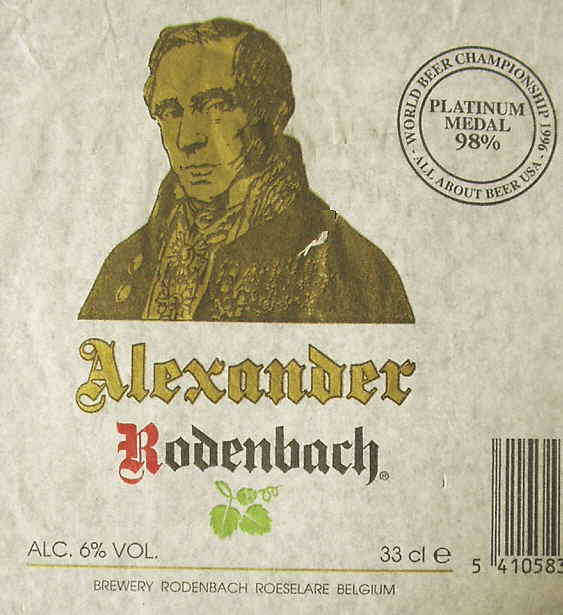
Lauren- Mine was the Alexander Rodenbach. I remember drinking that with ChrisBlack at Falling Rock. We were justtalking about the fact we acquired 7 sixty gallon barrels and my brew master Peter Bouckaert who use to be the brew master at Rodenbach. So we were there just drinking Alexander Rodenbach which was absolutely divine and I hadn’t really specifically gotten into sour beer yet… this was in 1997. I remember thinking “This…I love this beer”, but a few weeks later when we were tasting beers from those barrels for the first time I thought “This was not that.” So I remember it taking a good solid year for our barrels to start tasting anything like that Alexander. I distinctly remember that moment drinking Alexander Rodenbach and thinking how excited I was that we were actually about to make that beer, we had the brew master right there and I thought it would taste just like that! But what I didn’t realize then was it would take years to get there ha-ha.
When I heard they were going to quit making Alexander because of the agreement between Frank Boon and the Palm contingency it broke my heart. When I went to Belgium the first time they gave me Alexander Rodenbach glasses so every time I opened one I made this huge deal about having the glasses and it was this whole pomp and circumstance deal. So when I heard they weren’t going to make it anymore I called all the distributors and places here in Colorado to find out there were 20 cases or so…but then they told me there were 20 cases but someone is coming to get them. I said no I want them and they were like “You want 20 cases of beer? No we can give you 11 because this other person is coming to get them.” We went back and forth a bit before finally realizing it was Chris Black and I having this crazy war trying to get the last cases. So when we realized who was who… we called each other and laughed and laughed. We ended up sharing the lot.
The day I realized I was drinking the next to last one was a really sad day… but the next day I brought in the last bottle and set it on Peter Bouckaert’s desk. I figured he deserved it more than me.
ETF-When did you have the last bottle? Lauren- Oh I think it was sometime in 2008.
ETF- You did better than I would’ve holding on to great beer that long. Lauren- It was tough! I hid the bottles big time! When I would leave town I would look over at Eric and say “Look I am not kidding you… I don’t want to see these as empty bottles in the recycling when I come home.” Ha-ha!
Photo Courtesy Jeff Elkins
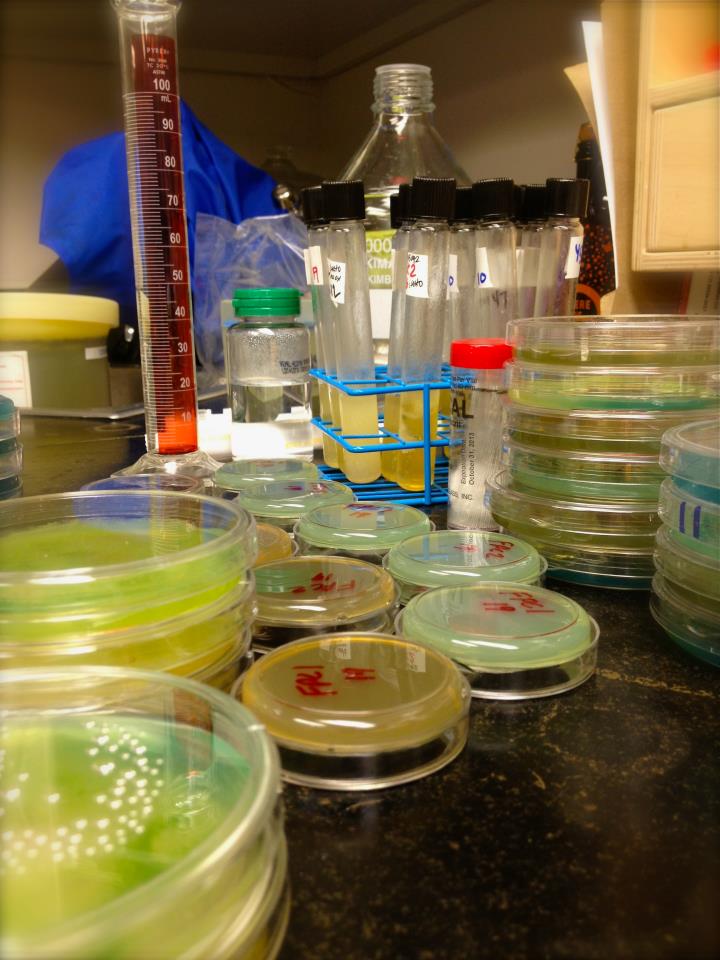
ETF- You mentioned when New Belgium got the barrels there was a sour beer learning curve for you, but now you are the sensory specialist (which is a pretty rad title) for the program. What all do you get to do as the Sensory Specialist? Lauren- Well my main job is to run the whole program. So I work in conjunction with the analytical, chemistry and microbiological labs to assure the consistency and quality of each production beer. We do microbiology checks all the way through from wort production to packaging and in the same we do chemical analysis. We also do sensory evaluation from knock out through packaging.
One of the biggest things is training the brewers, the cellarman and the packagers what true to brand and free of off flavors is for each beer through each step. It’s the concept of: If you move it, you taste it. So every single time the beer is moved from the knock out into the cellar, when we pitch yeast, 4 days after, pre-chiller, post filter, in the bright beer tank etc… The cellar guys release it to packaging, packaging accepts it from the cellar and they taste it.
We do tons of training, a lot of writing and descriptions during this process so everybody knows exactly what they should get when they pull a sample. It’s suppose to look like this, taste like this, smell like this, mouthfeel/body should be this… then there are some top things to know on what the samples cannot be. So if they find a discrepancy at any point they know what to do. It’s a lot of training, education and decision making skills to make the right calls all the time along with a humungous undertaking to do that.
We have around 20 cellarman, 9 brewers almost 70 packagers and we train them continuously. The cellarman and brewers get once a month training for 1 ½ hours, the packagers I come to all 4 of their shifts once a month and train those guys. The people up front we train them on gold standard…styles, style expectations, raw materials, the flavors that come from different raw materials, how to evaluate and judge beers. Their job is to give people great beer experiences. If you drive all the way from Michigan it better not be a mediocre Fat Tire, it better be the best damn Fat Tire you’ve ever tasted in your whole life! Because if it’s not… then why come all the way out here to get that?
ETF- Tell me about what you do with the sour beer program at New Belgium?
Photo Courtesy Jeff Elkins
Lauren – My job as Sensory Specialist in the sour beer program is solely care-taking and blending. Basically I taste barrels constantly. What they need, what they want and what they are asking for and where the barrels ‘are at’. Seeing if the barrels need to be fed, if they are hot or cold, if the barrel is hungry, do they want to be made into a beer? That is just a lot of listening and understanding their needs then doing it. If we aren’t going to make a beer for a few months and the foudre is ready then I need to coax it or trick it into not being ready. So blending it with a younger beer and trying to squeeze out a couple more months and maybe a little more beer is kind of a balancing act that has nothing to do with how much ethyl isomerate or freulic acid it has.
It’s just being able to listen and knowing what you are going for, having that goal of blending and caring.
When I go out in the field or when I’m training one of the first things I do is talk about the history of sour beer and tell them all beer use to be sour. The problem with people saying they don’t like sour beer is when they think of beer they don’t think of sour. They think bitter, light, refreshing etc… but they don’t realize the historical merits of sour beer and how amazing the isolation of brewer’s yeast really was and how recent it was. I talk a lot about the Lambics, Geuzes, Oude Bruins, Berliner Weisses and all these fun old world sour beers and just why all beer was sour.Then I talk about the merits of sour and how much most people do like sour stuff like lemonade and how refreshing it is.
The thing about drinking sour beer is you just need to be open to it and you should never surprise somebody with one. I hate when I see people say “Try this” and they won’t say anything about the beer. So in the other person’s head they think “oh beer” and they are ready for one thing, but get another. So it can be really off putting to the person drinking that beer. It’s like they never really got a chance to decide if they like it.
If I came up to you and said try this beer, it’s called a Flanders Red. Its beer style from the Flanders region in Belgium and one of the oldest known beers styles that remains in production. Then I might say “Are you a fan of Granny Smith Apples? Do you like tart cherries and plums? Do you like cherry cola? Almonds?” So usually they say “Yes” and have checked all those boxes off. I hand them the glass and say “Look at it, swirl it around and smell it. What are the things you are thinking about? Now take a sip, it’s going to be really tart, but the same kind of tartness from a nice Granny Smith apple.” So when you do that, they love it. It’s a lose-lose situation when you say “Try this beer (hey watch this…it’ll be funny)” because it puts the person off and they may never like sour beers.
It’s just being able to listen and knowing what you are going for, having that goal of blending and caring.
ETF- You just told me how you describe some finished sour beers to people. Do those flavors come up during the creative recipe design process or is there a different recipe process? Lauren- Well the Lips of Faith series is actually a hodge podge of people’s ideas and brewing wants. Things we’ve always wanted to make. Just the other day I was saying I want to make a Gratzer. I’d like to focus some attention next year to these slightly sour wheat beers. I think that sounds fun. It’s an old world varietal that’s been all but lost, there are a couple of breweries that still do it and do it well, but I just think it would be a fun style to make. Part of the process is the challenge… the challenge to make a great Berliner Weisse or Gratzer.
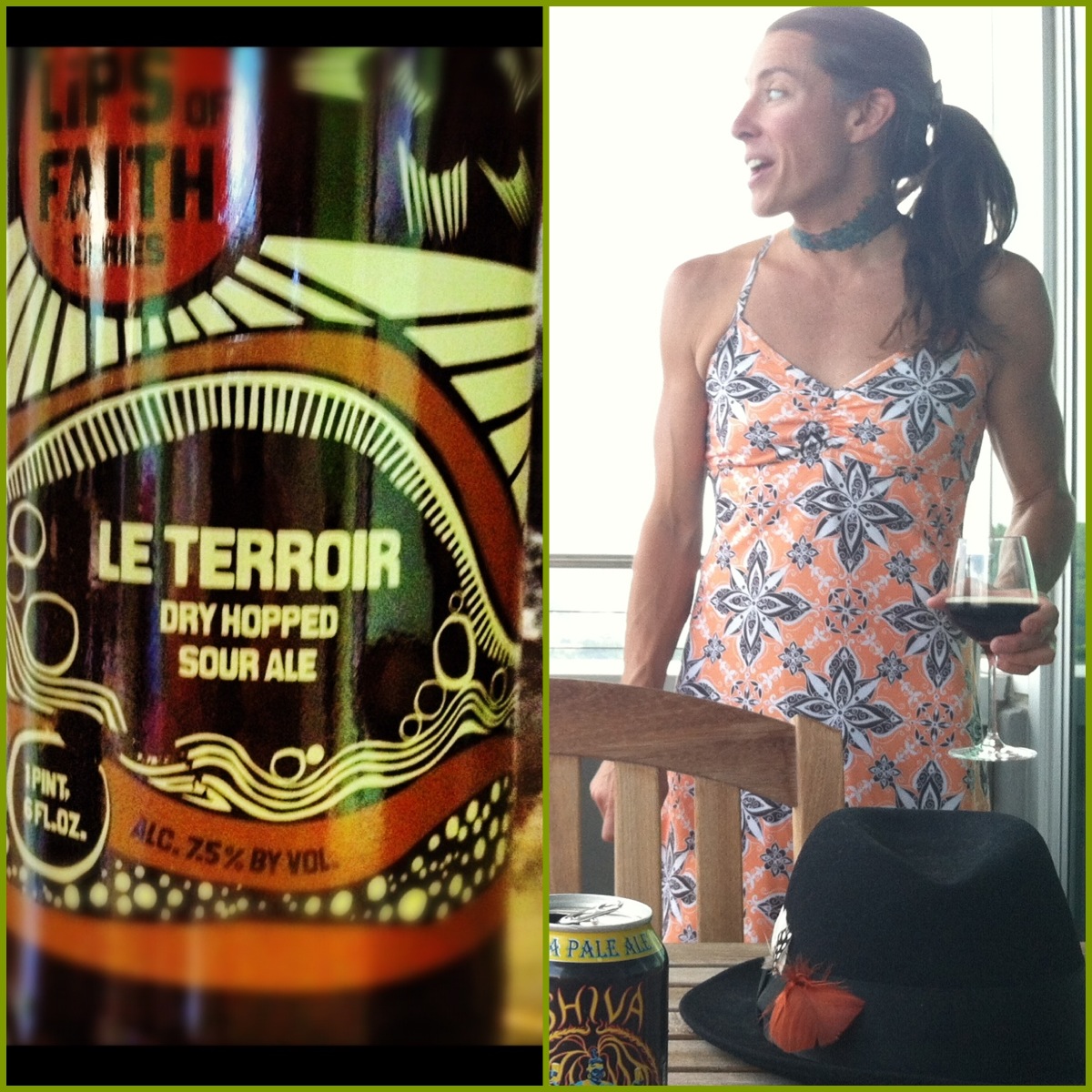
There are those beers like Oud Bruin that have a recipe, have a procedure and have a process so you kind of know where you are going and that’s one way to make a sour beer. But the other way is like when we made Eric’s Ale, Le Terroir or Tart Lychee. Eric and I would just sit back and taste the barrels saying things like “You know what would be awesome?, Doesn’t this taste like ____?”. When we started making Le Terroir I was telling Eric I had just smelled Amarillo hops for the first time and said “Don’t you think this hop smells just like Foudre #3? Peachy, mangos, awesome apricot and papaya notes.” I asked him if anyone had ever dry hopped a beer like this with hops like these and he said “Not that I know of.” So we grabbed some Amarillo hops, put them into a growler, threw some sour beer in there. 4 days later we racked it out and said “Well yep, you can definitely do that.” So sometimes that’s as complex as it gets.
Photo Courtesy Jeff Elkins
ETF- Le Terroir was one of my favorites last year. Was that a blend or straight up? Lauren- It was 100% Felix, the light sour beer and dry hops. It was the simplest thing in the world. We just taste all the Felix we have and make a blend with all base Felix to get the sour we were looking for and just dry hop. It’s pretty hefty on the dry hops though, we do 1 pound of Amarillo and a quarter pound of Citra per barrel. Then it’s a 4 day dry hop rest to let the alcohol do it’s job of leeching out all those amazing essential oils. Then we centrifuged it and called it good.
ETF- What temp do you guys dry hop at? Lauren- That’s a great question…We bring it up so it’s about cellar temperature or a little cooler.
ETF- Given the popularity of Le Terroir, when will we get the chance to enjoy it again? Lauren- Le Terroir shares the base sour beer (Felix) with Eric’s Ale, Kick and Tart Lychee. We are doing a major overhaul and expansion on the wood cellar. We had to empty and let all the Felix barrels dry out- so we washed them all out, inoculated with other barrels and filled a few weeks ago- saying that- we have about 1-2 years before we see anything with Felix as its base beer, let alone a huge production like Terroir (100% sour)- Eric’s is more likely (60% sour) but not for a while…
ETF-Is the grain bill on Felix pretty simple? Lauren- Yeah it’s basically Biere de Mars without the spices. Pretty simple. Some oats, wheat, pale malt… and it’s a lager. The grains are less than half pale malt, about a third wheat, oats and some caramel 80. Both Felix and Oscar are lagers because the concept is you are just making a dark beer and a pale beer.
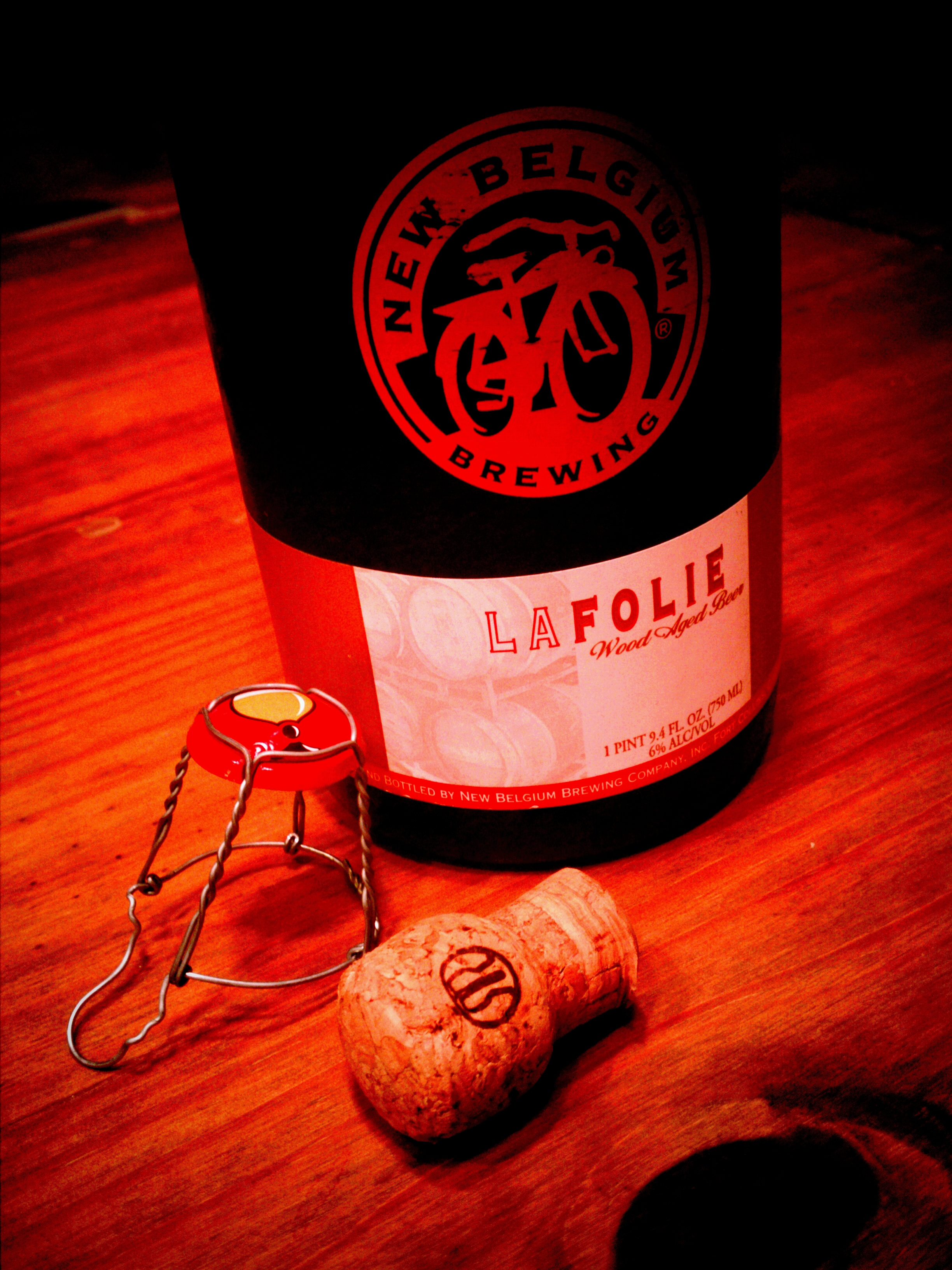
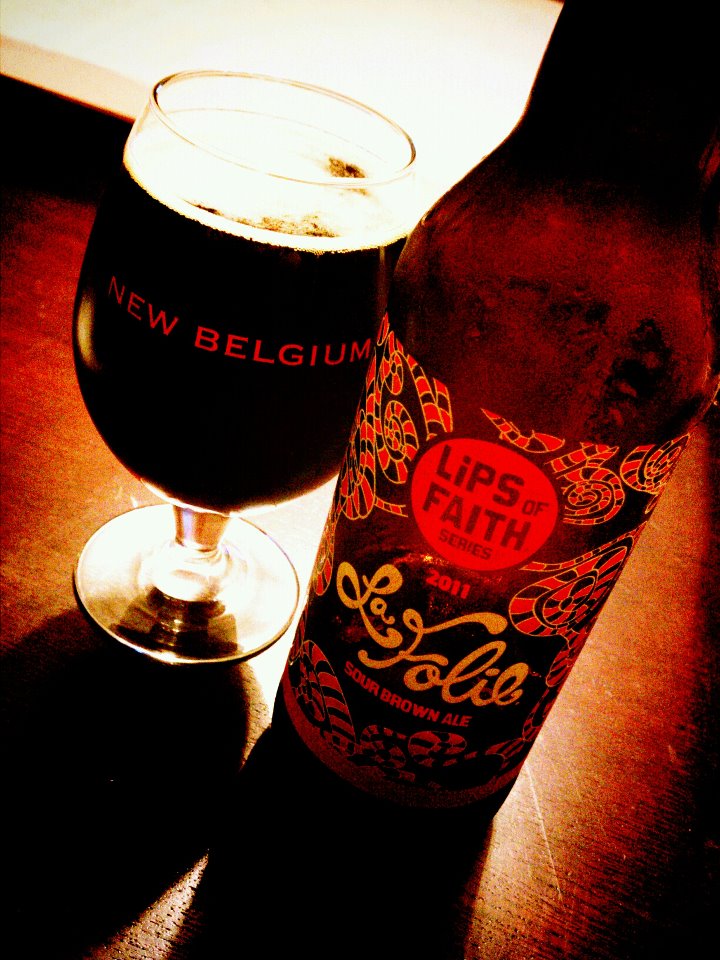
ETF- A question I see asked/debated/complained about almost weekly is “Why was La Folie changed from un-pasteurized 750ml cork caged bottles to pasteurized 22oz capped bottles?” Still to this day there are lots of rumors…. So can you set the record straight?
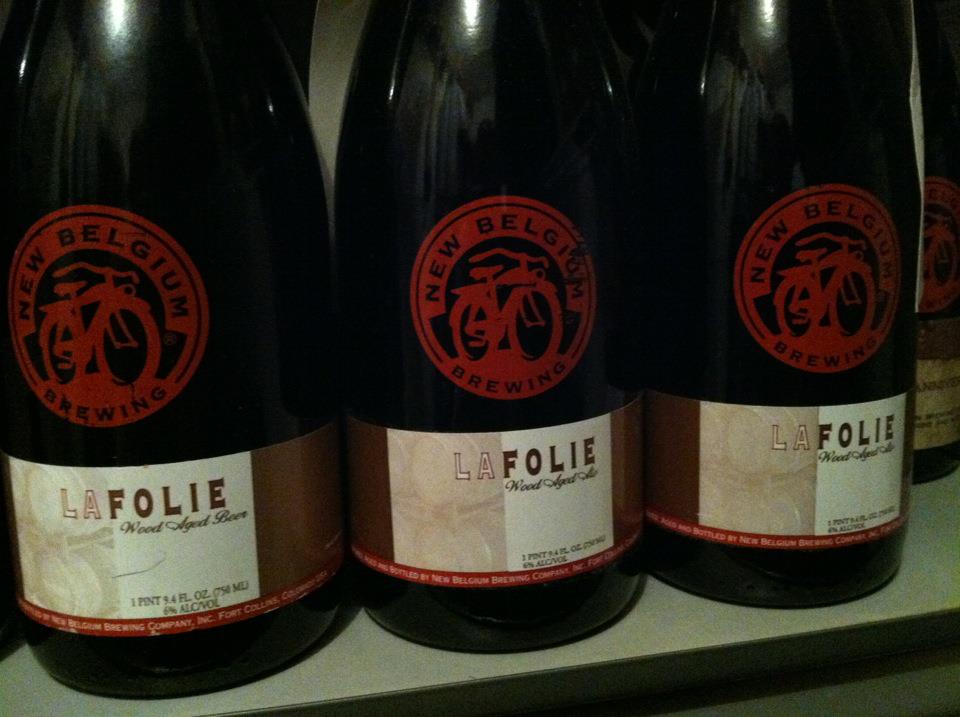
Cork/Caged La Folie
Lauren- Well most of those people would never be able to experience a La Folie if we were still doing corked. We were hand bottling this on a gravity filler. It was our first filler that we had sold to Cooper Smith and we would borrow it back from them.
So we would brew the beer, put it in a tank, throw some champagne yeast and get it ready to bottle. Then we would have to drag this big long hose all the way through the brewery to a place where we could package it. We had this single pneumatic, but really rudimentary, corker that was 1 bottle at a time. It was put the cork on, twist the cage, hand it to the next person who would rinse it, hand it off to dry it, hand it off to put a label on it, hand it off to put the government label on it, hand it off to put it in a box, then the next person would tape that box and the next person would move the box. So it was a 20 person operation for about 13 hours a day to make 20 hectoliters (approx 530 gallons) of beer. That ended up being 3 pallets of beer which is really nothing.
So as we started acquiring more barrels one day I said “Hey not for nothing, but I can make a ton of La Folie. You keep buying these barrels and I keep making this beer. I’m ready to make 100 hectoliters of La Folie, what the hell are we going to do? We physically can’t do this, we can’t have 4 days of this. Then I’ll be ready again in 6 months…are we going to keep doing this because it’s very inefficient.”
So not only that but the process with the gravity filler was causing so much air to get in the bottles. Sure we added yeast in, but when you would taste those C&C bottles (even if you bought 5 bottles like numbers 101, 102, 103, 104, 105) you might get 5 different flavors. All because of the oxygen and that cork. To the cork people that bottle says “cellar me” or “age me” and that was the worst thing you could do with those bottles because of the air. When you acidify with air you make vinegar. Lactobacillus is what everyone wants to taste, they want that really clean yogurt sour. Acetobactor is that vinegar taste. If you get oxygen permeatation with air, which is what corks do you will have vinegar. It won’t happen right away…if you keep it cold and stored right it’s probably ok. But people don’t store things right, they put them in their shoe closet or wife’s linen closet…their quote un-quote “Beer Cellar”. They put the bottle wherever and drag it out 3 or 4 years later saying “I had a 2002 La Folie and it wasn’t that great” and I’m left saying “Well in 2002 it was freaking amazing. Where did you store it?” They tell me the closet or wherever and say the cork didn’t even pop when it was opened.
But there were things at that point that got me really excited. One was the opportunity to make more and we had this brand new bottling line, They told me at first we were going to make 22oz bottles and I was kicking and screaming not wanting to do it. Then I saw that beautiful silk screen bottle and thought that was cool. Then I got to make that first 100 hectoliter batch of La Folie and we got to send to it places outside of Colorado. Before it was solely traded online since it was only sold in Colorado. So that very first shipment outside of Colorado was really exciting for me… to know everyone, within reason, who wanted to was getting the chance to drink it. It’s still the exact same process to make the beer, just a different package and more of it.
One thing to know too is the corking line we would’ve needed was 2 million dollars and we knew we didn’t have the money to spend on that. We wanted to buy more barrels and not spend the money on this corking line. We had to make a choice and we wanted more fermentors. Recently Kim (Jordan) asked me because we were thinking about putting in a corking line again and I was actually on the opposite, I didn’t want it. I knew saying that was crazy, but I loved opening bottles and I would rather someone drink New Belgium beer and store someone else’s beer.
“I would rather someone drink New Belgium beer and store someone else’s beer” – Lauren Salazar
I remember the first time at this person’s house and it was a random Tuesday night. They grabbed a 22oz Lips of Faith bottle popped it open and poured beer for everyone. Beer geeks were there and even people who had no idea what it was…but I remember thinking this is a freaking awesome day.
ETF- Well I think that definitely sets the record straight on what went on. Lauren- Ya know, it was really pragmatic. “We can make more beer than we can package. What should we do? We have this line, so how do we make this line a little more special? Let’s silk screen the bottles.” When I look back on all that now… I was literally about to dump 80 hectoliters of La Folie and that would’ve been an absolute crime. So the alternative was absolutely fine.
ETF- Let me jump back to the Pasteurization for a second. The 22oz bottles are pasteurized so there are no viable “bugs” in those bottles.
Photo Courtesy New Belgium
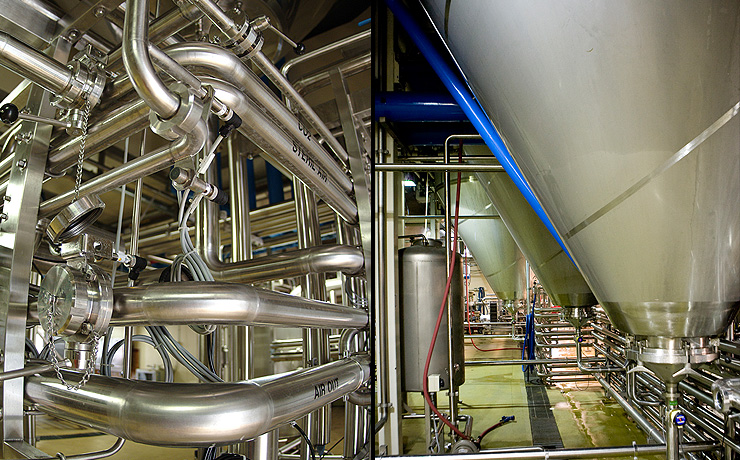
Lauren- Yes it’s flash pasteurization. It’s a tiny stainless transfer pipe that gets heated to what’s called a “PU” (pasteurization unit) which is a time and temp. So it’s heated to that specific spot in the pipe as it (LaFolie) goes by, which is 100 hectoliters an hour. It’s set to the exact time and temperature that kills beer spoiling bacteria because we are bringing the beer into our stainless cellar. We do not want Brett, Lacto or Pedio in the stainless cellar so we pasteurize it on the way in.
Now it does have a side effect, but it’s a wonderful side effect. It locks the blend that I produce into place. So when people ask how long they should store La Folie, I tell them we already stored it for you. It’s been in barrels for sometimes 4 years, you bought it so you deserve to drink it, we did all that for you.
You know some people store beers like Geuze for a really long time and what they don’t realize is that blender painstakingly made that blend. The blender tasted all their barrels and said “This percentage of this barrel, this percentage of this one etc..”. That person brought all those together, tasted it and said “Perfect.” But 3 years later, who knows what it’s like if its not pasteurized. So when you pasteurize you can definitely lock in the blend, but it can also oxidize.
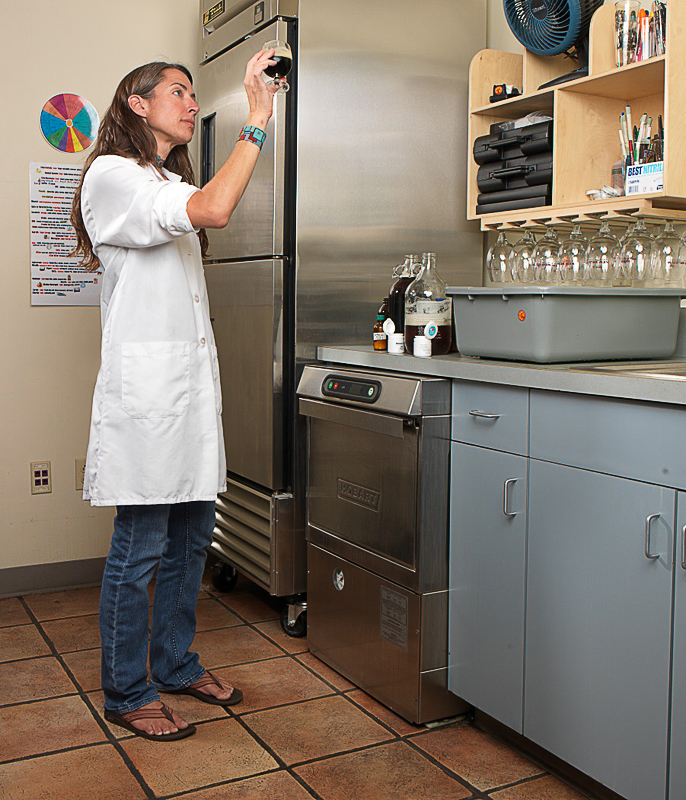
New Belgium Lab Work
ETF- So just to make doubly sure all the home brewers know…there are no living bugs, funky, wild yeast etc… in a 22oz bottle of LaFolie. Lauren- Correct, but we do bottle condition at the end. ETF- But that’s with the house strain or a champagne strain right? Lauren- Yep, it’s not Brettanomyces or anything like that. Just a little bit of a touch up for carbonation and oxygen scavenging.
Photo Courtesy Jeff Elkins
ETF-Each year when you are going through the process to get LaFolie ready what steps are you taking and how long does it take to get the blend just right?
Lauren- It takes me all year to kind of shepherd the barrels into the right way. Basically I know what I’m making, when I’m going to make it and about how much I need to make so I’ve got all that in my head. So when I’m tasting barrels throughout the year I move them around…maybe take 20 hectoliters out of this one, put 10 into one and 10 into another. I move them around a lot because what I like to do instead of filling and emptying is move. We don’t empty, fill, rinse, re-inoculate. Our barrels are the same inoculants since 1997, we’ve basically just trained them in the way they smell, taste, and perform. We use them as “examples” for everybody else. So if somebody’s not acting right I’ll take a little out of that one and give it an example of a great beer, feed it with the base beer and then move on. I know it’s a weird approach, but it works.
ETF- Have you had any times where it seems a few are not acting right, so that delays your blend and then delays bottling? Lauren- Oh yeah and I have no problem with that. Tart Lychee is a great example of that happening. It was suppose to come out 4 months before and I said “Nope, I’m not ready.” It was also a quantity thing. I had to let them know they could have it now, but less or wait and have what quantity they wanted.
Now with La Folie I’m always ready to make the bottled La Folie. That’s my biggest goal. I know how much bottled I’m making and when I’m making it; so that’s what I secure first. If there’s not enough of it for bottles I sacrifice kegs first, so there won’t be as many kegs at first… but I can make those throughout the year whenever I can. The bottle vintage is one bottled vintage only, I can make 3 different blends a year for the kegs.
ETF- What advice on starting a blending program would you offer to home brewers that are producing 5 or 10 gallon batches? Lauren- The two biggest pieces would be patience and time. It seems like that’s a problem many home brewers have because they can see it and they want to taste it. So every time they taste it they are exposing it to oxygen which can cause Acetobactor. You are then running the risk of making vinegar.
Also, it just takes a lot of time. If you make something then rack it into the carboy with wood chips and add your yeast blend then write it on the calendar and don’t taste it for 3 months. When you do taste, figure out a great way of limiting the amount of oxygen that gets in there. So once you taste it make a decision: is it anywhere near ready? If not then it’s 3 more months. If something goes wrong then who cares? You need to learn to dump it and figure out where it went wrong. The second you taste vinegar it needs to be dumped because it’s not getting any better… this is not Kombucha.
ETF- What base beers would you recommend a brewer keep on hand to blend with? Lauren- I just do a dark beer and a light beer. Use a neutral lager strain, something that will really dry it out because you don’t want residual sweetness, you want dry as a bone beer. You’re not really fermenting sugar, you’re acidifying alcohol. That’s a really important thing to get in your head. Also ferment your beer first so you make a beer, then acidify your beer. Once you get that down, then go crazy…do Geuzes or spontaneous fermentation. But you need to understand acidification first and then go with mixed.
But back to the base beer, I would say don’t get too fancy with your base beers. All those esters, all those wonderful nuances from the yeast , all those great spices… don’t put them in. The more things you have to get through (fermentation) the longer the process takes. If you want spice, dry hops or something like that you should blend or add those later…basically all that stuff comes after. All you need to do is make a dark beer and a light beer and keep them simple.
ETF- Oscar being the dark base….what’s in it? Lauren- It’s basically 1554 with a little less black malt.
ETF- What are the chances of a Geuze release from New Belgium? Lauren- It’s hard to say because you can make a “Geuze like” beer, but you can’t really make Lambics here…it’s kind of jerky to say you’re making Lambic because you can only make those in Lembeek. So really you can only make Geuzes there. It’s the micro flora that live in Lembeek that really make a Lambic a Lambic and a Geuze a Geuze. You can make things that are Lambic like, but for me they might as well call them something else….you might be going for a Lambic but you’re never going to get there. But Geuzes being 1 and 3 year blends…I don’t like that rigid time where it has to be 1 year plus 3 years. What if the 1 year is great but the 3 year sucks?
ETF- Speaking of time… What the oldest beer in your arsenal you can blend with? Lauren- Well you could make an argument there is beer in the barrels from 1998 since its all the same inoculants and we just pull beer then feed it. I don’t do ages on my barrels, I rate them. I have what I call “Users, Blenders or Waiters”. The “Users” are ready to make beer, the “Blenders” are if you need to make more beer and “Waiters” are just that…they need some time so we wait. So my quality thing is I put a Smiley Face, Sideways Face or Frowny Face. So you might see a “User” with a smiley face and a “User” sideways face…the smiley face one gets used first. I know people want to make or think it’s more complicated than this…but I only have to talk to myself to know what I’m doing Ha-ha! When I’m doing the sensory analysis training is when I talk about butyric acid or things like that, but with the barrels I just need to tell myself what I think is happening and where I think we’re going.
ETF- Ph wise are they all about the same? Lauren- Yeah I would say everyone is in the 3’s. I love SOUR beer, so if I make a straight sour beer you are going get 3.2 or 3. I put out a La Folie that was 2.8…which might’ve been a little much. The blends hover up near 4. Tart Lychee was around 4.5-4.6.
ETF- Speaking of Tart Lychee…I didn’t have the original batch, but I’ve heard people say the new batch wasn’t as sour as the GABF batch. Lauren- That’s right… I changed it. The test beer was 100% sour and the new was a blend. I ended up doing the blend because the concept of Tart Lychee was suppose to be tart and then Lychee. With the 100% sour you couldn’t taste the Lychee because the sour drowned it out. So we decided to do a blend to see where it went. Then blends are fun because they are beginner sours and session sours which I love. I love drinking sour beer, but truthfully I’m not going to sit there and drink 4 Geuzes. But I will sit there and drink 4 ‘Eric’s Ales’. It’s fun to make both kinds though. When I made Le Terroir I did a blend with it and didn’t like it. That beer only sang when it was all sour and a ton of hops. If I blended anything into it, that beer was terrible. It needed all those hops and all sour beer. That beer was ridiculously expensive to make and nobody questioned me what-so-ever. When I saw the return on investment of that thing I was so glad it was in the black, but it wasn’t by much!
ETF- You guys got a lot of people talking and it sure had a ton of interest. Lauren- Well really that’s what those beers are all about. That’s what La Folie is…a folly. We kind of took that and spun it into “What’s your folly?” because ours is beer.
ETF- Let’s talk for a second about the NB/Lost Abbey collaboration “Brett Beer”. Was Brett Beer pasteurized and can you give an idea on the Brett used? Lauren- The Lost Abbey is fermented with bretta then filtered, not bottle conditioned. When I talk about pasteurization, I am talking about sour beers- locking a blend in and keeping our stainless cellar clean- this is a different process- we ferment with Brett, then filter the yeast out like other regular beers- we achieve a specific flavor profile and alcohol content and we’re done. The bretta used was a combination of ours and Lost Abbey’s bretta cultures.
ETF- Are there any new sour blends or other projects you are working on now you can tell me about? Lauren- We just talked to Frank Boon and we will be doing Trans-Atlantic Kriek again which I could not be more excited about! ETF-When would that hit store shelves? Lauren- We think end of this year, depending on Frank Boon and when he can get the beer in a shipping container, customs, long haul truckers, you know- variables… but sooner than later!
Photo Courtesy Lauren Salazar
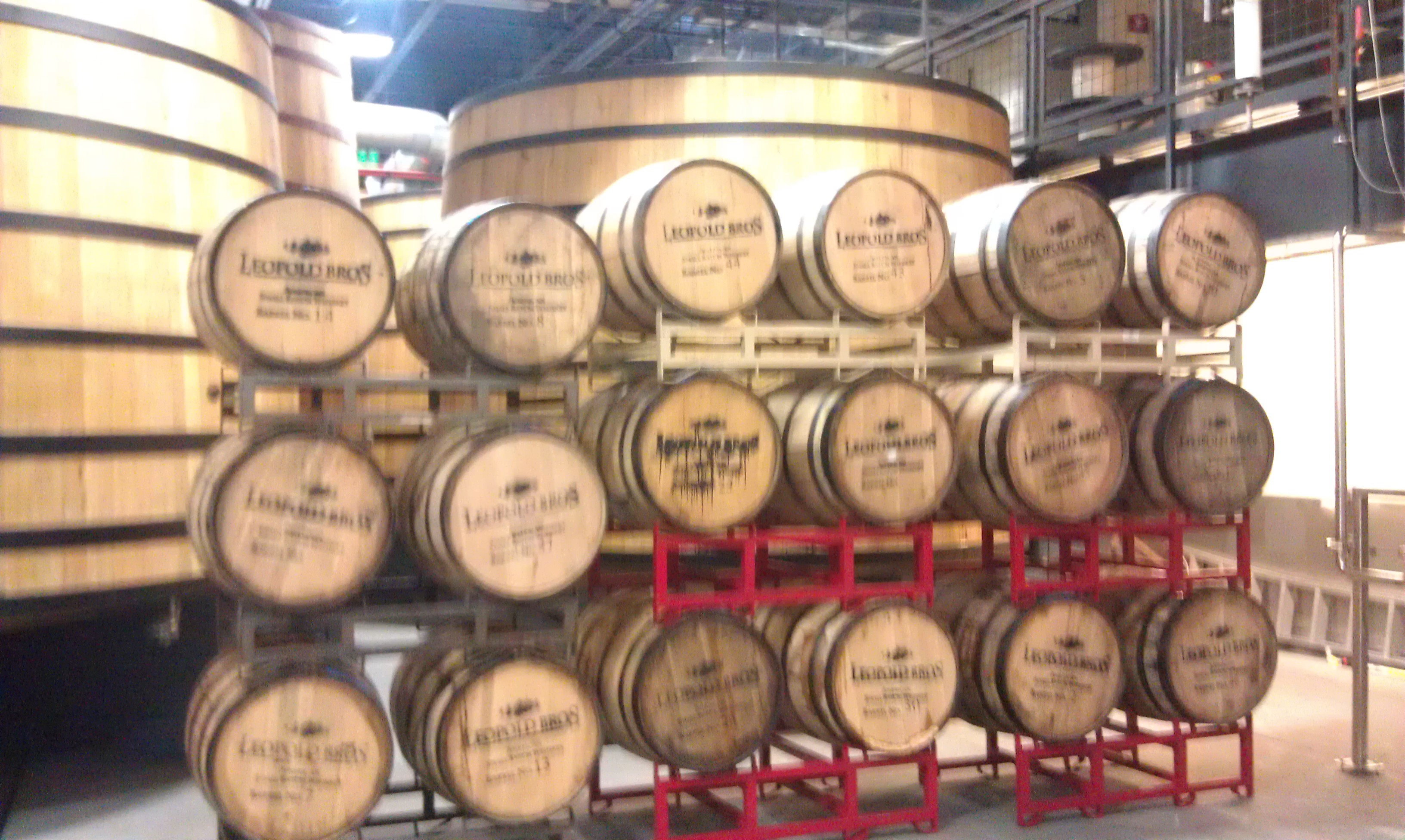
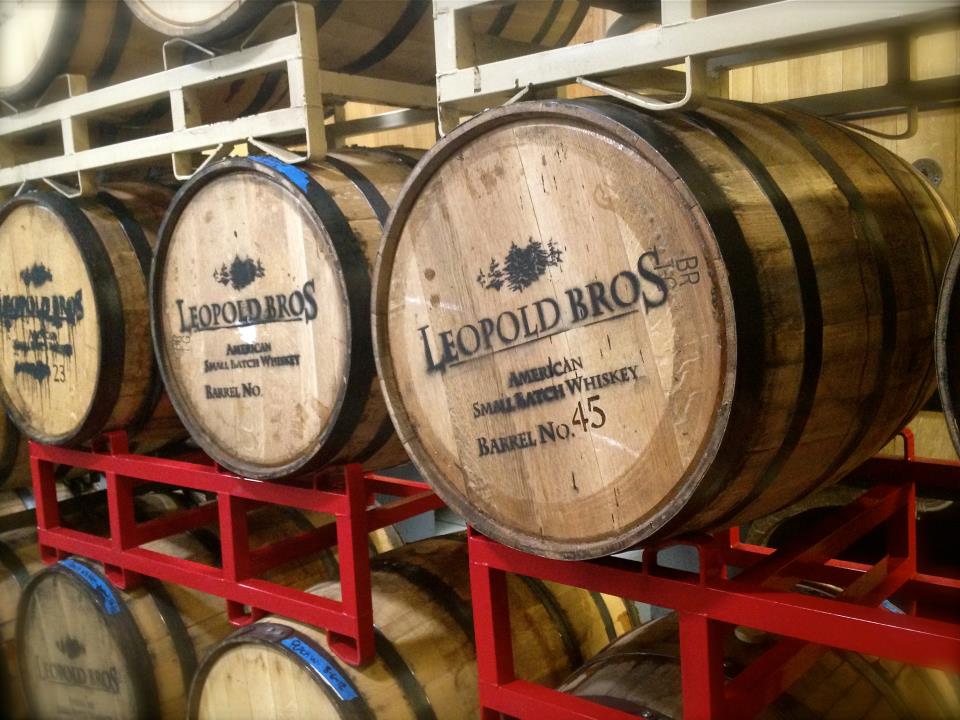
These small barrels are our new peach, apple and blackberry whiskey barrels I just filled last week from Leopold Bros Distillery in Denver-love those guys- fun stuff in there! These were filled on the 16th of June and we will taste at 1, 2, 3 months.
ETF- There is so much awesome that could come out of that…. can you share what you filled with and whats gonna come of those beers?
Lauren- I’m pretty excited about them. Never done anything like this! We will probably pull, keg and carb right before GABF. Here is the filling doc:
1 x apple whiskey- Dunkelweiss with clove- touch of sour oscar right before keg fill
3 x apple whiskey- Sour Oscar
6 x peach whiskey- BDM w/bretta brux, lemon peel right before keg fill
5 x peach whiskey- Prickly Pear w/lacto- some sour felix right before keg fill
1 x blackberry whiskey- 2 Ooh la la w/lacto- put some 1.5 Home Plate Stout– taste before sour or no.
1 x blackberry whiskey- Vrienden– crazy bretta foudre #15 (FO-15)- innoc right at filling
1 x blackberry whiskey- 2 Home Plate Stout- 1.5ohlala- taste and decide on sour or no sour
Photo Courtesy New Belgium
Right now my biggest thing is the acquisition of all these barrels. We are going to have 7,000 hectoliters of beer in oak by the end of this year. I want to make La Folie, I want to make it great and I want to make more of it. I would love it if you could walk into every proper beer bar inAmerica and they had La Folie. There’s something you said about the scarcity and mystic of La Folie, but there’s also something to be said about if someone is in a bar and wants a La Folie…there it is.
Make sure you follow Embrace The Funk on Twitter and Facebook.
When I started brewing I remember looking over all the yeasts at my local home brew shop and being amazed at the sheer number of types. As a young brewer I bought Wyeast more than any other yeast brand mostly because of the smack pack type packing. When I was starting out in home brewing I was concerned about every little thing so I can still remember the first time once of my packs swelled before I smacked it. Nervous my yeast was messed up somehow I contacted Wyeast and Dave Logsdon quickly put my fears to rest.
I’ve come along a bit in my brewing since then and Dave has since moved into another role. So it’s very cool for me to have gotten the chance to talk with Dave about his new adventure: Logsdon Organic Farmhouse Ales.
ETF- What was your sour or brett beer epiphany moment? Dave- It was around 1982 and a Lindemans Cuvee Rene if I recall. ETF- Was it a special event that made you want to try a sour beer or just something that was hanging out on the shelf? Dave- Well I think I had tasted beers that would qualify as a beer of that nature, but didn’t really take note of it as intently as when I tasted the Cuvee Rene. It was at a brew school inSeattleput on by Charles Finkel and one of his guest speakers was Roger Mussche, who was a Belgian specialist of fine beers. He was the person who helped Lindemans get into theUSmarket and helped them with their lambic beers they were producing inBelgium. So he brought the Cuvee Rene for a tasting during that event. That was an introduction of not only being able to taste the beer but to learn about they were made, what the process is and little more detail about the styles themselves.
ETF- You’ve worn a number of hats in the beer world: from home brewing to being Full Sail’s first brewer to founding Wyeast Labs and now Logsdon’s Farmhouse Ales. What are some nuggets you picked up at each of those points that has helped you with your current project? Dave- Obviously I’ve worked a lot with yeast at Wyeast since I was the founder of that company and developed it into what it is today before I left a few years ago. I sold my interest in Wyeast and moved on to look at the opportunity to open up a farmhouse brewery. Working with yeasts day in and day out my entire career led me to experiment a lot by doing pilot brewing at the facility there. I was also able to see first hand what we could reproduce or produce with yeast cultures I acquired all around the world.
The work at Full Sail was in the early 80’s where I was one of the co-founders, first brewer and designed the first beers we produced. That was valuable experience, however I don’t think I got much more from brewing at Full Sail other than the fact I knew I wanted to brew other styles of beers and I liked other styles than we were producing there. Experience overall was good, the laboratory experience was extremely valuable and I hadn’t done much creativity in the last 20 years as far as putting beers on the market (although at Wyeast I was a consultant to a lot of breweries around the country/world that I was able to lend my hand in designing beers and process to produce those beers). So all those things combined gave me the impetus to say “Let’s do this again, let’s do something a little bit different this time”… and I wanted to make the beers I like to drink.
ETF- If you are brewing the beer you like to drink, is Saison your favorite style? Dave- I like Saisons a lot. Brewing them is as fun as drinking them because they allow for a lot of interpretation on what you want to produce. The style guides are fairly broad and our beers we produce don’t really fit style guides that well. We do some things different because what I want to do is produce flavorful beers, that’s number 1 overall.
So…I like all varieties of beers for the most part, I prefer some much more than others, but having some nice choices gives what you are looking for in the moment.
Like our Kili Wit, it’s a nice 5.% (ABV) that’s a little higher alcohol than most Wit’s, but it’s a nice beer that ‘s very refreshing, thirst quenching, and enjoyable especially on a hot day.
With the Saisons we’re producing a couple different varieties now and some days I prefer one over the other, but I tend to enjoy the profile we brew them in. Now there are a lot of Saison soon the market that I don’t care for at all and that really amounts to the brewer’s interpretation they are making with the beers they are brewing. So you can think about what the beers are made of or what they consist of as being the important factor: the profile and drinkability…that’s what I’m looking. Saison is such a yeast forward beer, we use 4 different yeast strains in our primary fermentation which creates a lot of flavor and aroma complexity. We brew 100% organic beers and use one 100% organic whole cone hops so those things give us an element of difference that I think a lot of breweries miss that use pellets for example. There is a different flavor profile that comes from pellets, so whole hops in my opinion. These things combined with the overall techniques we use in brewing, the care we take in finishing the beer, we like to re-ferment in the bottle to give a nicer presentation that what you can get on draft, so all these things combined make this beer something that I enjoy drinking. There is more to it than just a style.
ETF- What are your thoughts on some of the newer beers hitting the market that are pushing towards new styles? 100% Brett beers, Dry American Hopped sours etc…
Dave- Well talking about interpretation of styles, for example the 100% Brettanomyces beers. There’s a lot of innovation brewers are doing these days with different cultures that are making new styles, creating new beers that haven’t been brewed before. When I look at some of the Brett beers that are 100% Brett fermented, I’m not a big fan of them. I haven’t found one I would order twice. The profile is kind of narrow, maybe there are some others out there that are different, but I haven’t been able to find something in that category that says “This is an exceptional beer”. I’m sure there are ways to do that (fermentation) though. Historically Brettanomyces was found in breweries by accident and they didn’t want it there, but it was a big profile in Lambic beers. So it was realized over time (I think in the 40’s it was isolated then identified) that this is a yeast culture that produces these particular characteristics . If you read any of the literature on Brettanomyces they are very strong and very powerful characteristics that come from these yeasts, so a 100% fermentation really skews the profile a lot in my opinion. It makes it difficult for everything to come together and work well.
I’m a fan of beers that work well together and have a nice balance of flavor characteristics. The Lambics are one of them where you can taste and smell the Brett layers in the beer. Orval is a nice example… a beer fermented with saachromyces and refermented in the bottle with Brett that gives a very distinct character.
The other thing with Brettanomyces yeast is there’s been about 7 species that have been isolated and identified with I think 4 being used in brewing. So of those the anomalus is used quite often for 100% fermentation of beers. That has a certain flavor characteristic and profile, just like Brettanomyces Brux has a distinct flavor and Clausenni has a little bit milder, but nice pleasant flavor profile. Even the ones we use in our brewery have different flavor characteristics than other Brettanomyces yeast that we had isolated and used at Wyeast.
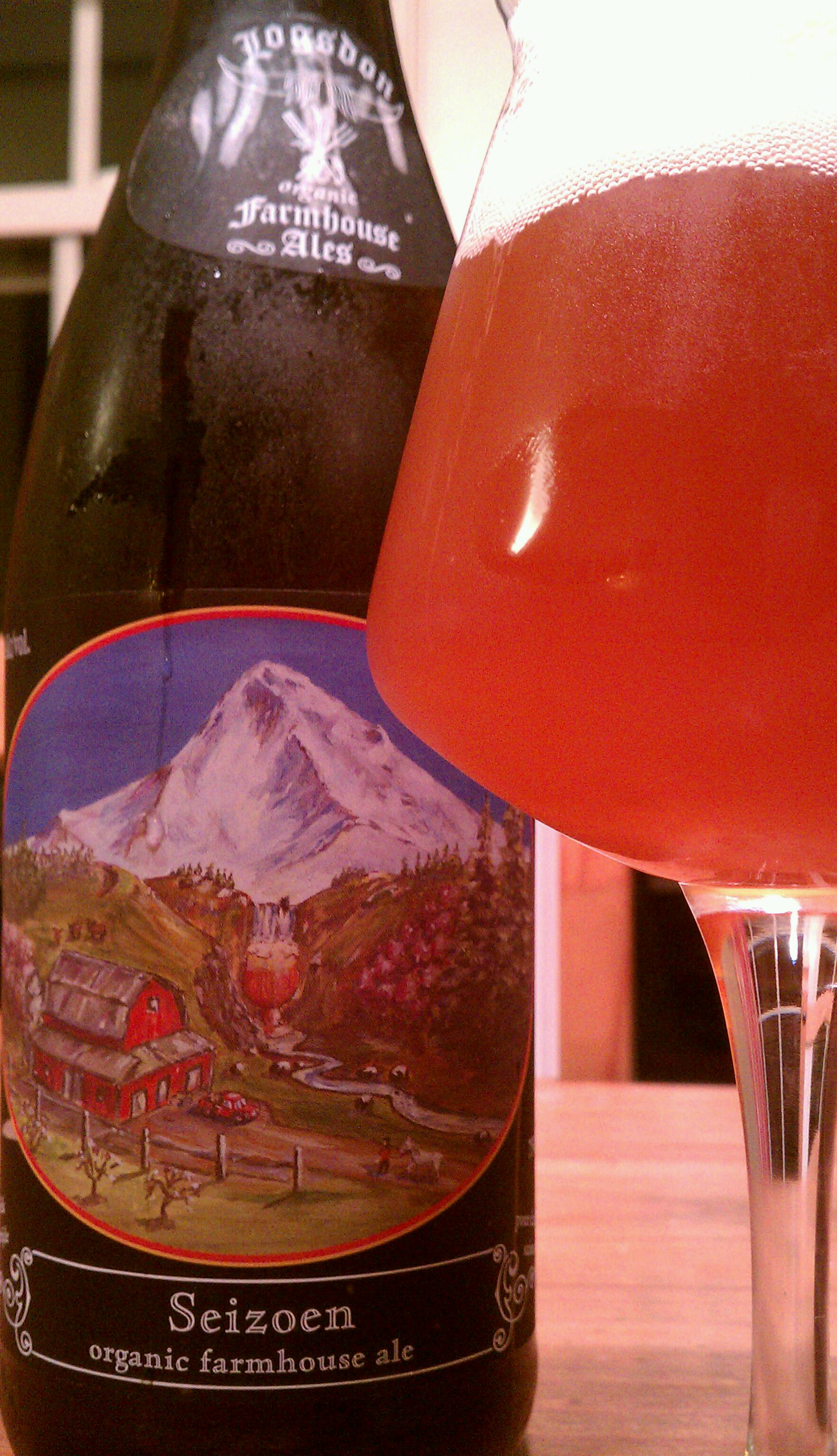
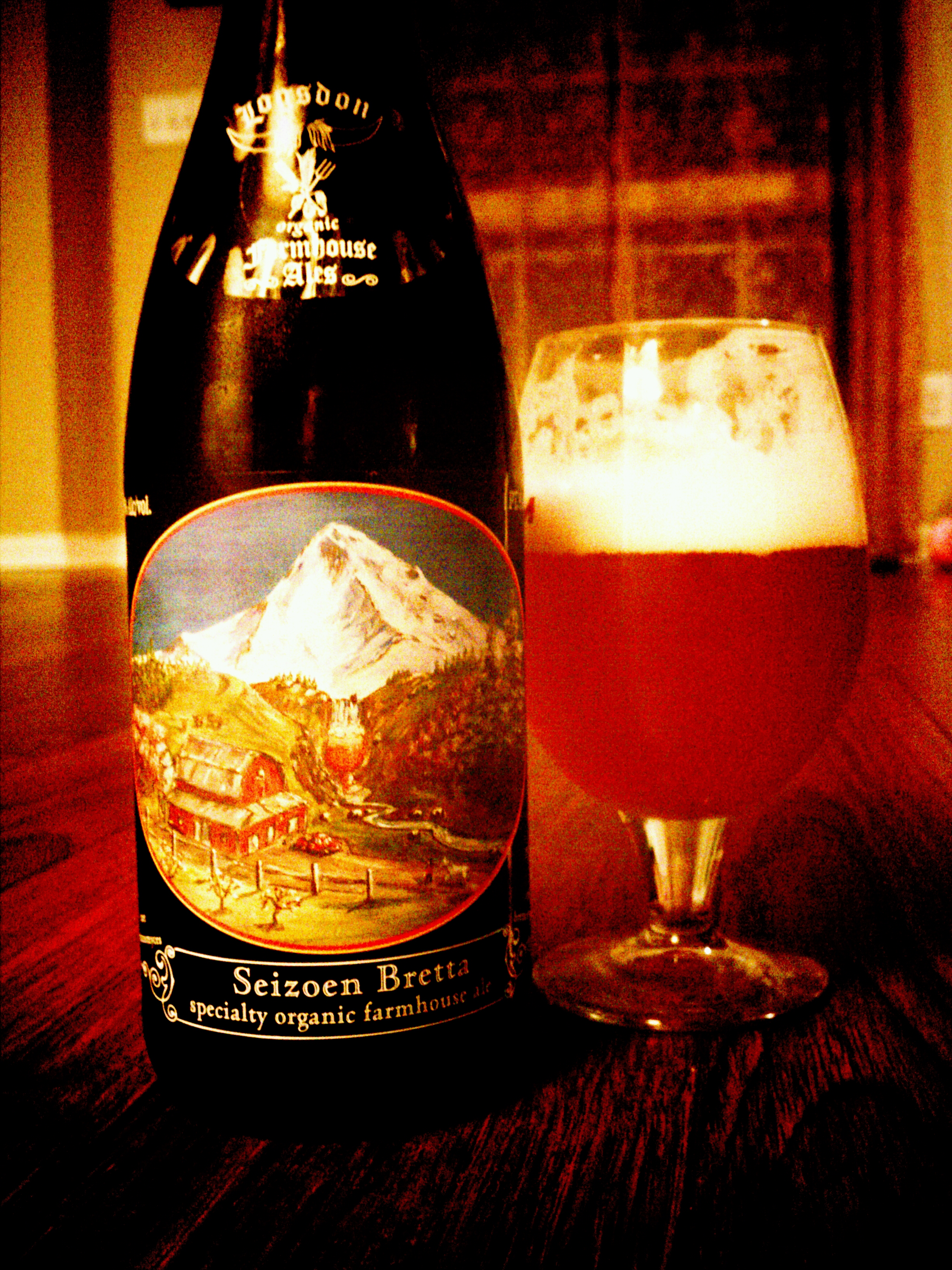
It’s all about what you are working with and how it’s built into the profile of the beer. We add a specific Brettanomyces strain to our Seizoen Bretta that’s unique in a number of ways. First being it’s flavor, it’s a very fast yeast as far as fermentation time and flavor development…I like the character we are getting from that. We’ve looked at and used some other Bretts in the lab I have here at the brewery that we just ok. They either weren’t as flavorful or didn’t provide the fermentation profile with the 4 sacchromyces strains that are in that beer.
ETF- I think that’s interesting you have 4 different strains of sacchromyces in that beer. Are they being pitched as one blend or do you propagate up all 4 strains separately then pitch? Dave- We grow up and pitch 4 separate yeasts at the same time, the beginning of primary fermentation. ETF- Are they all Saison yeasts? Dave- No there are a variety of yeasts….A Saison strain and Belgian strains.
ETF- So in the Bretta you are using a single strain of Brettanomyces right? Dave- Yes, in the Seizoen Bretta we are using just one. We have another strain (Brettanomyces) we are using in our Far West Vlaming which is a new beer that we just got into the bottle. It’s a Flemish Style Red Ale that does use Brettanomyces and Lactobacillous as well as sacchromyces. So we are using 4 different yeasts and bacteria in that beer too. It’s got a different profile than the other Brettanomyces that we use (in the Bretta).
ETF- Can you gives us an idea of what strains you are using? Are they commercially available to brewers? Dave- These are yeasts that I’ve banked myself since I left Wyeast. These aren’t anything that I know of that are on the market. ETF- Most brewers hear not on the market and immediately want that strain…Any chance you might let some lab release those strains? Dave- I’m not in the yeast business anymore Haha. I doubt that will happen.
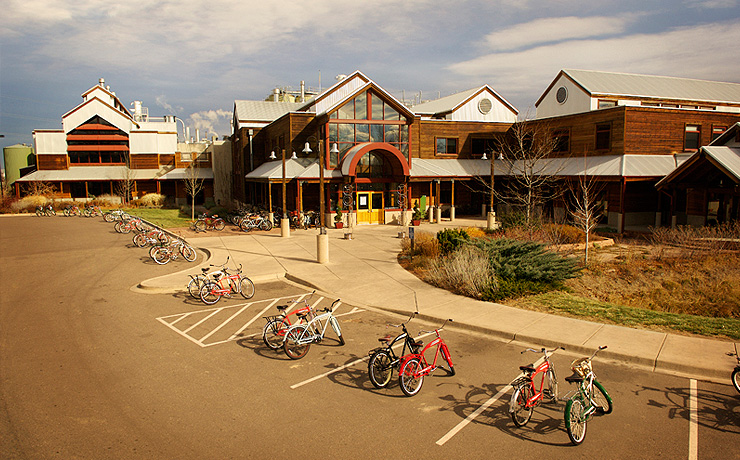
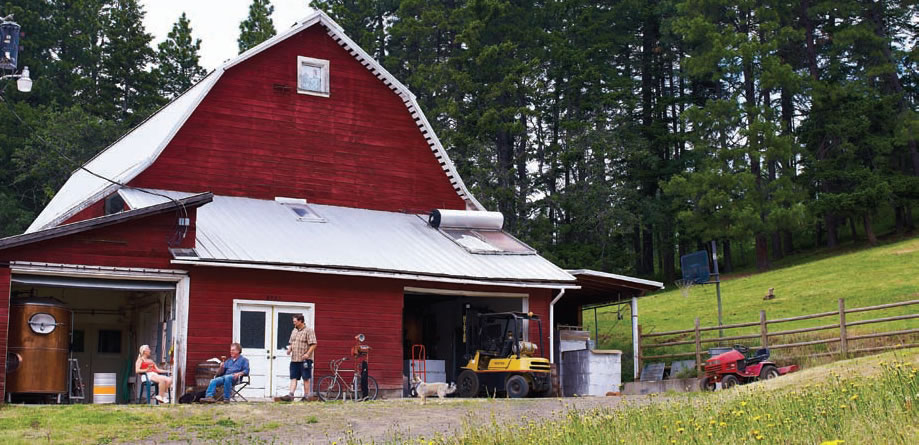
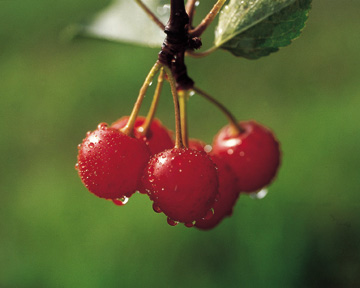
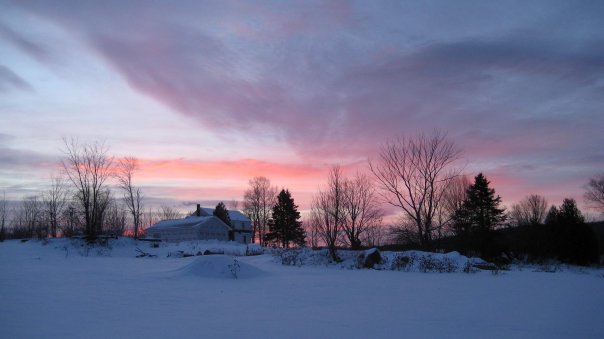
ETF- Looking at the pictures of the brewery you have a very neat looking “Farmhouse” and a lot of gorgeous land. Tell us a little about the history of the building and land. Dave- The brewery itself is situated in a barn that was built in the 1940’s. I’ve owned this property for about 20 years where I’ve raised Scottish Highland Cattle, a few ponies for my daughters, and a few fruit tress on it. I’ve expanded that with Schaerbeekse cherry trees I imported from Belgium that are currently in USDA quarantine on my nursery. I’ve got about 100 trees planted for expanding that this first year and then expanding that out into about 10 acres of cherries is the goal.
The farm itself was the homestead property here in the valley, I think about in 1905. It’s been and orchard, dairy land, pig farm and before I purchased it a marijuana grow in the barn. When we got it that was cleaned out and I built the laboratory for Wyeast which was in the barn until it was moved in 2001 to a new facility and since then I’ve been hammering out a little brewery here.
ETF- What’s the status on the cherry tree quarantine? Dave- Well they are in the ground now, but I’m not allowed to spread them past the quarantine area for a period of 2 years. The USDA will have to give approval for that. ETF- What sort of time frame are you looking at to get usable fruit? Dave- 3 years is typical for fruit trees to mature in order to get a small crop.
ETF- So you guys are Certified Organic, tell me about the choice to go that route with the brewery. Dave- That’s a good question…I talked about that with my partners I put this together with and the organic ingredients we made the test batches with made nice beers. Plus I really didn’t see a reason not to produce organic beers. Well then the question becomes do you do 100% (of the beers) or just some of them? We decided to go with 100% of the beers as organic. My farm is organic and growing fruit trees on it just seemed reasonable that we would use all organic ingredients. We are able to get most of those fairly local. We contract directly with hop farmers that are not too far away. The malted barley we use comes out of the northwest and we are currently working with another farm not far from here to get some of our own barley planted/malted in the region. So there’s opportunities to do that. As far as sustainability long term it seemed like the most practical way to go. Not only did I think our beers wouldn’t be sacrificed by using organic ingredients, it would be a benefit overall as far as flavor goes.
ETF-Any concerns getting some of those organic ingredients? I maybe wrong in presuming this, but wouldn’t there be a concern since there is less quantity of organic ingredients available? Dave- Well there are concerns. Malt is fairly plentiful, I’m not too concerned although we are limited a little on just what we can get and use. We are small so we don’t command a lot of those resources from the market, but we have to stay on top of it and contract out on our hops several years ahead. We want to have a source and availability on the hops we want to use because we are particular on what we use. It’s good to have that relationship with the farmers who produce those for us.
We don’t beat the drum we’re making organic beer, but if you look at the bottle it has the USDA/Oregon certifications on the label. Some people will look at an organic label and say “Uggh it’s organic, must not be that good” while others might say “Ohhh it’s organic, it must be better.”
Out here in the northwest you see a lot more organic products and more organic beer being made. Two things happened recently, for one the USDA set some pretty strident guidelines. If you are going to claim to be organic you need to be certified. It made it more difficult than just saying “I’m organic because I’m going to make a batch of beer with organic malt”. Brewpubs get away with it on their menus, which is illegal, and it takes away from our availability for ingredients particularly the hops.
There is a new ruling that takes place in 2013 that says 100% of your hops have to be organic, compared to the past when you couldn’t get them (organic hops) you could get by without having to use organic hops. That might actually make availability better for us because people may say “Well I’m not certified, so why should I go do it?”
I don’t know how this is going to play out because the farmers still need a demand for their product to justify growing them. You could say it’s a benefit as well as a burden.
ETF- You’ve been open for about a year…when was the first beer released? Dave- We released the first one during Portland’s Cheers To Belgian Beers in April 2011 where we won the People’s Choice for best beer. We also entered our beers again in that festival this year where we won again. So back to back years we knocked off 40 something breweries.
ETF- So out of the gate the brewery seems to be doing very well with the people. Pretty good validation for what you are trying to do right? Dave- Absolutely. We do a lot of work in what we do and like I said earlier I brew the beers I like to drink and we are just happy others enjoy drinking them too. Also having good feedback on the beers, we do a lot of tastings where we get the beer in front of people for sampling. Being a new brewery it’s nice to get positive responses and having these awards come about it is validation… but it makes us realize we have to continue doing what we are doing. That’s part of the challenge now is when you come out of the gate in good fashion, you need to keep doing it day in and day out.
ETF- When you are out doing these tastings what are you hearing and what are some misconceptions that come up about these beer styles? Dave- Good question because obviously Brett lends some sourness to the beer and the first 2 beers we came out with were the Seizoen and Seizoen Bretta. During the tastings they could taste both of those beers Some were tasting Brett beer for the first time. We aren’t talking about beer geeks here, these are grocery store tastings and places like that. So we would hear “Well that’s a nice beer, but hmm that’s interesting too”. What we found that almost every time half would prefer the Seizoen and half would prefer the Bretta. They didn’t really know what was different, and the beers are formulated a little different, but with the Seizoen it’s very malt forward with a nice hop balance…whereas with the Bretta the malt drops out, it’s much drier, it’s fruitier because of the Brett fermentation, the hops diminish as well in the process so they are quite contrasting beers. So a lot of people who are not really beer geeks and never tasted a beer like that didn’t really know what it was… they found they liked it over the other one. That’s a pleasant surprise. Exposing people to a sour beer or something unique is fun and is a nice part of this whole thing.
ETF- So as more people discover your beers and these ‘new to them styles’ they will want to buy them…What’s your plans short/long term to keep up with demand? Will you expand the brewery? Dave- Yes to some extent. We are currently limited with our licensing to even put a brewery on a farm at 3,000 barrels a year. We are looking to hit about 1,000 barrels this year. Over the next 3 years we are projecting to push right around the 3,000 barrel mark. So we should be able to get our beers spread around.
ETF- You do have a barrel aged beer program going on right? Dave- We do. The Far West Vlaming is in oak, the Cerasus which is the Far West base, the Peche n Brett which is our peach beer has oak aging on it also and we just put some of the Bretta in oak a couple of months ago just to see what we would get. But the goal long term is to increase the barrel fermentation substantially.
We have a few things going and even more planned like our Lambic program which will start this fall. I’ve got a Lambic barrel I’ve been playing with for about 12 years and I like what we’ve been able to produce out of that on a pilot basis. It’s a matter of getting the cool ship going up in the loft and getting more beer in the wood.
ETF- So when you start the program this fall is it going to be cool ship build first or start out with the beers wild fermenting in barrels? Dave- We are going to install a cool ship if we are brewing Lambics. I’d like to do things traditionally. If we can get it installed this fall I’d like to do a little more experimenting in the winter months.
ETF- Since the Lambic brewers are traditionally limited on when their brewing season falls, do you have any idea of how many months you would be able to use the cool ship? Dave- Our temperature and climate is not that much different thanBrussels, so I would expect it to be pretty similar to what they’ve traditionally done in that part of the world.
ETF- Do you think your new cherry trees and the expected expansion of that project will have any bearing on the microbes in the air? Dave- In Hood River Valley we are one of the most dense orchard growing regions in the world. So we have a pretty substantial flora in the area that is somewhat affected by the fruit orchards. I think our fruit orchard may have a little bit of an impact on that, but the orchard is downwind from the brewery so I don’t know really haha.
ETF- On your recent trip to Europe did you explore some cool ship designs or do you already have the plan in mind? Dave- Not on this past trip. I’ve explored Belgium pretty extensively and looked over a lot of cool ship designs/processes first hand at breweries like Cantillon and Lindemans. I’ve got a pretty good idea in my head of what I’m looking for. ETF- Stainless? Dave- Yep
ETF- If a home brewer said “Dave I want to brew a sour beer, what advice can you give me to get this beer right and not infect my brewery?” Dave- I’ve worked in yeast and bacteria cultures mixed in same processes my entire career at Wyeast Laboratories and never encountered any problems with that, so it’s all about technique. I can say at the same time I’ve seen breweries that could brew hoppy ales and try to produce weiss beers or lagers that have low IBUs get lactic acid problems because they didn’t have a good cleaning regiment. So if you have a good cleaning technique in place you should be able to rest easy. But if you don’t know that or have concerns then a separate set of soft equipment might make it a bit easier. Even if you are trying to produce sour beers and you don’t have a good cleaning program for your surfaces or contact points there might be other things growing in there that you might not want. You gotta do a good job no matter how you do it. Just having a separate set of equipment isn’t going to save your ass… it may save your Pilsner or IPA from Brettanomyces, but it won’t preclude your sours from getting things in there you might not want. You need a good cleaning program either way, there is no substitute.
ETF-What would you tell that person about recipe formulation? Dave- One of the first things I find important no matter what you are brewing is balance in the beer. Not one thing being overwhelming of anything else. When making a sour beer you have the potential to get very sour…undrinkably sour even though people pay big money for a really sour beer sometimes. I can’t choke them back. What I try to do is build enough malt balance in a sour beer to create some residual malt sweetness that compliments and balances the acidity. That’s a big part of building a beer and it starts in the mash tun, which is very important for any beer you are making. Remember that the hopping generally has to be low as it tends to conflict with flavors. You can use some hops some of the Lambic breweries will use aged hops. Getting that upfront design in place is critically important to what kind of results you get.
The next thing is don’t look to brew a Flemish Red or Geuze then 6-9 months later expect to have nailed it. Even professional brewers don’t think that especially when you are going into the wood, many of these beers are young beers and old beers blended. So if you are getting into making sour beers you are looking at a 5 year project, brewing a number of batches possibly tweaking along the way. Then you will have a blending opportunity. Anticipating blending will be what you need in order to get the beers how you want them.
So design, execution and being able to step up to the challenge of blending these beers together to make an exceptional beer.
ETF-What advice do you have for those on a homebrew level wanting to emulate an open air wild fermentation? Dave- If you look at the studies as to what goes on in a cool ship there is not a very large inoculant that occurs in a cool ship. It’s more of a factor as to what builds up in the horny tanks, which is what a cool ship empties to before going to the fermenter. These tanks are typically cleaned about once a year so they have a much larger population of microbes that have come from the air and accumulated. So getting a big enough population to create a decent fermentation profile is something that just doesn’t happen overnight in a cool ship. If you are going to ferment in oak or with oak staves there is typically a big population in there that has accumulated over time. This is something that evolves over time and is not something you are going to fire up 1 time, set it out there, pick the bugs and have a nice fermentation going on. You have to accumulate those cultures and wherever you pull them out of the air is going to have a signature on the beer that is made.
Make sure you follow Embrace The Funk on Twitter and Facebook.
If you’ve been around beer for more than 5 seconds you are familiar with the scales for measuring hop bitterness units. The most common one in the USA being IBUs. With many new hops that have big citrus characteristics coming on the market pairing them or subbing with larger amounts of fruit brewers are creating bigger brighter flavors/aromas. The first time I heard about citrus being referred to as “measured” was when Chad Yakobson mentioned them during this interview in January. After that I was curious about this measurement and wanted to track this unit to the source. Shaun Hill at Hill Farmstead has been doing some great work with these International Citrus Units (ICUs) and offered up a few pieces of advice on ICUs.
Courtesy: Bob Montgomery Images
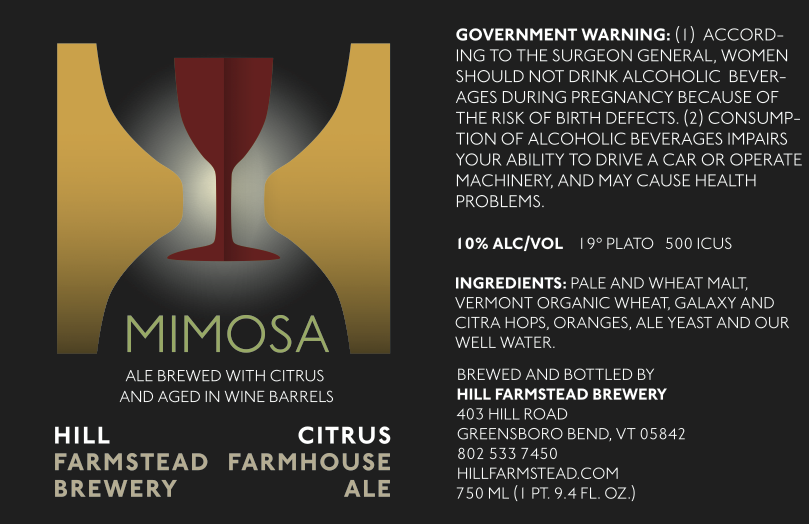
ETF-How did you come up with the idea to create a scale like this? Where did your research begin? Shaun=) No research really. It began when Dan and I brewed a beer called Mimosa. We wanted a highly citric beer complimented by fruity character of primary fermentation with Brettanomyces Claussenii. As I began looking at the amount of zest we were adding… I started thinking about hopping additions and the IBU scale. If an IBU was 1 mg of Alpha Acid in 1 liter of solution… then 1 gram of Citrus zest in 1 liter of solution would be the same as 1,000 mg/L or 1,000 ICUs. Super easy math… Then, when Mikkel was here and we were brewing Daybreak together, we began to fully embrace the thought of working with International Citrus Units.
ETF-How does the calculation change with the fruit used? Shaun-This is yet to be determined. I reckon that some Citrus fruit has a higher oilcontent in the zest than others – which would have a much larger ICU contribution. Someday perhaps I’ll be able to create a scale that takes into account the oil content of the rind (similar to Alpha Acid %) as well as Utilization…
ETF-What ph considerations are there when trying to calculate ICUs for a recipe? Shaun-Very little to none. Especially in a pale beer. The zest seems to contribute nearly no acidity… whereas we have found that if you dump the raw juice into a fermenter, you will often see as much as a .1 reduction in the pH (1.5 liters of Citrus juice into a 500 liter batch…).
ETF-What fruits are good for use when calculating ICUs? What about some of the odd fruits? Shaun-Any Citrus Fruit… an ICU is a citrus unit. It has to be part of the Citrus family. http://en.wikipedia.org/wiki/Citrus There are dozens of citrus fruits that we would love to work with…
ETF-Any sort of lab tests have you created or run for this calculation? Shaun-Absolutely 0!
This Image Courtesy Shaun Hill and Nobody Else
ETF-Can you give a couple of examples on what the ICU levels are in Hill Farmstead Beers? Shaun- Mimosa: 500 ICUs. Daybreak: 800+ ICUS (although… in such a dark and robust beer, it truly required much, much more). Last weekend’s collaboration with Dieu Du Ciel: 350 ICUS.
Thanks to Shaun for giving us some great information to learn from and apply to our brew sessions. Since using citrus in beers has been done for many years I think the idea of a scale like this will prove very helpful to brewers trying to refine their recipes and nail down consistency. What does everyone else think about ICU’s and working towards a scale?
Make sure you follow Embrace The Funk on Twitter and Facebook.
So I’m reading over the finished Q&A thinking about how to intro this interview and the song Doowutchyalike by Digital Underground keeps popping into my head. While it might be a stretch, Shaun Hill of Hill Farmstead is doing what he likes, having fun and batting pretty close to 1000 while he’s at it. Hill Farmstead is doing what I think is the perfect brewing dream: brewing phenomenal beer in a farmhouse setting… the way he wants to on family land that looks like something out of a painting. In between making the beer that sees a lot of “ISO” on many websites Shaun sat down for a Q&A with me….
ETF- What beer was your sour or brett beer epiphany? Shaun- 2004: Both visiting Brasserie Cantillon as well as drinking a Rodenbach Grand Cru… incredible moment.
ETF- As I look over the some of the ingredients in Hill Farmstead beers they include some local flavor like your well water. How important is using local Agriculture products to you? Shaun- The existence of the Hill family in Greensboro is entirely dependent upon agriculture. My roots are entirely agrarian. Locality, when possible, is as much about developing terroir as it is supporting the local community. They are coupled. For us, it is about connection. Hill Farmstead is built upon a connection to its landscape – and it only makes sense, rationally, that we would extend that connection to our producers. Honey, Raw Wheat, Water, Oak, Our Microflora. Someday we hope to extend this connection to our hop growers and our malt suppliers.
ETF- You guys are getting close to a 2 year anniversary, did you think 2 years ago Hill Farmstead beers would be as sought after as they are today? Shaun- Ha. Sigh. Absolutely not. When I look back to myself, three years ago, constructing a business plan while sitting in a coffee shop or bar in Denmark, I absolutely never believed that our brewery would surge in popularity and acclaim as quickly as it has. I was courting Mikkel and other Danish brewers as potential “contractors” in case we were unable to fill our tanks. Today, this notion is a stressful thought and an absurdity – as we struggle on a daily basis with allocations and demand. My goal has always been to produce uncompromising beer – truly. If a beer doesn’t meet standards, it goes down the drain. There is absolutely no other method of entering the craft, as far as I am concerned…. be the best…. or don’t bother.
ETF- Looking back over the almost two years since you’ve been open, is there one event you are most proud of? Shaun- Several epochs, really. First brew day. Tasting the first batch of Edward on tap at Three Penny Taproom. Our Grand Opening Celebration at the end of May 2010. Our first beer event at Monk’s Cafe in Philadelphia.
ETF- What do you consider HF’s most ambitious brew to date and why? Shaun- Most ambitious? All of our beers are ambitious and well thought out… but our most ambitious effort, overall, is the expansion of our barrel aging program. We are now beyond 100 bourbon and wine barrels… which, for a brewery that is 95% draft beer and produces just 1,500 barrels per year… is a significant undertaking.
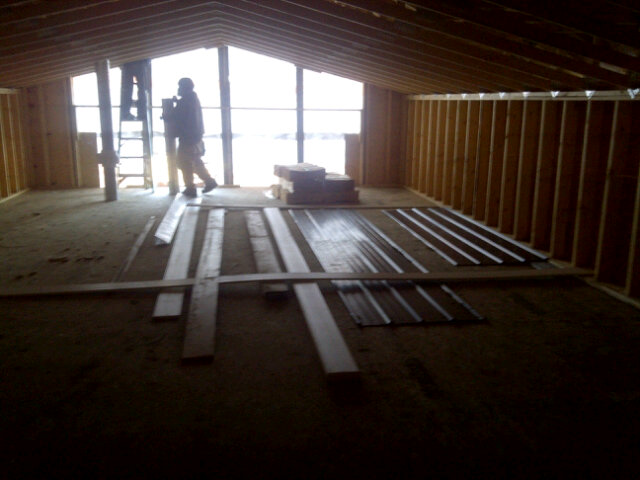
Coolship build in progress December 2011
ETF- What’s the status on the coolship install and batches for it? Shaun- Coolship install has been delayed due to planning our next phase of expansion. To date, 3 batches of beer have been inoculated in our cool ship – and all are showing significant promise.
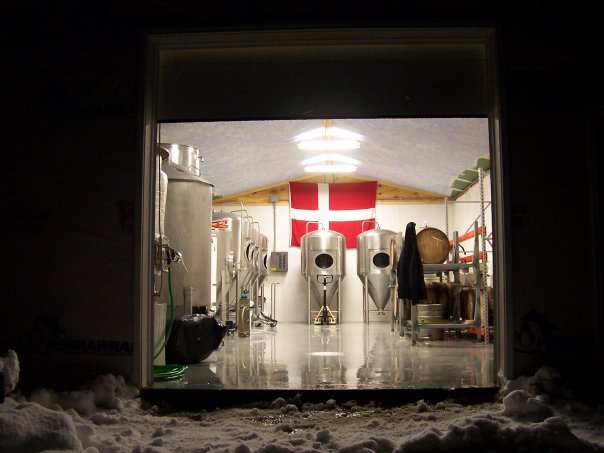
ETF- What are the plans to expand the brewery, batch sizes … beer output? Shaun- In just two years, we have doubled in size… almost tripled. We have installed a 15bbl brewhouse and have expanded our oak aging program. The next and final phase is a 4,000 foot expansion that would allow us to expand our production to 3,000 barrels of beer, primarily draft, while taking our oak aging/wild fermentation project to 200 barrels a year. The end.
ETF- Speaking on just sour and brett beers, what’s your newest beer that’s maybe just hit the fermenter or you are prepping for?
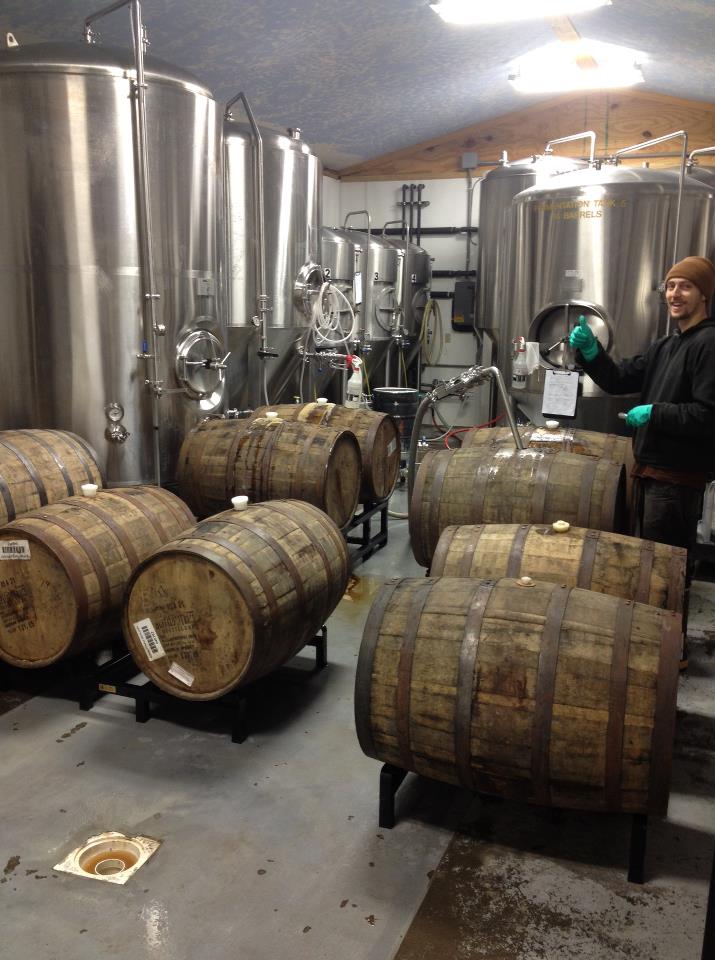
Barrels Inside The Hill Farmstead Brewery
Shaun- We will bottle another round of Flora within the coming weeks. Civil Disobedience #4 was bottled on Friday – ’tis a black saison blend of 5 different beers from 4 different barrels. This week we will brew a maple/wheat/coffee imperial stout that will be aged in very select Port and Bourbon barrels.
ETF- You’ve done some really cool collaborations, are there any upcoming ones you can tell us about? Shaun- Nothing at the moment. Hoping to escape to Alaska to brew with Gabe at Anchorage by the end of the year. Likewise, a return to Cigar City. Possibly Dieu Du Ciel to brew a Double IPA in Early May… I would love to work with Tomme Arthur or Ron Jeffries in the coming year. The Shelton/12% beer festival will bring a host of EU brewers to New England and, thus, the potential for a Scandinavian reunion with Anders Kissmeyer. ETF- What sour/wild brewery would you most like to collaborate with? Shaun- 4 way tie: Jolly Pumpkin/Lost Abbey/Cantillon/Drie Fonteinen
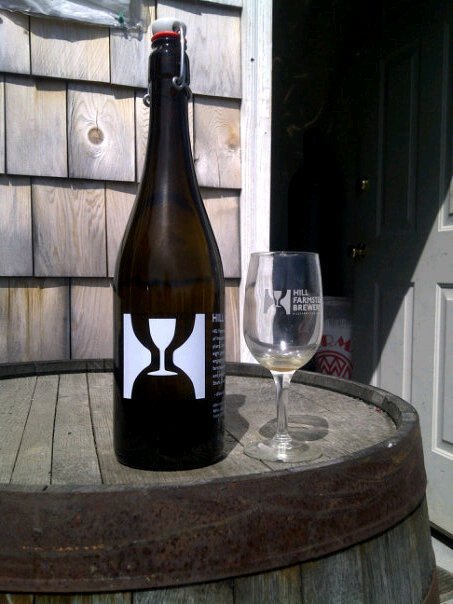
ETF- Your brewery logo is very simple, but effective… when people see it they know. So who came up with the design and what’s the insight on the significance of the art in the logo? Shaun- The logo is loosely based upon a sign that once hung in my great great great grandfather’s tavern in the early 1800s. While in Denmark, I became fond of Søren Varming – the designer for Nørrebro Bryghus. He agreed to work with me on my logo/design concept.
ETF- What are your thoughts when you see bottles of your beer on eBay going for 2-3 times as much as the brewery sells them for? Shaun- Horrid disgust.
ETF- For homebrewers, what 2 pieces of advice would you give them to produce wonderful wild beers like HF has? Shaun- Water. Patience.
My goal has always been to produce uncompromising beer
Make sure you follow Embrace The Funk on Twitter and Facebook.







 Embrace The Funk