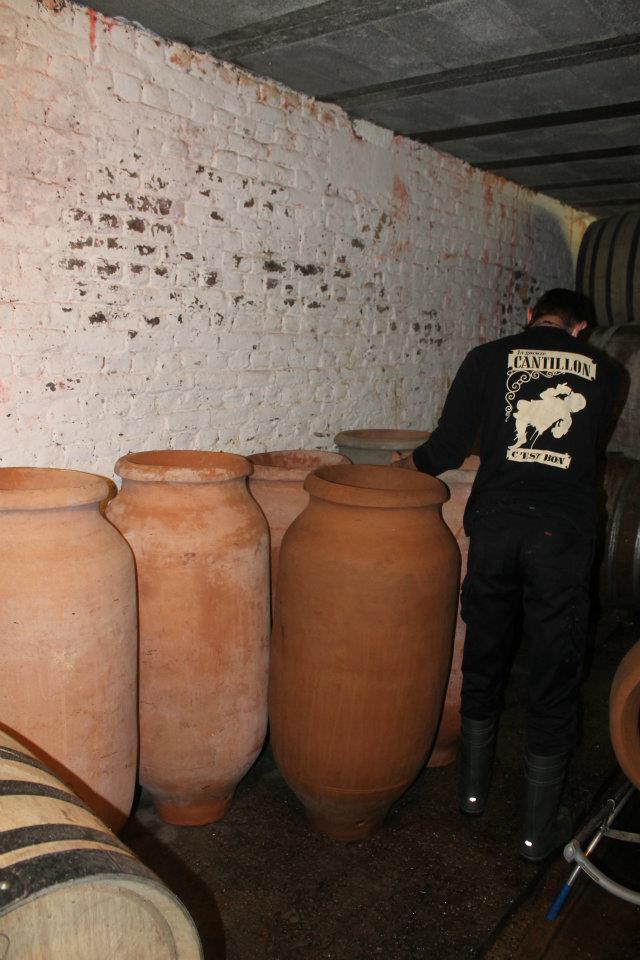
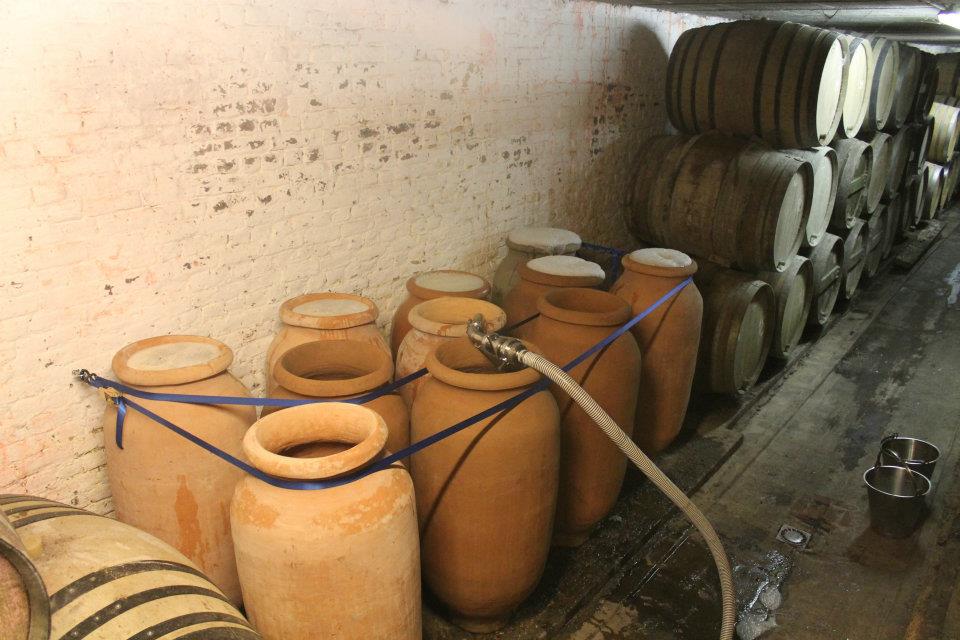
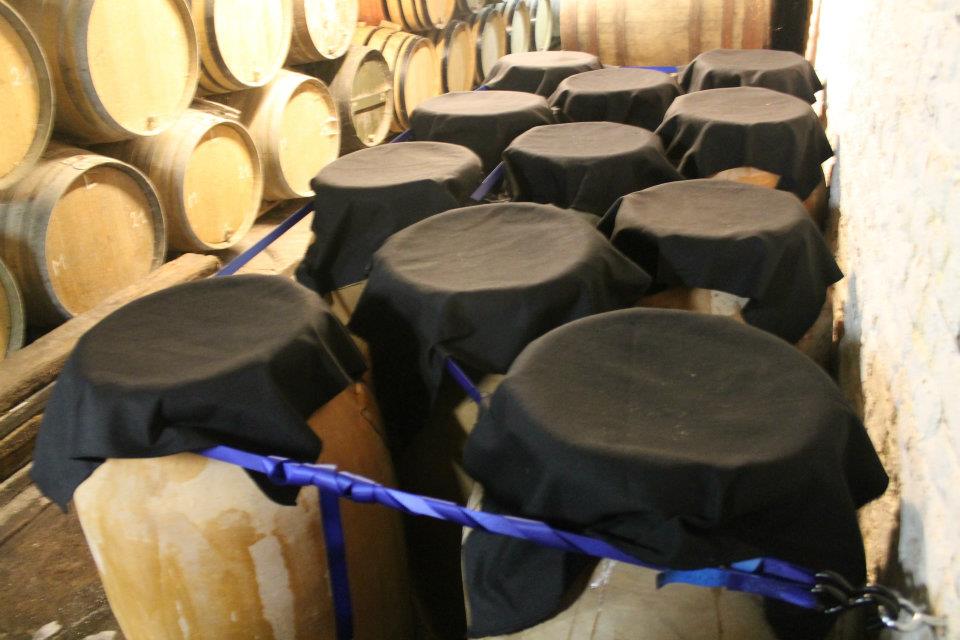
It’s not very often that we see old meeting older to create something new. Today was one of those days when Jean Van Roy of Cantillon let the world know about a unique batch of Lambic he is fermenting. In the official message below he tells us why it’s unique and how the idea came about, but basically they have put traditional Lambic into ancient style vessels (circa 4800BC) called AMPHORAS. 12 of them to be exact. These vessels are used by some winemakers who prefer a more natural fermentation very similar to how Lambic is fermented.
Even though the wort has just hit the Amphoras, Jean did have a few minutes to answer questions for me. You can read my brief interview after his official message.
Back to the future
As you may know, Lambic and wooden barrels have been inseparable partners for centuries.
Until recently I would have never even imagined myself putting my beer into anything besides a barrel, and yet…And yet, a blind wine tasting session completely changed my vision of things.On that occasion I tasted something which truly caused me to lose my composure.Its exceptional fragrance and finish, unbelievable complexity bringing together fruitiness, freshness and minerality made it incomparable with a “traditional” wine. There was clearly something different at work here, but what?
Thankfully, Gabrio Bini, an Italian winemaker, was present at the restaurant organising the event and I soon understood that he would be able to answer my numerous questions.Gabrio’s wines are produced in Sicily and matured in, wait for it, amphoras! He spoke to me about his amphoras with such passion and enthusiasm that I very quickly started imagining putting my Lambic into this type of container.After all, what could make better sense than putting a centuries-old beer like Lambic in a container which has been around since antiquity!
The winemakers currently experimenting with amphoras are all producers of natural wines (organic or biodynamic techniques) fermented without the use of additional yeast. By the way, this is another element such wines have in common with traditional Lambic.In any case, the approach here involves optimally oxygenating the liquid and subjecting it to lower temperatures to favour slower fermentation.
I’m happy to say that the entire team at Cantillon is very impatient about getting started with this new project.In fact, besides just being curious about the results we’ll obtain with this kind of maturing approach, letting Lambic age in amphoras makes us feel a bit as if we were travelling far back in time.
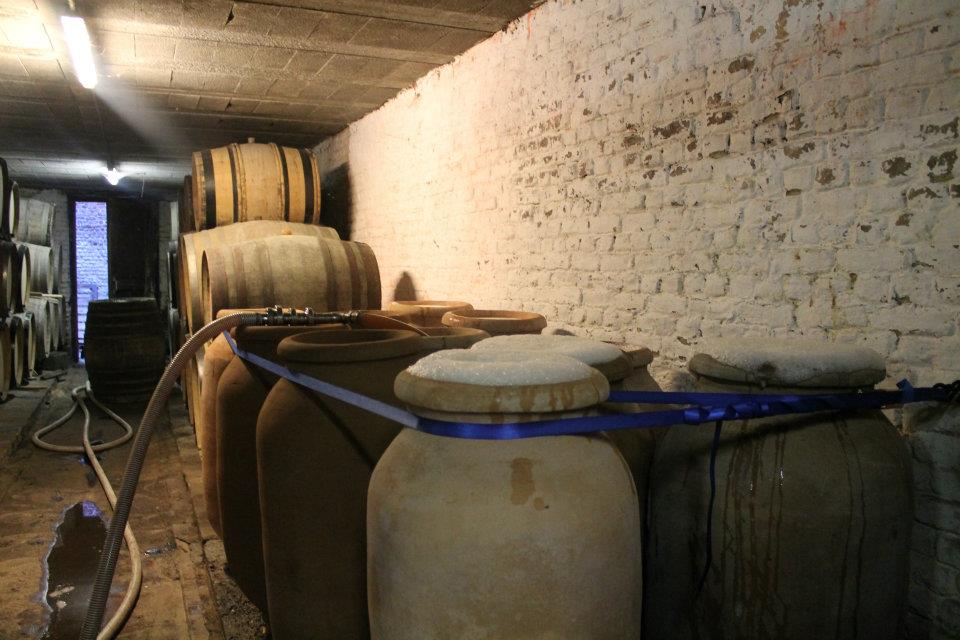
Some time ago, 12 amphoras of 200 litres each arrived at the brewery.After soaking them in water to make them less porous, they were filled with the Lambic produced during the 19th brewing session of season O (which took place on 26 January 2012).
Rest assured that we’ll keep you updated on how the fermentation process develops and, assuming things go well, start making plans for a tasting session this fall.
ETF- This project is barely underway, but any idea if this will be bottled or draught?
Jean Van Roy- It will depend on the result of the final product. It is an experiment and I have absolutely no idea of what it will give us. The goal is to follow the fermentation day by day. Information regarding the progress and fermentation will be available on our (Official) Facebook page. (A tentative tasting this fall)
ETF- Do the Amphoras have lids or will they remain uncovered during active fermentation?
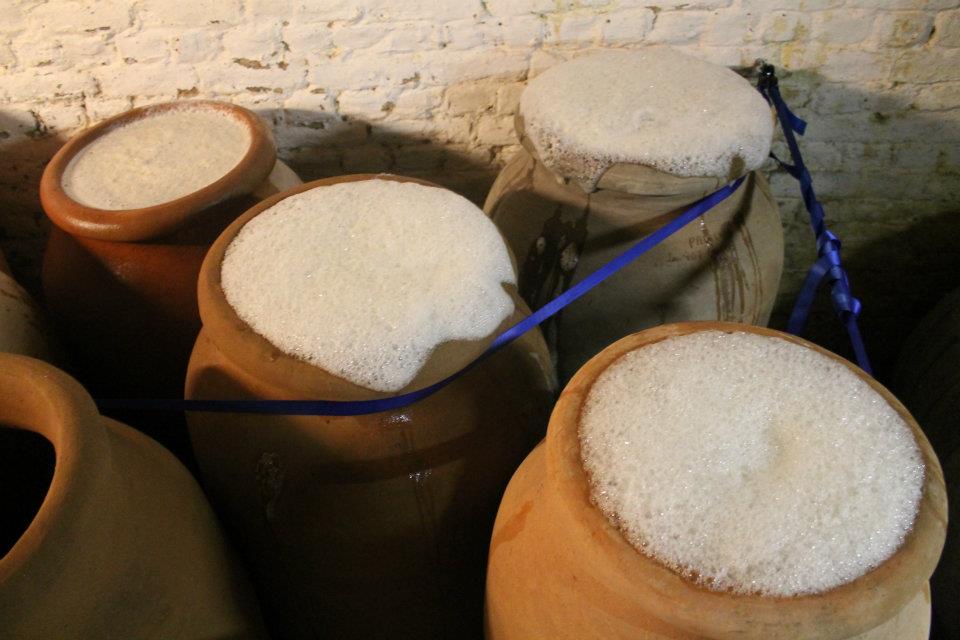
Jean Van Roy- They will have a thick cloth covering actually. Then later corked after the first fermentation.
ETF- Are these Amphoras new or previously winery used?
Jean Van Roy- They were purchased new. Coming from South of Spain.
If the idea of moving Lambic forward by going back wasn’t cool enough already, remember Jean wants everyone to follow this experiment with him via their Facebook page. I’m really looking forward to seeing more pictures and learning along side one of the greats how this Lambic fermentation might differ. When great artists such as Jean share information as he is planning to do, then we all win. Now I’m off to the garden shop to buy a big pot to do my own experiment!
UPDATED PICTURES FROM JEAN
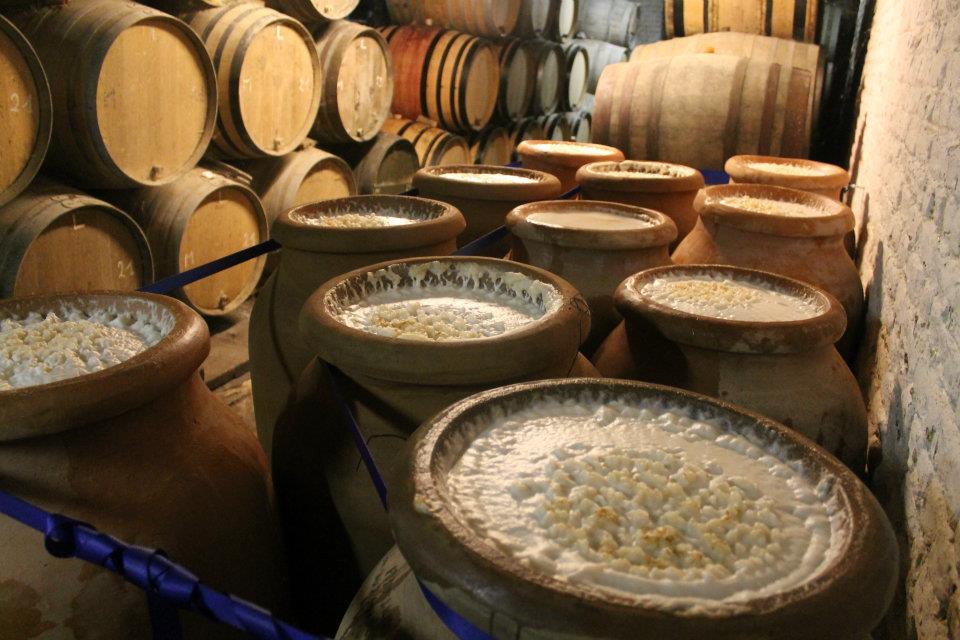
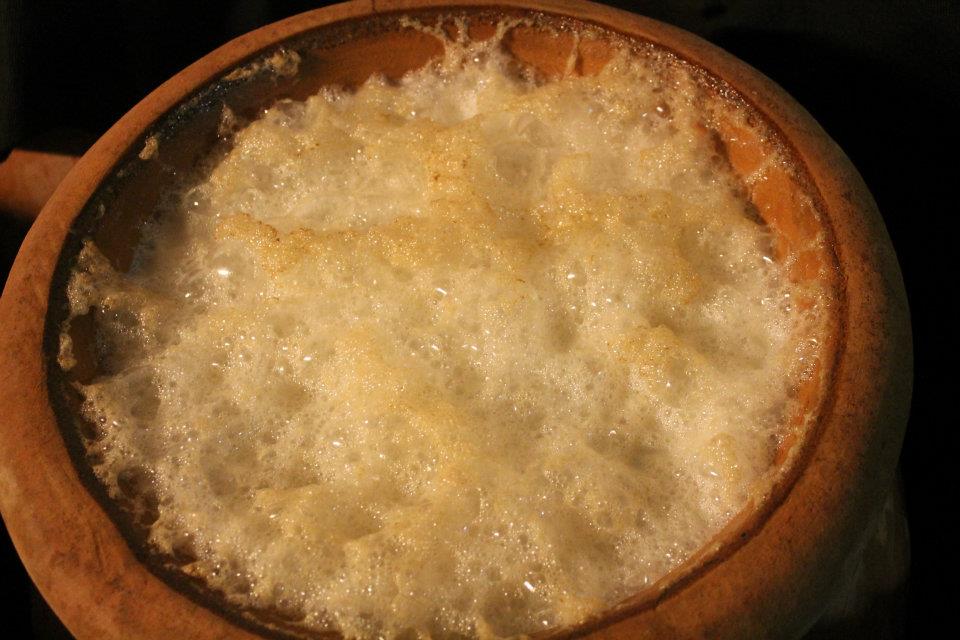
Day 1 of active fermentation (photo courtesy Jean Van Roy)Day 2 of active fermentation (photo courtesy Jean Van Roy)Amphoras now covered (photo courtesy Jean Van Roy)
One of the great things about craft beer is most brewers will take a moment to talk about their products or just talk about brewing in general with people. You have those great people… then you get a chance to speak with Crooked Stave owner Chad Yakobson who takes all that a step further. You can tell right out of the gate he not only loves beer and loves brewing funky/wild beer, but is dedicated to educating the drinker. Chad is the mind behind one of the best beer related research projects I know of: his Masters degree dissertation called “The Brettanomyces Project”. Last year his research won the award for Best Paper in the Master Brewers Association of the Americas. For those of us who have embraced the funk in our own home brewing set up this is an extremely helpful resource in brewing Brett beers.
I had a great conversation with Chad a few weeks ago about his new beers at Crooked Stave, the upcoming Cellar Reserve program and he dropped some knowledge along the way to help my fellow home brewers…
ETF- Everyone who enjoys sour and wild beers has that epiphany… that one moment they embrace the funk. What was the beer that turned you?
Chad- My sour epiphany was La Folie. I was going to college in Ft Collins and studying Horticulture Science… really grape growing for winemaking. I was really getting into red wine and especially barrel aged wine. But all of a sudden there was this beer that New Belgium had. I think it was around 2003 or 2004 just as they were starting to get their program going…and wow it was barrel aged beer. I loved my beers, but I hadn’t seen a barrel aged beer before….I was young and in college. So I tried it and I was like WOW this tastes like saurkraut! I didn’t have any sort of reference or anything to compare it to or something I knew of, but I tried it and it was interesting. So I tried it again and tried it again… the next thing I knew it was this beer my friends and I couldn’t get enough of it. So that was it for me, I just didn’t understand other than the fact it was barrel aged how it got this flavor and how it got these characteristics. I would really say I’ve been pulled in ever since, nearly obsessed.
ETF- Speaking of getting into sour/wild beers, what beer from Cooked Stave would you say is a good gateway beer to get someone hooked?
Chad- I think we have 3 actually and they all lead into each other. One is going to be the Wild Wild Brett Orange that is part of the series of 100% brettanomyces beers that play off the color wheel (ROY G BIV). The orange I’m going to bring back as a year round beer, it’s going to be called Saint Bretta. It’s going to stay the same, but have a few tweaks. It’s a 100% brettanomyces beer that has that cusp of acidity in the beer, but also that little bit of coriander, that little bit of orange… these citrus units. I actually call it citrus units as does another brewer friend who likes to refer to them that way as well. That is a great gateway beer I think for anybody because it’s coming with these flavors that are not “beer like” as we know them. Like with sours it’s hard to say this is a beer but it is, yet it’s got these candied tangerine and key lime characteristics. But it also has a hint of that brett, hint of the acidity and tartness. That’s great to start to getting the cogs rolling and realizing that ok this is 100% brett and this is interesting.
The orange I’m going to bring back as a year round beer, it’s going to be called Saint Bretta
The other one is Petite Sour, which as well is going to be a full time year round beer. This beer weighs in at about 4% and the idea behind it is my version of a table beer. It’s Berliner Weisse meets Gose meets Farmhouse Wit, so it’s a tart witbier. It has an acidity level but it’s tame. It has the fruitiness from the brett (which is very characteristic of our beers as it is) but also some of the beer background as well because it’s a blend of a 100% brett beer blended with a saison farmhouse type wit which is not in oak. That beer marries all these flavors together to where it’s approachable. It’s light, crisp, clean and lemony.
Those 2 beers really start getting the idea “Oh I can do this, I like sour beer” because it’s not all the way sour.
The next is our Golden Sour. It’s kind of the final pull to really bring people in. This is a golden beer that is 100% brettanomyces fermented. So the brettanomyces flavor is coming upfront and right off the bat…but the souring from the lacto and barrel is afterwards. The idea is that it’s not “all the way sour”, but it still has all the qualities of it.
So between going through each one of those beers they really pull the drinker in and that is the goal behind Crooked Stave. Sours are not one dimensional; in fact even though I keep saying sour, I’m kind of against the term “sour” in a way. We make a difference between pale ale and an IPA, but we know what the differences are. The same thing for the wild beers, they don’t have to be tart… there are varying levels of tart. But there are also varying levels of balance and that’s what brings drinkers into these beers as well. It’s not the power of what’s most sour, it’s the power of what has the most expressive characteristic, what has the brilliant bright flavors. The way I look at it sour is the extreme of it. I see “Wild Ales” as being the broader of the category and you’ve got sour on the extreme level of it. So if sour is on the far end as the most tart then you have varying levels all the way through. For instance I would consider the Wild Wild Brett Green a wild beer simply because the same reason a Saison is a Saison, what really makes it a Saison? The fact that it’s got Saison yeast in it? Pretty much. So to me what makes a wild a wild is the fact it has brettanomyces in it. So secondary brett beers can be wild or primary fermented beers could be wild. In our WWBG the primary fermenter is brett with hops so it tastes like an IPA. It has the passion fruit / dark stone fruit sort of dark berry IPA but its still wild because it has the brett in it. So it’s all about education to inform the consumers that it’s not just about the sour and there are varying levels for them to understand.
ETF- So is the sour versus wild a pretty big misconception in this type of style?
Chad- Absolutely. There are 5 underlying factors in the Wild Wild Brett series of beers. One is to re-train the way people think about brettanomyces and these wild beers. That’s why each one is a different recipe, each one is a different beer and each one is very different in the way it’s produced and brewed. The idea is to slowly re-train people about brettanomyces. Brettanomyces ferments clean albeit not as clean as a lager or a saccharomyces. But if you compare it to a saison strain for instance the differences genetically are not that much and the differences flavor wise are not that much either. Brett just takes it an extra step further. That’s the way it should be thought of.
Now acidity comes from bacteria and I’ll give it that brett creates a tiny bit of tartness. The idea is not to allow a lot of oxygen for these beers and therefore not a lot of tartness will occur. So these beers come out very clean, with beautiful esters and flavors. So you can limit the amount of phenolics and amount of brett character. It will always have an underlying brett character in it, but that’s the beauty and that’s the way to use this yeast. That is what makes it wild. It’s this designation us as brewers have come up with and it’s the understanding that by using non saccharomyces yeast. Even though we are using it purposely.
Sour on the other hand is a beautiful art in using these yeast in any way. Those beers deserve the recognition in what that are. The fact that they are barrel aged, extremely manual and extremely labor intensive. The amount of time and the blending that goes into making one… it takes a true artist. So it’s a great variation between one end the wild beers and the very far end of the acidic long barrel aged beers. Us as brewers are trying to educate ourselves and that was a large part of me doing the masters degree research I did. None of us knew why these fermentations were happening, what the flavors were or anything to that effect. But we knew it happens and we knew we really liked the effects it was having on the beer. I wanted to study that and dig deeper to get a better understanding. Now that I do I’m trying to educate about these differences. We are going to see a plethora of these beers and really we already are seeing them. So the more the consumer and us as brewers can know the better experience we are going to have. That’s what drinking a beer is all about, the experience.
ETF- Going back for just a second…the 2 beers (Wild Wild Brett Orange and Petite Sour) that are coming back full time. What’s the time frame for a full time release?
photo courtesy: focusonthebeer.com
Chad- Sadly it’s as soon as the brewery is built in Denver. I’m going to be doing Petite sour here again soon, but as long as I’m brewing at Funkwerks I can’t do anything year round. Just because I’m not able to brew enough. So when the brewery is built in Denver I’m going to brew it year round.
It’s really fun the way we are playing around with things. It will be Petite Sour Blanc and then Petite Sour Noir so the idea behind them is they will be table beers: a white and a dark. The dark will be a bit higher alcohol, browner with more maltiness and a smaller amount of sour. The blanc is more golden and lighter. So we will be able to play with seasonal variation. In order to do that I’m going to need foudres year round specifically for the Petite Sour and a fermentor or 2 just for it. Plus one for the Saint Bretta just to have all of those going.
ETF- Where did the name “Crooked Stave” come from?
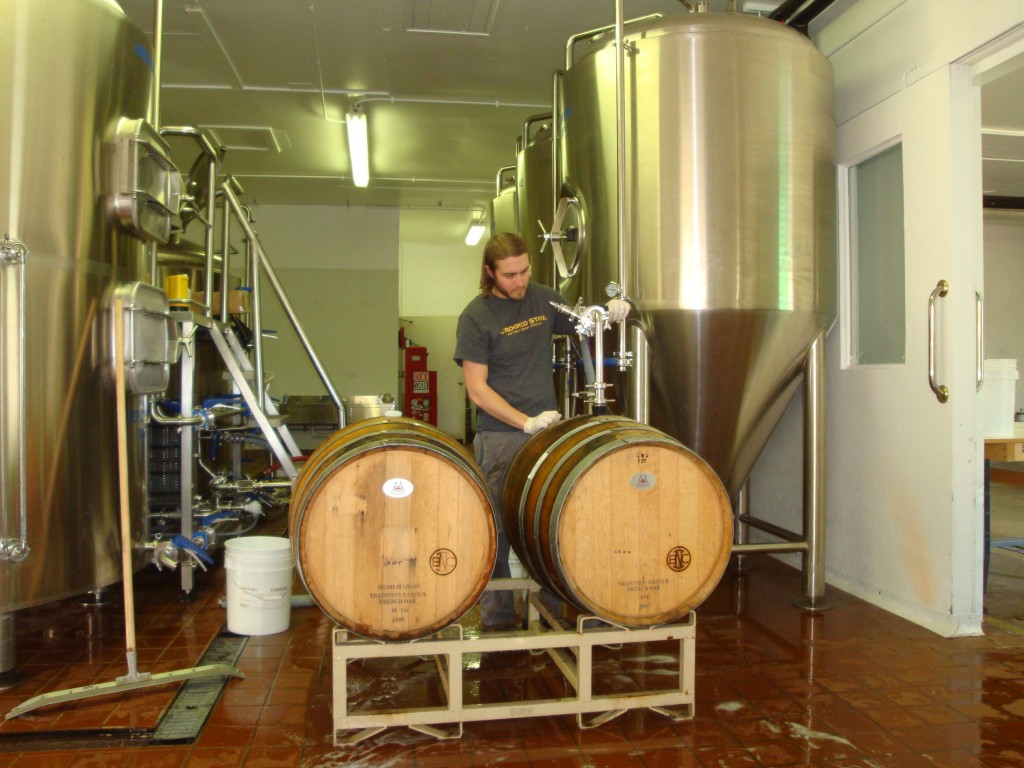
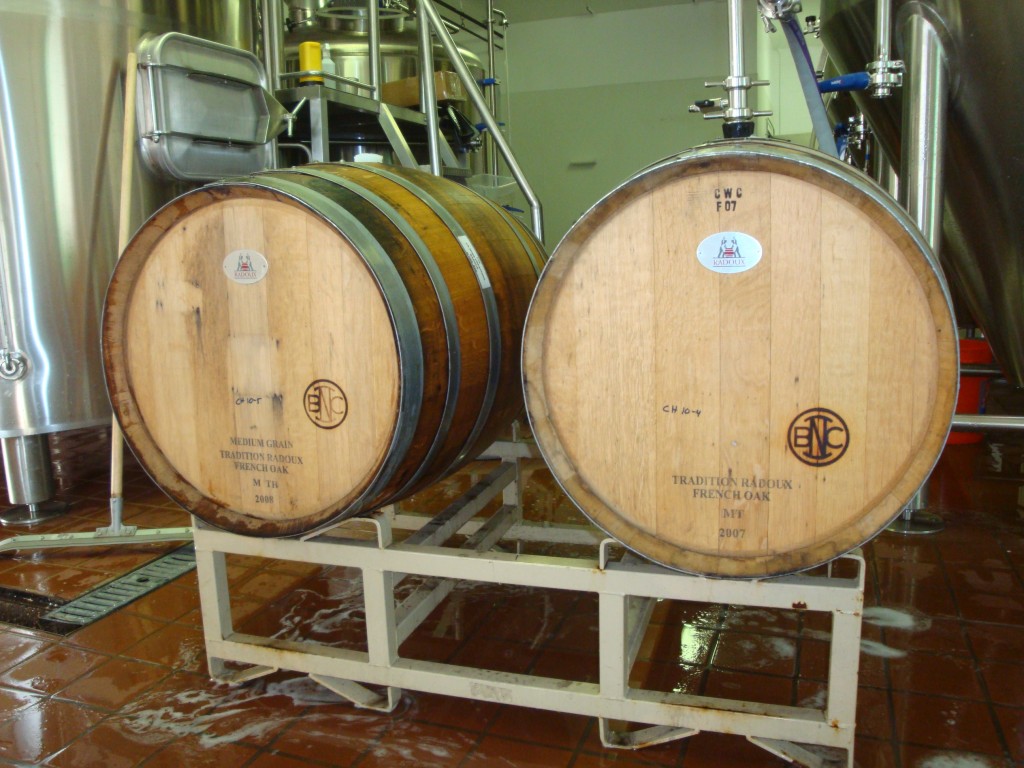
Chad- I was really having a tough time naming the brewery. I kept coming up with these different things. Oak is very central to our brewery and its an underlying theme of what we do. My favorite thing is to put beer in to oak and see how it comes out on the other side, I love the long barrel aging. I was looking at what makes up our brewery and what makes up a barrel. Staves are what makes up a barrel so I see what we are doing at Crooked Stave being very different, a different model, a different line of beers and a different idea. It’s a very different approach. It’s very much a wine maker’s approach to making beer is how I think about it. So a crooked stave is the one in a barrel that is different. At the same time I think it’s artsy and sounds neat. All of that portrays what we are and the central theme in our brewery.
ETF- In the short amount of time Crooked Stave has been open we’ve come to expect some new unique beers. What’s the newest one you are working on and what’s just hit the barrels?
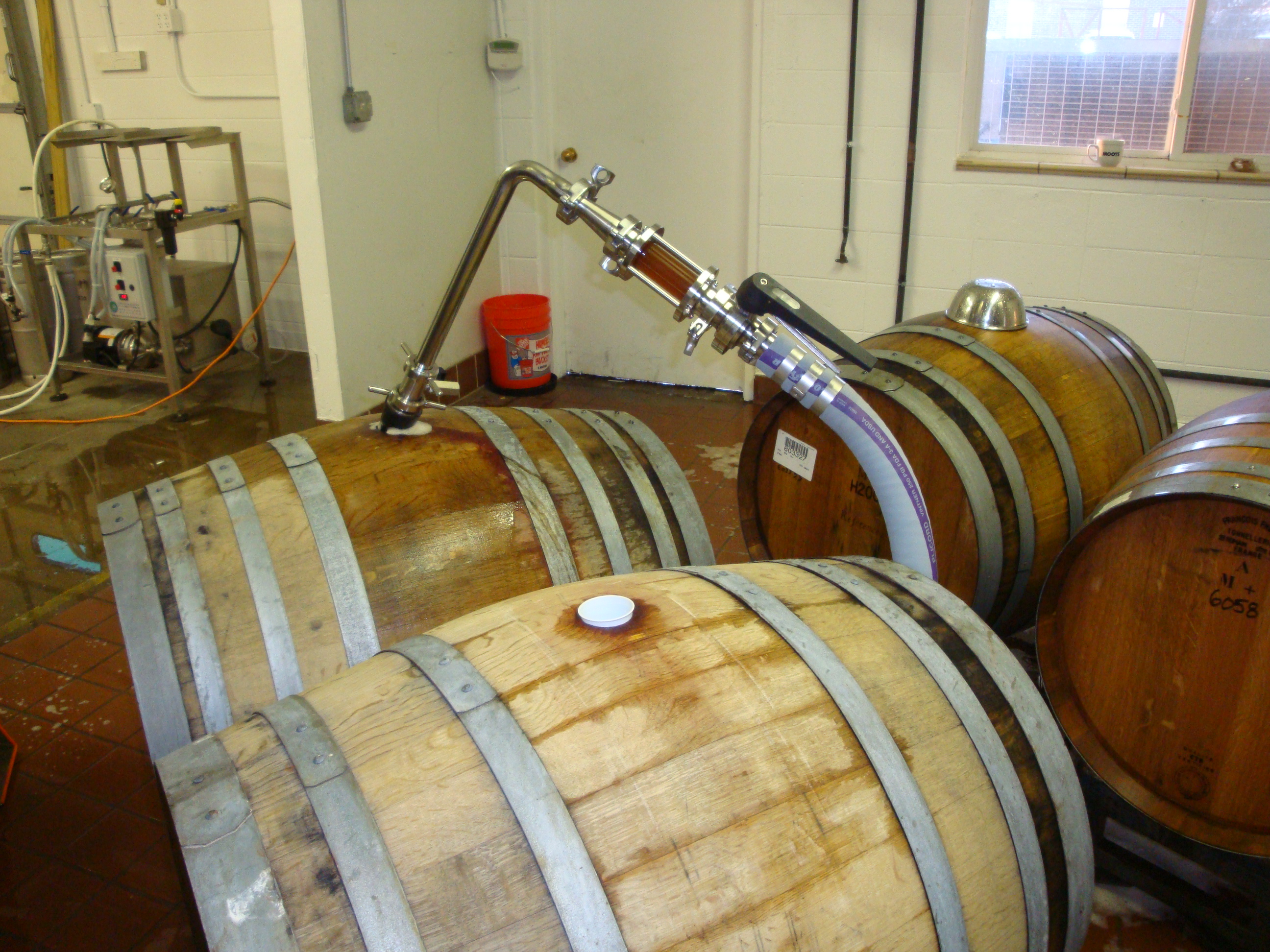
Chad- Well from the standpoint of the most recent thing I filled barrels with was the dark sour. But I think the new one with the neatest properties or characteristics is the one called “Nightmare On Brett Street”. It’s a very fun beer to brew. I essentially took a re-worked baltic porter recipe, which I love Baltic porters. I took this recipe and worked it over to the point where I could build the mouthfeel plus build all the flavor and characteristics. Then primary ferment it 100% with brettanomyces and have that in various barrels. I got some really nice fresh barrels: Cognac barrels which have French oak, some really nice Brandy barrels that came from Heaven Hill and also some Heaven Hill Bourbon barrels. So I’m really excited to see the way this beer turns out because I’m more use to working with wine barrels and neutral wine barrels at that. So this is a beer I’m trying to get those flavors in and I’m really looking forward to the way I blend it. I think it will make a really nice Grand Cru Nightmare On Brett Street that’s this brett Baltic porter. It’s all about turning heads and being different so I think this one is something people will get into quite surprising saying “This is brett? This is a cognac barrel?” I think it will really be exciting!
ETF- With your barrel program growing how will be able to sustain this current program while relocating?
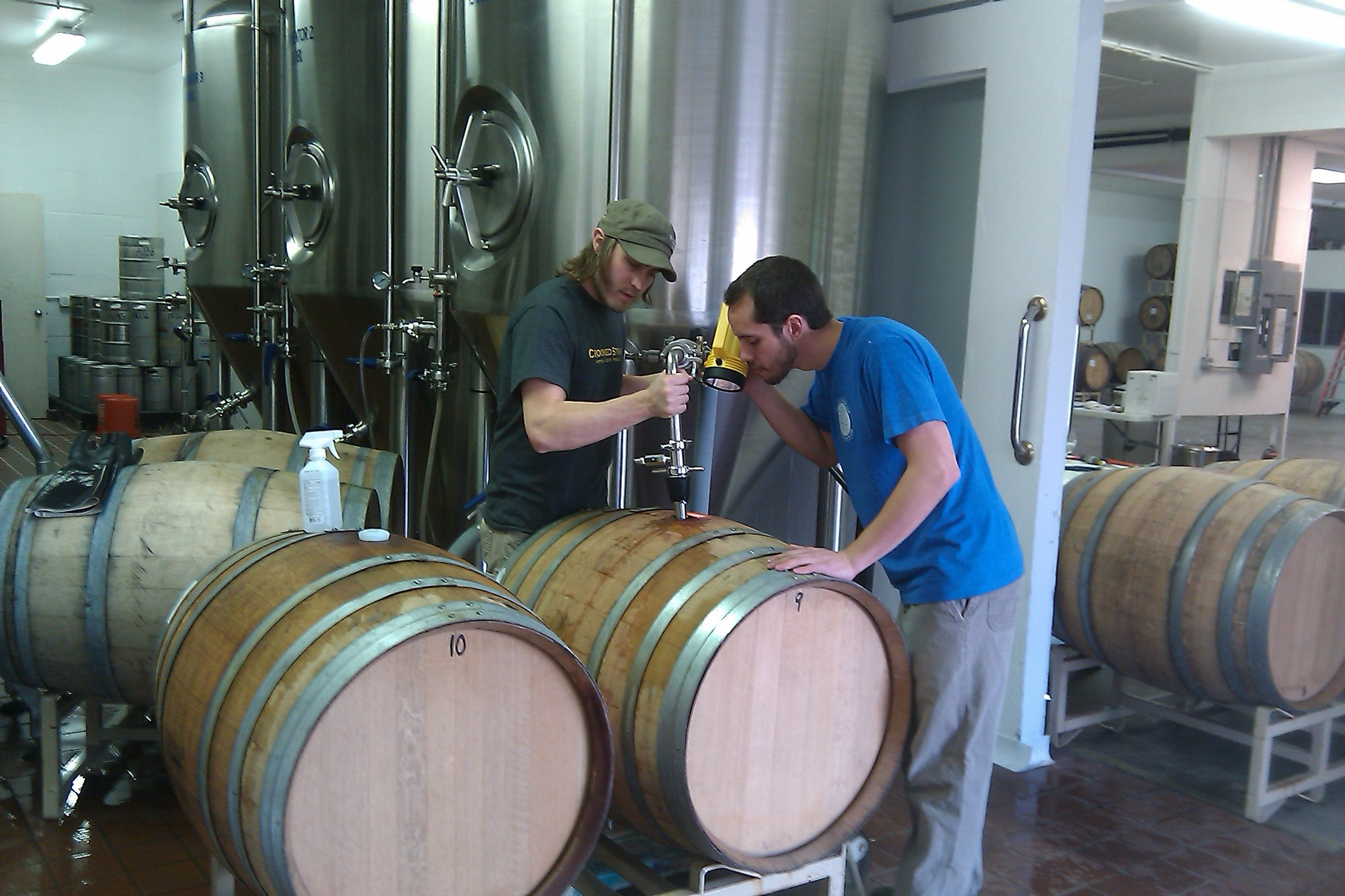
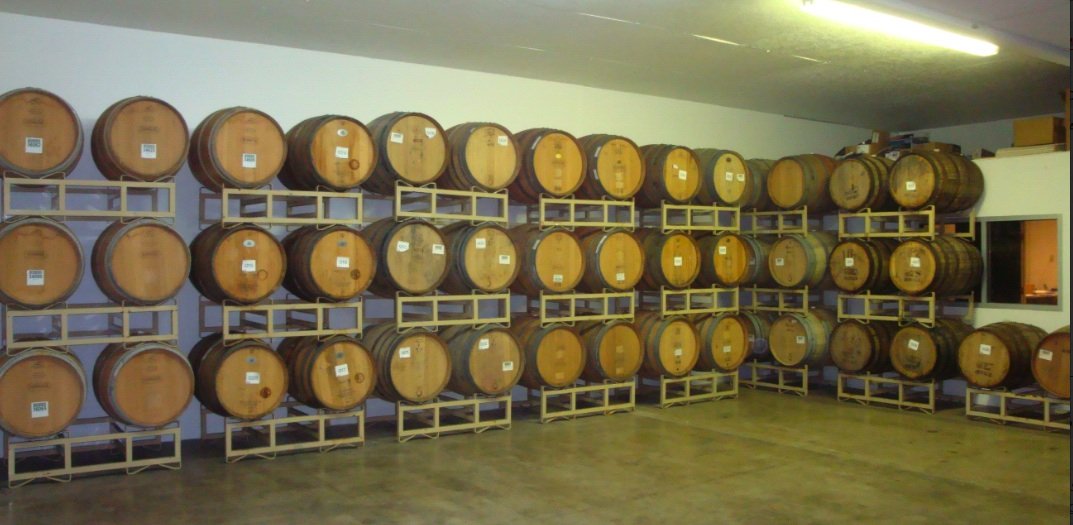
Chad-Very very carefully haha. Basically everything will get put on a large semi and moved down to Denver. It will be difficult, but the idea is just to load them up. They are pretty stable in the barrel, you could make an argument why it is good to rouse the barrels, wine makers rouse their barrels. Even now we take the barrels and put them on a pallet to shake them back and forth just to get some of that brett/bacteria that may have fallen down back up. What’s going to be more tricky is when it comes time for me to make blends and empty if we are not already brewing again. I am very big on being close to my barrels. Keeping them topped so if I empty those barrels I need to be filling them. With how little I am able to brew currently that will be tricky. Which is once again why we need to get down to Denver and make the move quickly.
Chad- The membership is a really exciting thing for the members and me personally. While we have a base of sours we will be doing, for me it is about experimentation. Even if it means taking some of those bases and adding various fruits to them, putting them into different kinds of barrels or blending them in a special way from different barrels to make special blends. These are not things that can not be done on a larger scale. The Cellar Reserve membership gives me the ability to what I see as reward the people who are really into what we are doing, really interested and supporting our brewery from the beginning. I guess the expression would be a grassroots movement, but more of grassroots support. We’ve seen so much support. Denver has been great to us, Colorado has been great to us and so have a lot of the people throughout the USA who are writing to know more about these beers. This program is my ability to give back to them. I myself come to the industry as a beer drinker who collects beers and trades beer. So this is something I am interested in doing, so I see it as rewarding.
With these small barrel projects there can only be so much. With them comes exciting flavors and unique things that are not going to happen on a larger scale even if that scale being 15 bbl at a time. A lot of times it;s cost prohibitive as sometimes I’m putting $500-$600 worth of fruit just into one single barrel plus the amount of labor and time.
I’m really excited about the peach beer that is going to come out. I got some beautiful Colorado peaches that are a very specific variety for flavor and aroma. The things we do with Petite Sour by taking that base beer then adding some really unique fruits to it will get some neat flavors out of it. With that as well as show casing the first few spirit barrels I mentioned (Cognac, Bourbon and Brandy Barrels). Being able to take those and show them off, well the only way we can do that is through forming a Cellar Reserve program and being able to sell it that way. With so few cases it would probably be hoarded in the taproom, but I want these beers to get into the hands of people who are truly interested in looking for this product. It’s what I would want as a beer drinker and I really hope to reach our customers through it.
ETF- Which beer in the Cellar Reserve series are you most looking forward to releasing?
Chad- Wow That’s difficult because I know of a few that are going to be really neat. I would say in this first year it’s the Peach Sour. I think it will have some really really unique flavors to it. I’ve done a few other beers kind of like this and they’ve been like no other.
ETF- Do you have a target date on when the move to Denver would happen?
Chad- I do and that would be yesterday haha! But we are trying to do it as soonas possible. We’ve got the investment and interest there. So a lot of it is on my shoulders to get it finalized, start bringing in all the investment and to finalize our building location. I’ve been looking at a few buildings and seen a lot of great things but I’m waiting to be able to pull the trigger on those things. It’s a bummer because like I said, I would’ve like to make the move yesterday to get going, but as with every business there are always the steps and process. One of the things I am looking at to negate some of that is a possible intermediate location.
ETF- A bit of brewing science now. What would be your best advice for homebrewers using brettanomyces in their fermentations?
Pitches of Brettanomyces at CS
Chad-If you’ve got the ability to prop the yeast up some I would certainly recommend that. A healthy active culture is always the best and brett can be finicky from time to time. So if you can take a smack pack or a vial then get it going in a flask. It really doesn’t need to be a lot of work like a 2 liter prop or anything like that. Even 500ml or so of sterile wort and just pitch that smack pack or vial into it then let it go for about 5 days. Even if you don’t have the equipment like a stirplate just shake it with your hands when you walk by. That’s going to get the brett active and acclimated. I’m very big on giving brettanomyces acclimation. So you are getting the brett used to some alcohol and starting to ferment. There will be cell growth and its going to be more viable. Pitch that into your 5 gallon batch and the fermentations will be more typical of the ones that I am seeing. At Crooked Stave I’m getting basically full attenuation in 2 weeks, but then I’m seeing more attenuation over the next few months. But in those 2 weeks I’m going from 14 plato down to 2 plato. Then the beers will continue to come down to 1 plato. Having a proper cell count and treating it like saccharomyces in a way is key to these fermentations.
*After the interview we were talking more about helping brewers with the techniques of fermenting with Brettanomyces. Chad has agreed to help me with a series for the website on brewing with Brettanomyces and his theories on why to use certain ingredients in your recipes. I appreciate him lending his knowledge to this series and hopefully we can not only get some new information out there, but dispel some of the inaccurate information on brettanomyces.
I am not a fan of cold weather (I honestly think I could sip Berliner Weisse at the beach everyday). So my latest brew session I was thinking Springtime for 2 reasons: I needed something dry/crisp on tap to enjoy outside when the weather warms up and I needed to brew something wild or funky to serve during the East Nashville Beer Fest in late March.
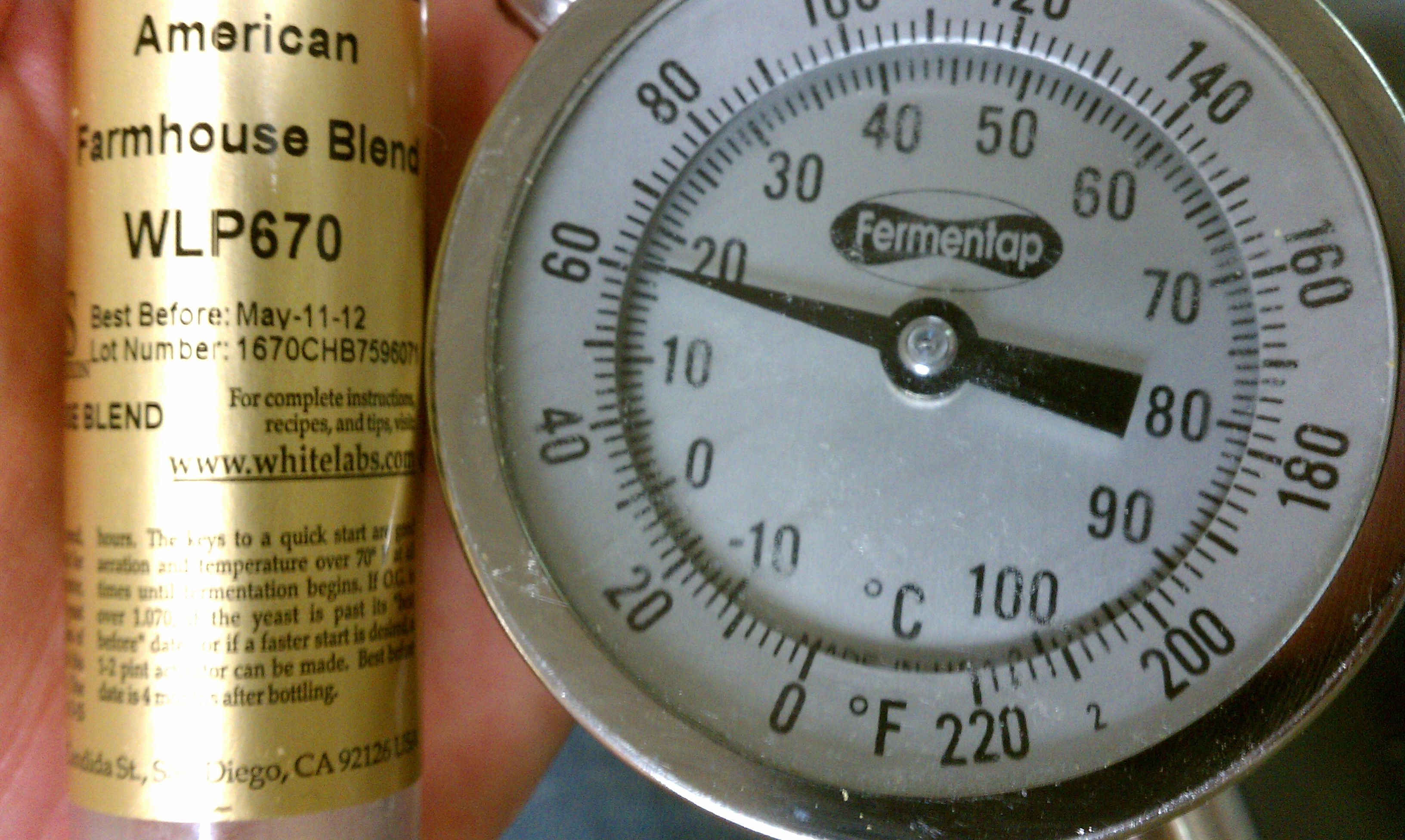
With approximately 90 days until I needed to serve I didn’t feel like I could turn a good quality funky bacteria beer. So brettanomyces was up to bat. With the news that WLP670 American Farmhouse was now a fulltime offering a Brett Saison was just too perfect. My LHBS just got in a fresh batch of the WLP670 a few days before so I was good to go for part of the batch.
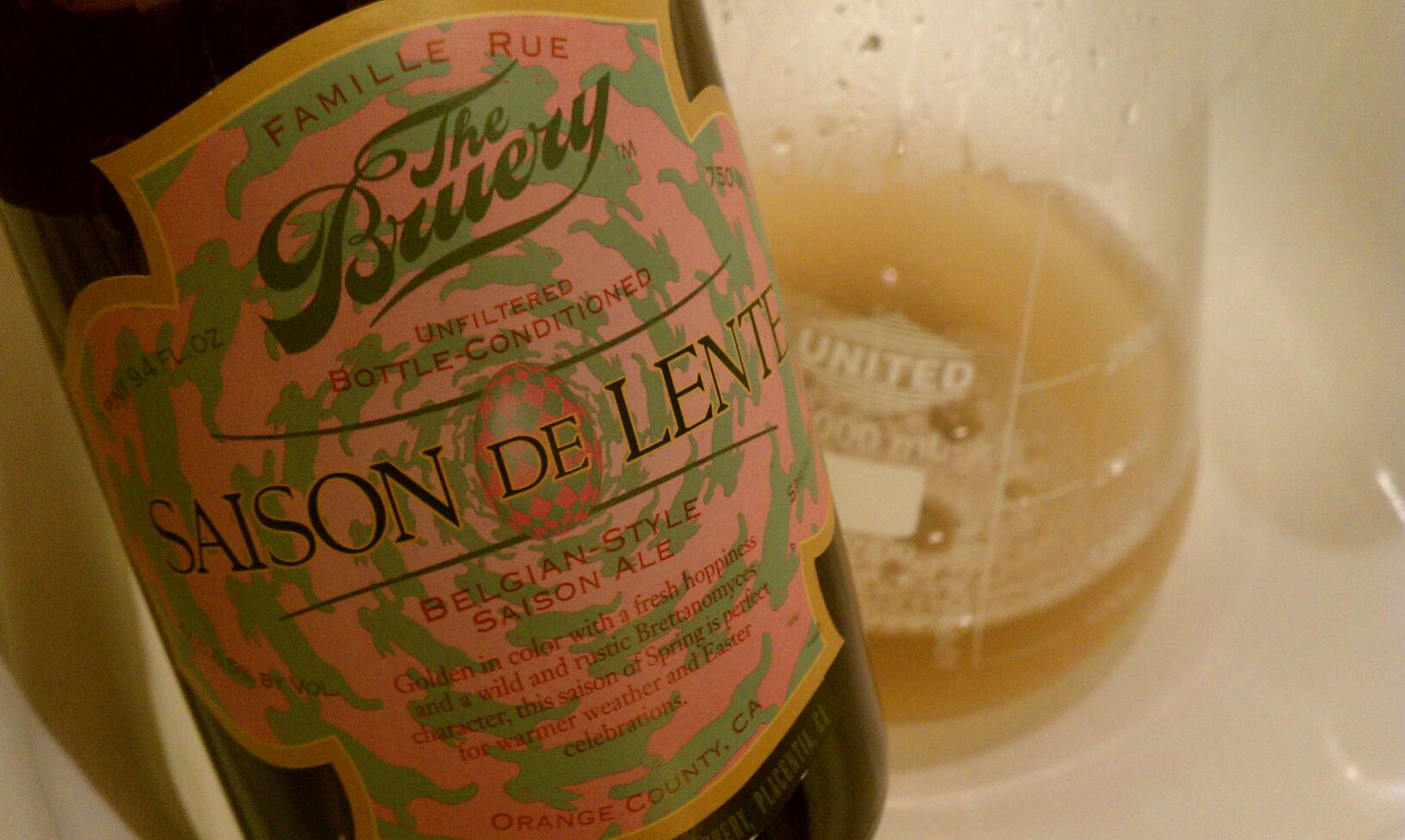
OK admittedly I am a yeast klepto. I love stealing “dregs” from bottles of commercial beers. Some have been really active and produced great beers for me (Great ones: Orval, Cantillon and Kellerwies [no bugs in it]) while some have been fair. A friend of mine (Thanks Ryan!) sent me a bottle of The Bruery’s Saison de Lente so I decided to step up the dregs to pitch. This was my first time stepping up dregs from The Bruery, but they seemed to become active again fairly quickly. I did my typical step up: 100ml of .020 wort for 2 days, stepped up to 1000ml of .020 wort, stepped to 2000ml of .035 wort on the stirplate. One carboy got the Bruery stepped up yeasts and one carboy got the WLP670 (no starter).
I changed up the recipe some from the last Saison I brewed basically to get a lower starting gravity since I’m on a deadline and to simplify the flavors so the Brett could shine through.
OG-1.050, IBU 13.1, 60 Minute boil, 25 gallon batch size
60% – Pale Ale Malt
15.3%- White Wheat
12.3%- Light Munich
12.3%- Demerara Sugar
13.1 IBUS Magnum @ 50 minutes
2 oz Styrian Goldings @ 0 Minutes
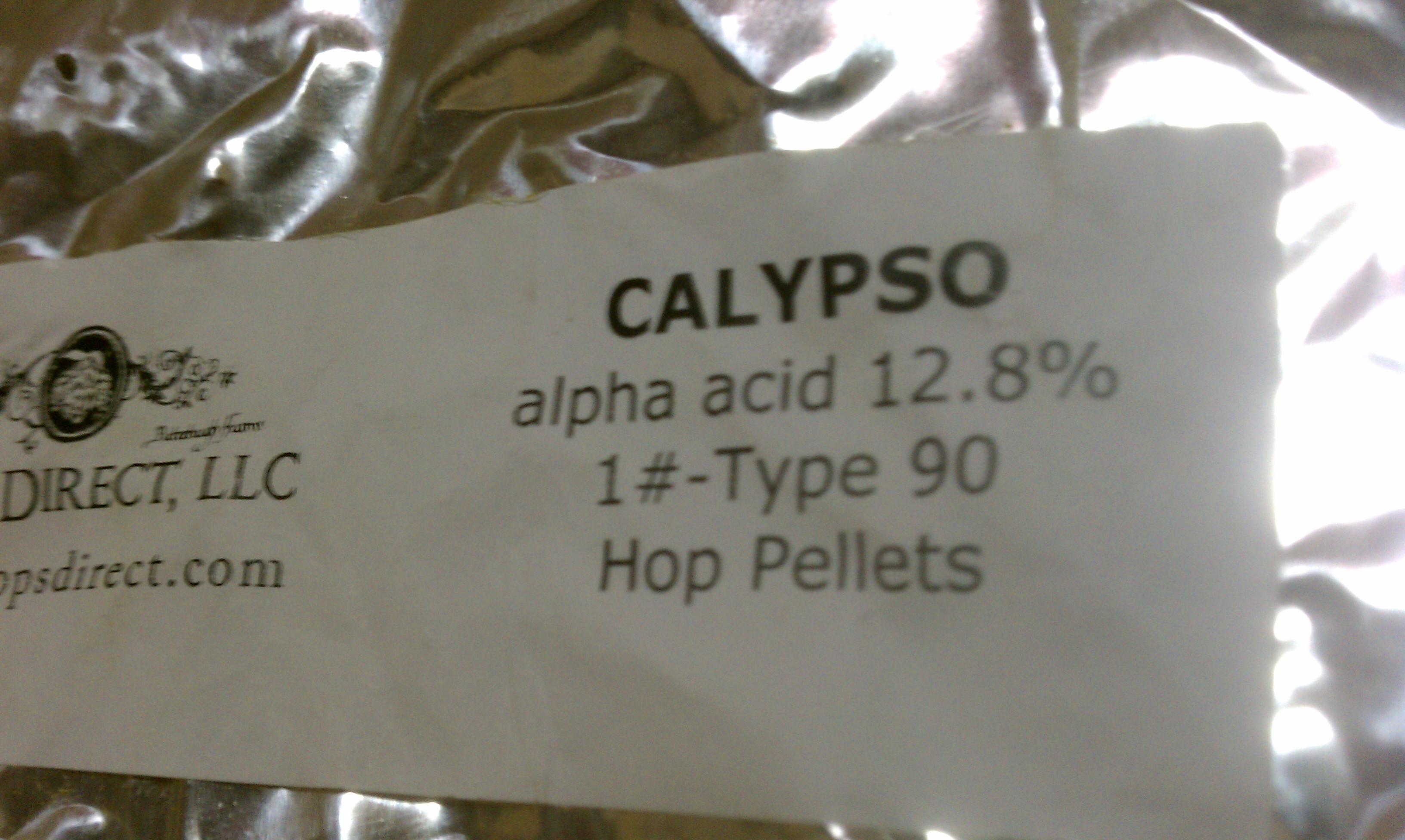
1.5oz Calypso @ 0 Minutes
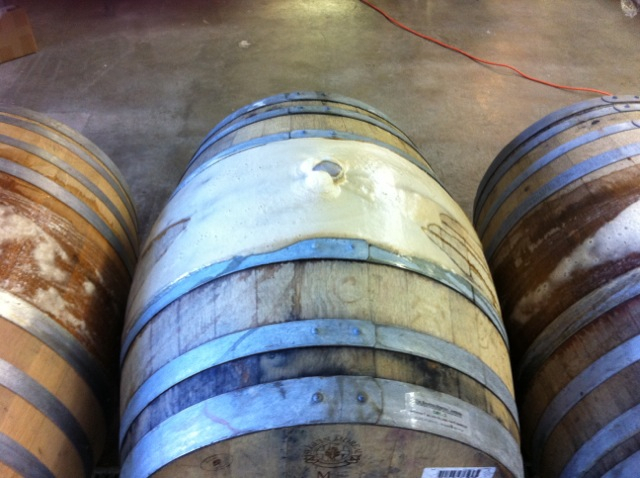
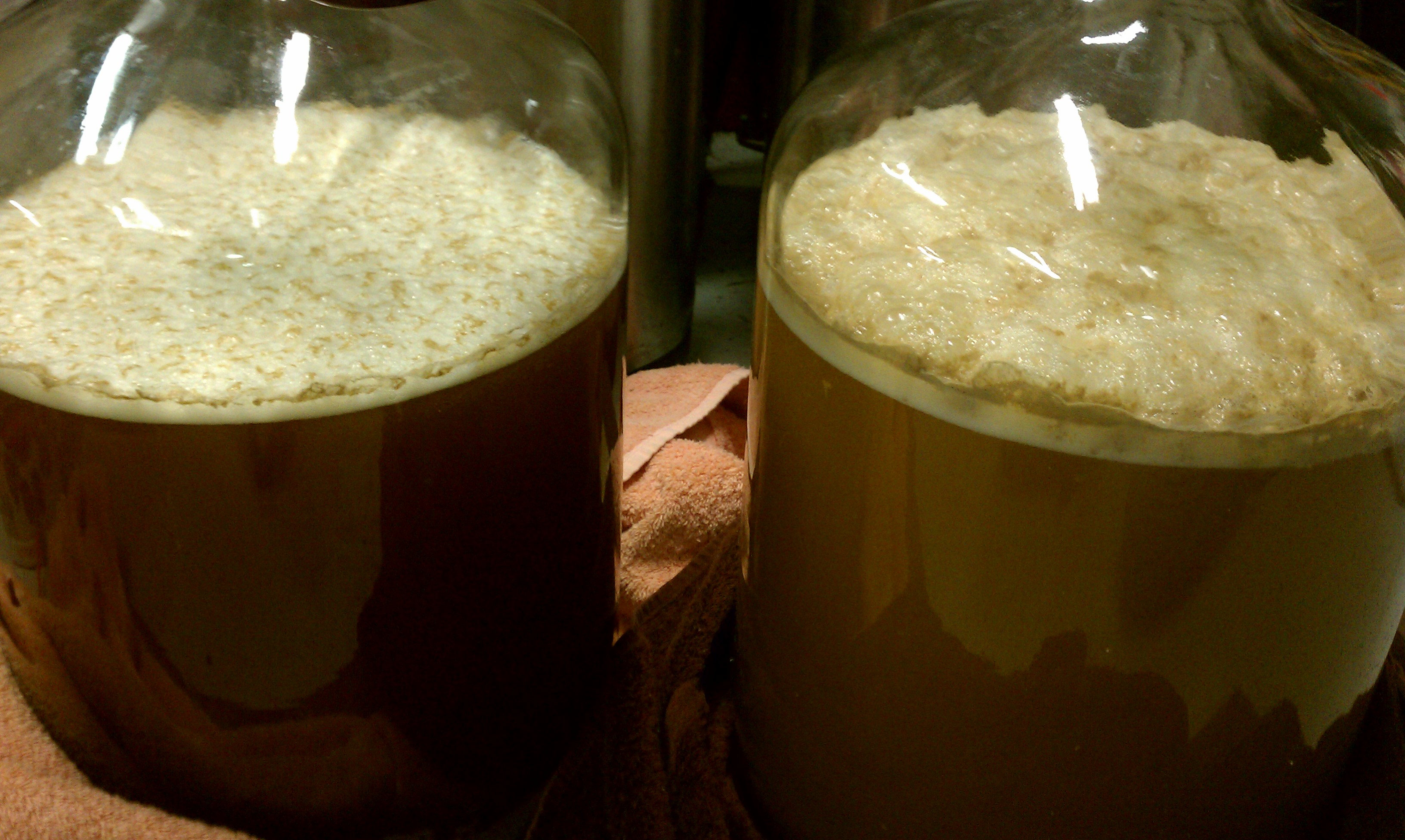
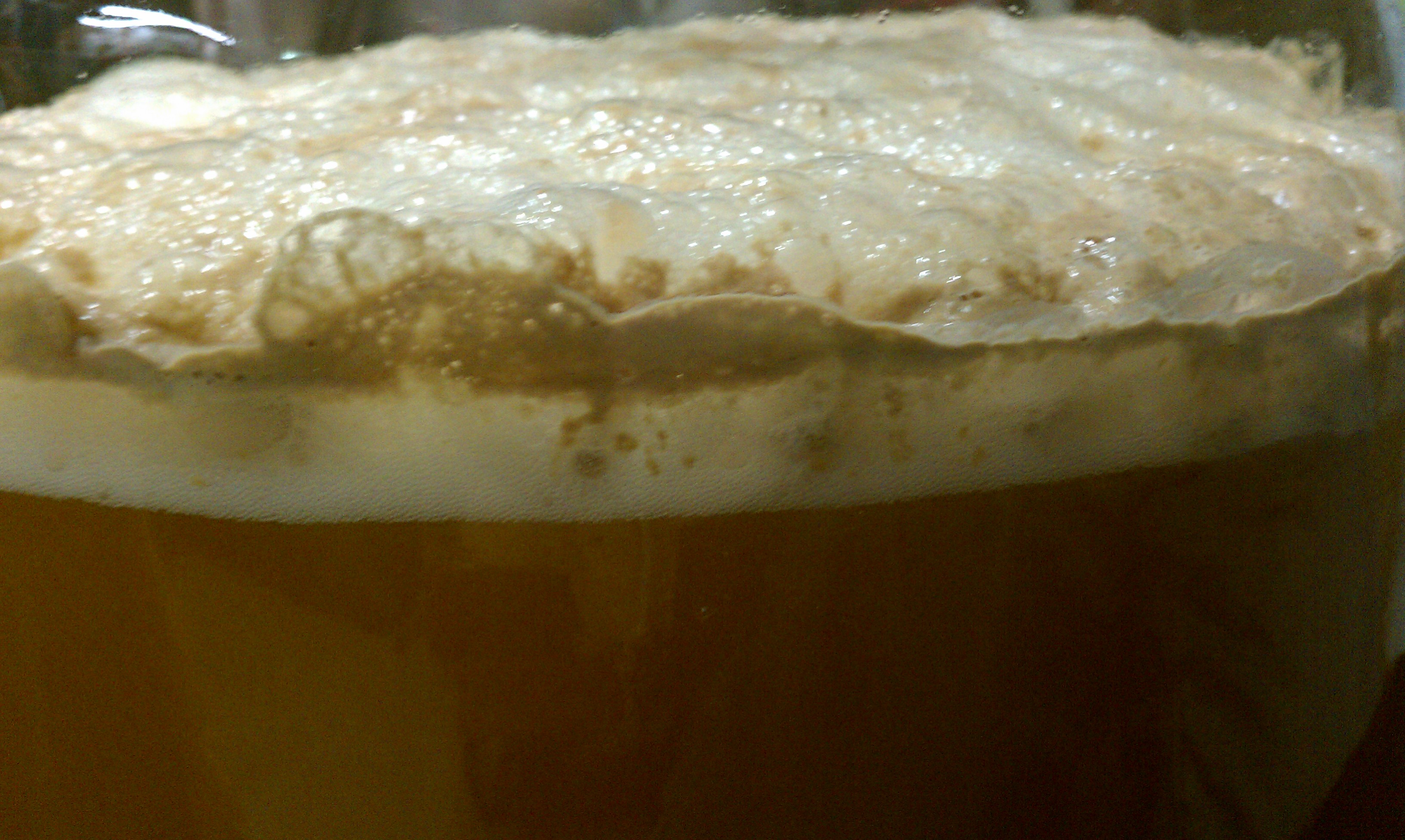
This time I pitched the WLP670 and the Bruery Dregs at 62F. The Buery Dregs were the first ones to take off. That carboy had a nice tight half inch krausen formed in about 10 hours. The WLP670 was about half that. The below pics were taken approximately 36 hours after pitching with temps up to 65F now.
The carboy on the left is WLP670 American Farmhouse. The one on the right is the Bruery Dregs pitched carboy. Notice the different wort/beer colors and the different krausens. I’ll begin warming these up into the upper 70’s in about 36-48 hours. I’ll see what the gravities tell me and if they have reached 40% attenuation yet. I’ll update the progress of these beers sometime in late February or early March. Right now I’m thinking these might end up as a blend for the beer fest, but I’ll make that decision closer to packaging time.
Saison Fermented with stepped up Bruery Saison de Lente dregs
It’s the perfect time to brew a Brett Saison for your springtime lawnmower beer. One thing to remember is Saison strains and Saison recipes are designed for high attenuation. Add in the Brett and some could ferment down to 1.000. When building your recipe for a Brett Saison it’s not like a grain bill for let’s say an APA. A typical APA recipe with an OG of 1.050 with a normal attenuation of 75% produces a 5% ABV beer. A Saison with an OG of 1.050 with attenuation of 85-90% would produce a beer around 6%. Just remember to take into account the significantly different attenuation and consider lowering the grain bill so you don’t end up with a beer bigger than you planned. Cheers!
**UPDATE**
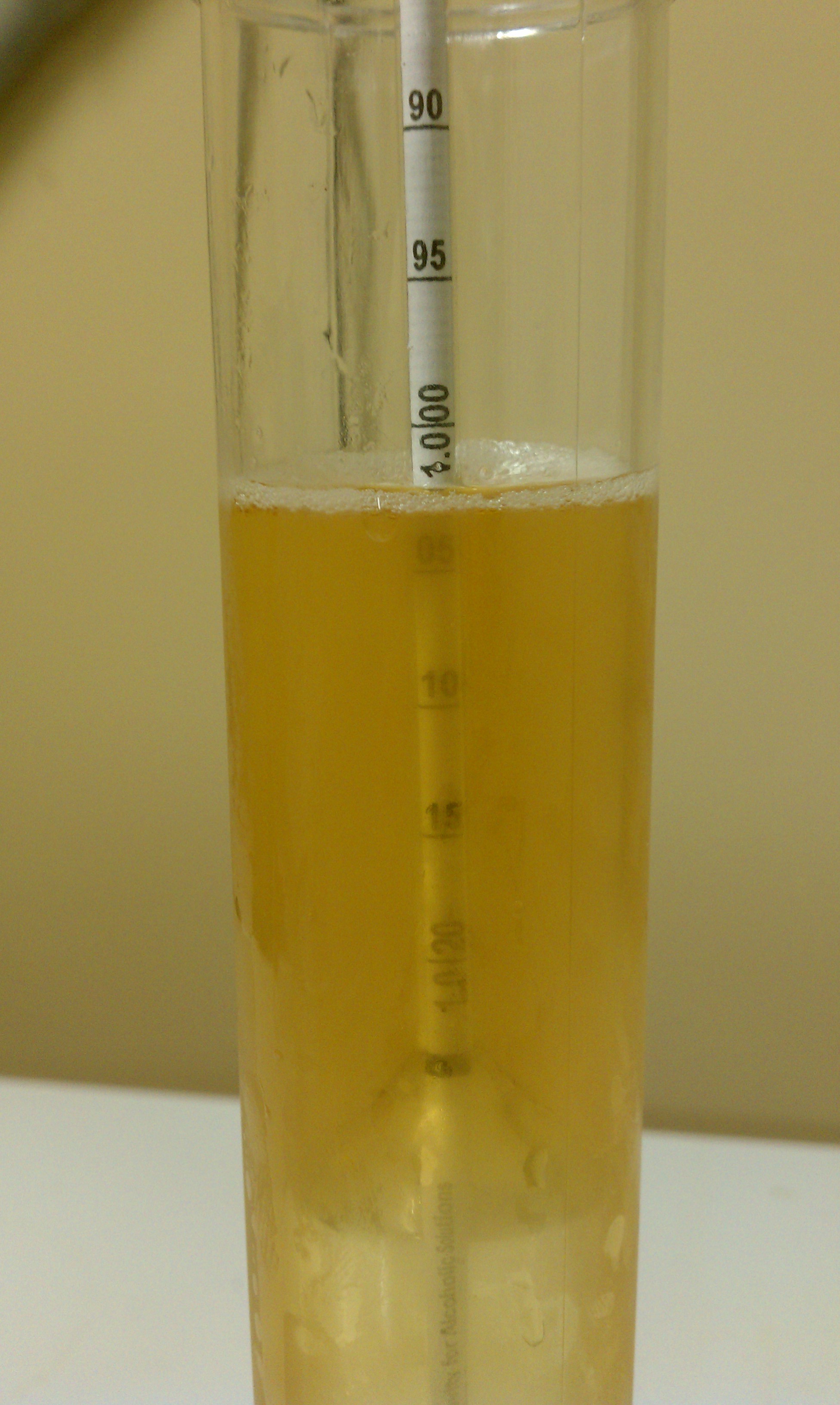
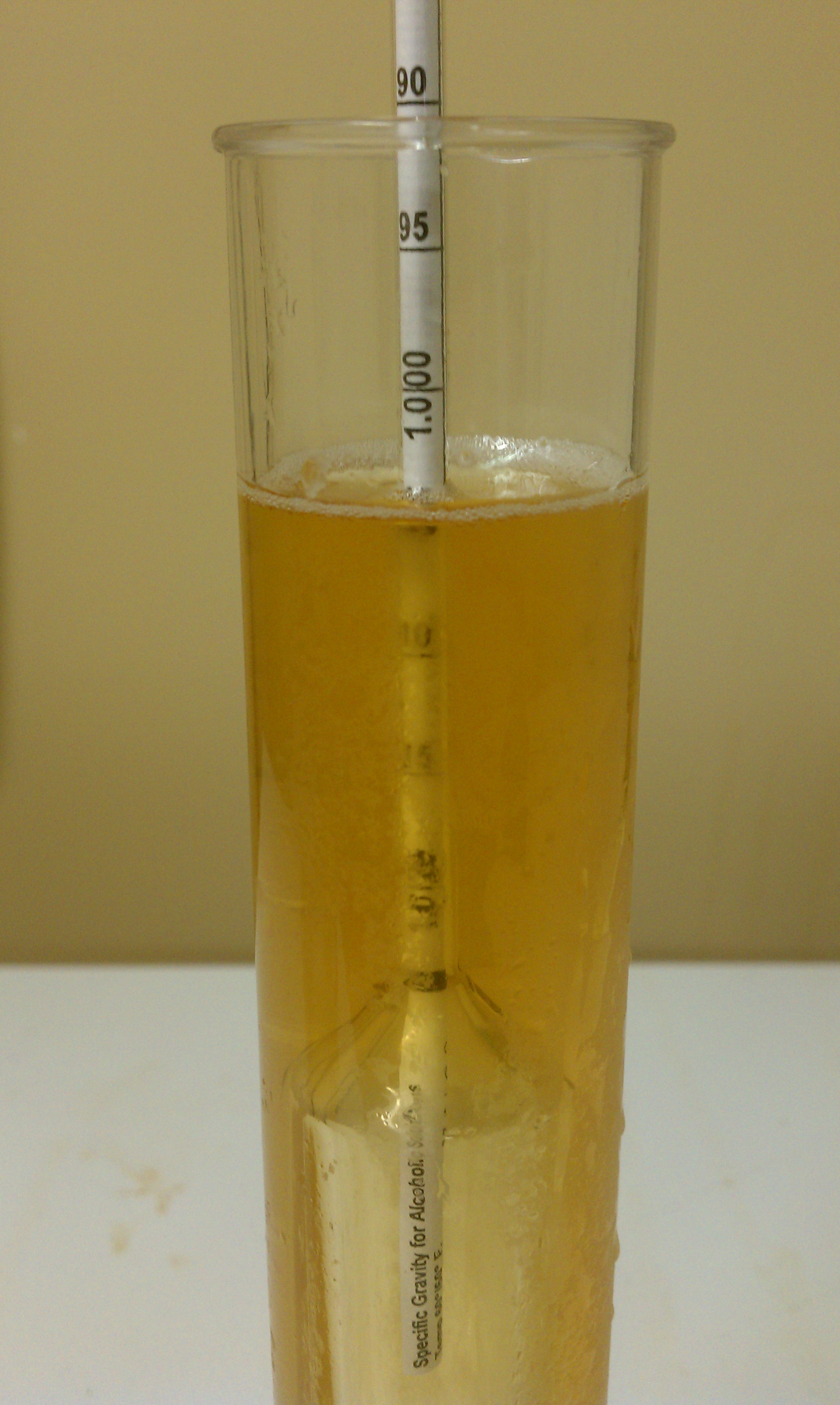
The beers have been packaged up. I’m happy with the way they tasted (WLP670 was kegged for the East Nashville Beer Festival and the Saison de Lente I C&C in 750ml bottles).
WLP670 American Farmhouse 95.8% AttenuationThe Bruery Saison de Lente yeasts 91.7% attenuation
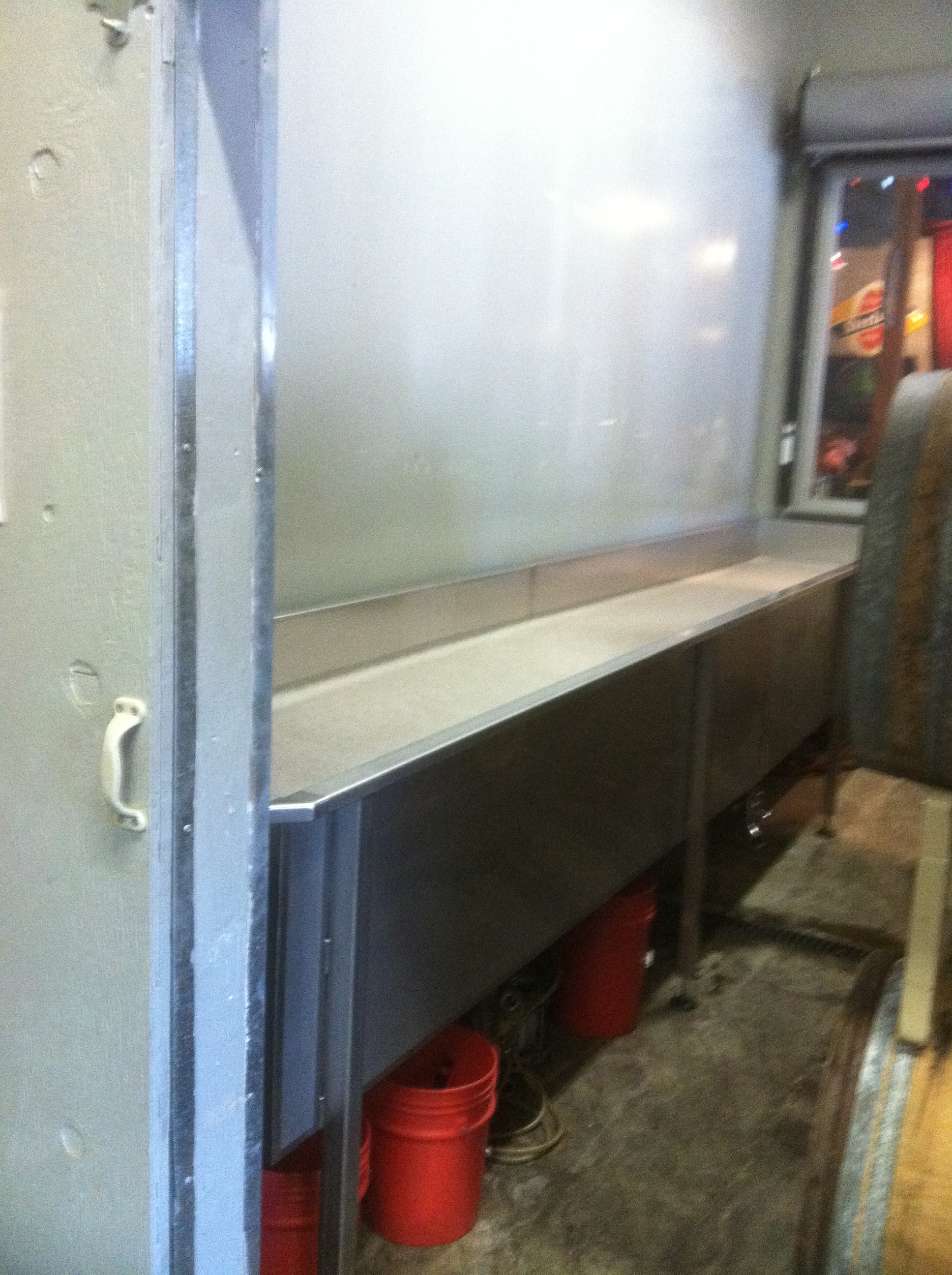
Just about a month ago Russian River Brewing hit us with these 2 huge bits of news. First was the releases of Beatification batches 4 and 5…but I thought the neatest news was the installation of a “Coolship” (a shallow pan used to cool wort while inoculating the wort with natural yeasts and other microbes). So on December 29th I asked Vinnie about Russian River’s newest piece of equipment…. The Horny Tank !
ETF-How long have you been planning on installing a coolship?
Vinnie- The cool ship / horny tank idea has been in the back of my head for 5 or 6 years now, we just didn’t have the money or time to deal with it. Earlier this year I got serious about it and moved forward with the project. A part of why it worked now is that we have a second barrel room now at our production brewery making a total of three barrel rooms. This gave us the room to give up space in the barrel room at the pub for the horny tank.
ETF-You brewed your first batch a few days ago using the Coolship…how did it work for your process? How much does it change your brew day?
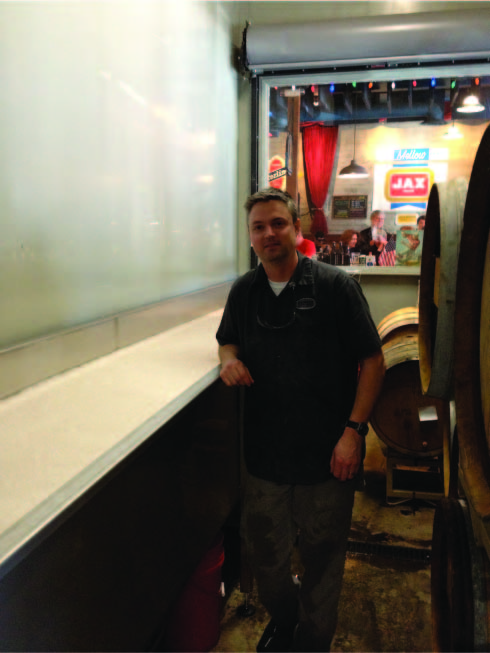
Vinnie proudly stands with the 1st "Horny Tank" batch (photo courtesy Matt Brynildson)
Vinnie- Yes, it was the day after Christmas we brewed into (the Coolship). We follow a pretty traditional Lambic style recipe, we call it Sonambic (Sonoma and Lambic contracted together). The recipe is 70% barley malt and 30% un-malted wheat and we use aged hops in the kettle. As for process, we are trying different things and most importantly trying different temperatures going into the horny tank. Of course it will be years before we see the full effect of the different temperatures so it is hard to say how the flavors will differ from batch to batch. Compared to how we use to spontaneously ferment I can’t say either if it will be different. The process using the horny tank is much easier than how we did it before where we employed our mash tun as a horny tank after we removed the spent grain and rinsed it out.
“We follow a pretty traditional Lambic style recipe…”
ETF-The wort you used on the Coolship…is this going to end up as a new beer or another way of producing one of the beers you already make?
Horny Tank Batch 1 Just Filled! (photo courtesy Vinnie Cilurzo)
Vinnie-We have brewed three batches into the horny tank and it is the same recipe as previous for Sonambic. Once barrel aged and tasting good, we blend different batches of Sonambic to make Beatification. We do plan on making a new beer that we would send to the horny tank, let sit for a day or two to pick up the bugs and critters in the room and then hit it with some Brett and or other yeast and let it ferment in the tank. This way, we’d get some of the bacteria working but, a full fermentation and maybe create some sort of new mildly sour beer. We’ll see where it goes.
ETF- After all the planning and all the preparation, when the first batch brew day was done can you describe how you felt?
Vinnie-You know, the brewing part was easy, it was obviously cool to see the horny tank full, but, the real anguish starts once the beer goes in the barrels and you wait for the beer to start fermenting. Another item that we will continue to play with along with the temperature in which the wort was when it filled the tank is how long we let it sit in the horny tank before filling barrels.
ETF- Any chance we might see a release of a straight up “Sonambic” one day?
Vinnie- It is hard to say if we’ll do a straight Sonambic, I guess if we find a batch we like a bunch.
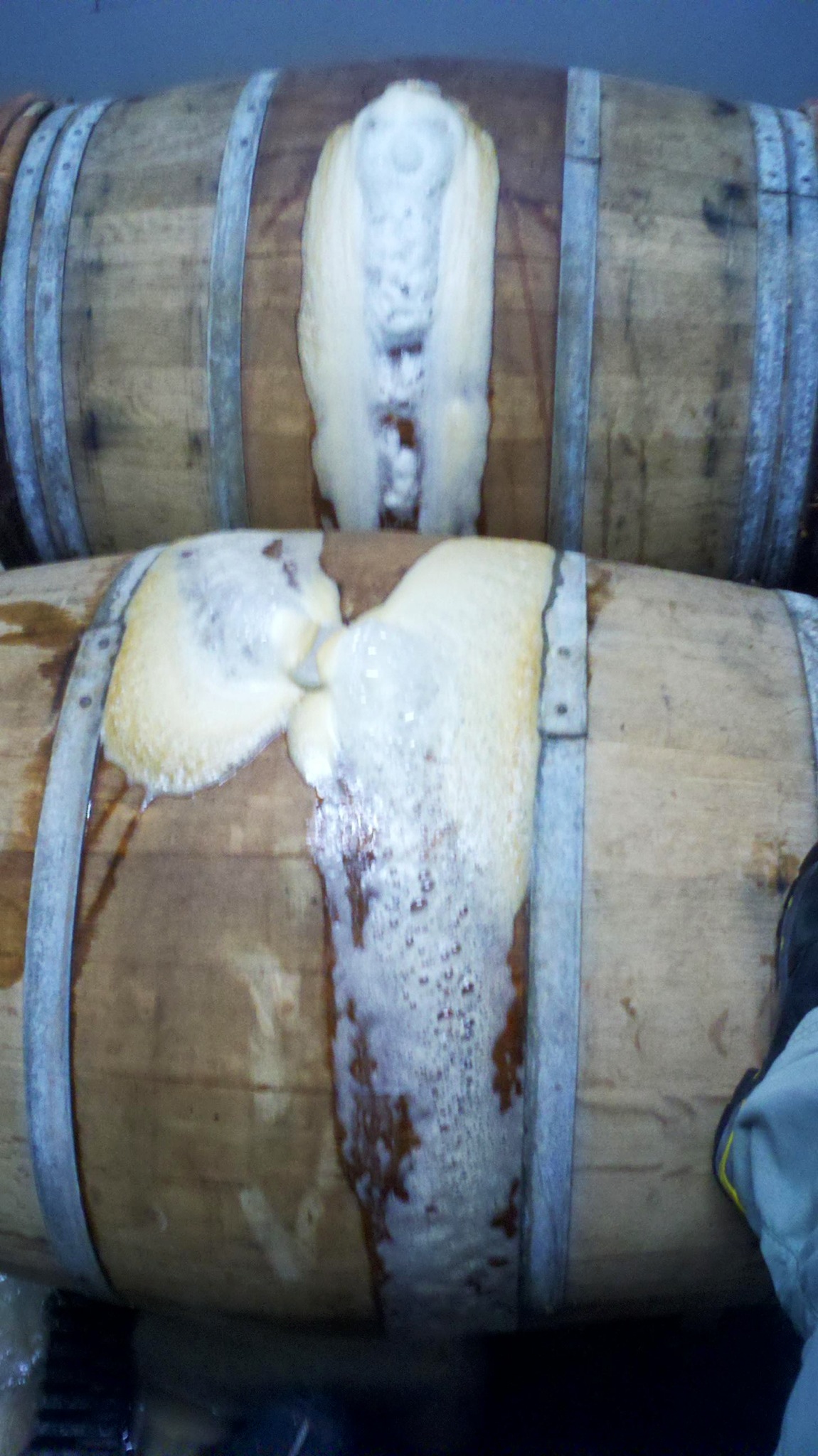
Horny Tank Batch 1 Barrel Fermenting (photo courtesy Vinnie Cilurzo)
So there you have it folks, some very cool new stuff happening at Russian River. I’m sure your taste buds are going nuts right now as are mine! Beatification , a NEW beer in the works , and the possibility of a straight Lambic ( Sonambic ) !!! I hope to follow up with Vinnie sometime in the future to see what they’ve discovered on how the temps are changing or not changing the beer.
 Even though the wort has just hit the Amphoras, Jean did have a few minutes to answer questions for me. You can read my brief interview after his official message.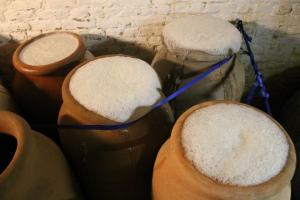









 Embrace The Funk