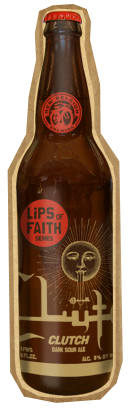
Sign me up for this one! The new release in the Lips of Faith series from New Belgium brewing sounds awesome. It’s called “Clutch” and is named after a hard-rock band out of Maryland. The beer has trickled into some markets on draft already, but the official release party was scheduled for today (August 29th) with the band in Washington, DC. That party looks to have been postponed indefinitely (I’m assuming due to Hurricane Irene). I had been holding on to this post in order to get some information from the party but since that isn’t going to happen….Look for the bottles in your area soon.
Pure rock fury meets Belgian-style brewed folly in this collaboration with Maryland hard-rockers, Clutch. A pronounced bass line of dark chocolate, coffee and black malts bridge the sourness of our dark wood ale for a fluid riff.
Being the fan of dark malt and sour that I am I’ll be searching this one out. The “facts” from NB on this offering:
ABV –
9%
Malts –
Dark Chocolate, Coffee, Black
Fruits/Spice –
Dark Wood Ale
One thing I wonder….Is teaming up with a band to release a beer the new Brewery 1 and Brewery 2 collaboration?
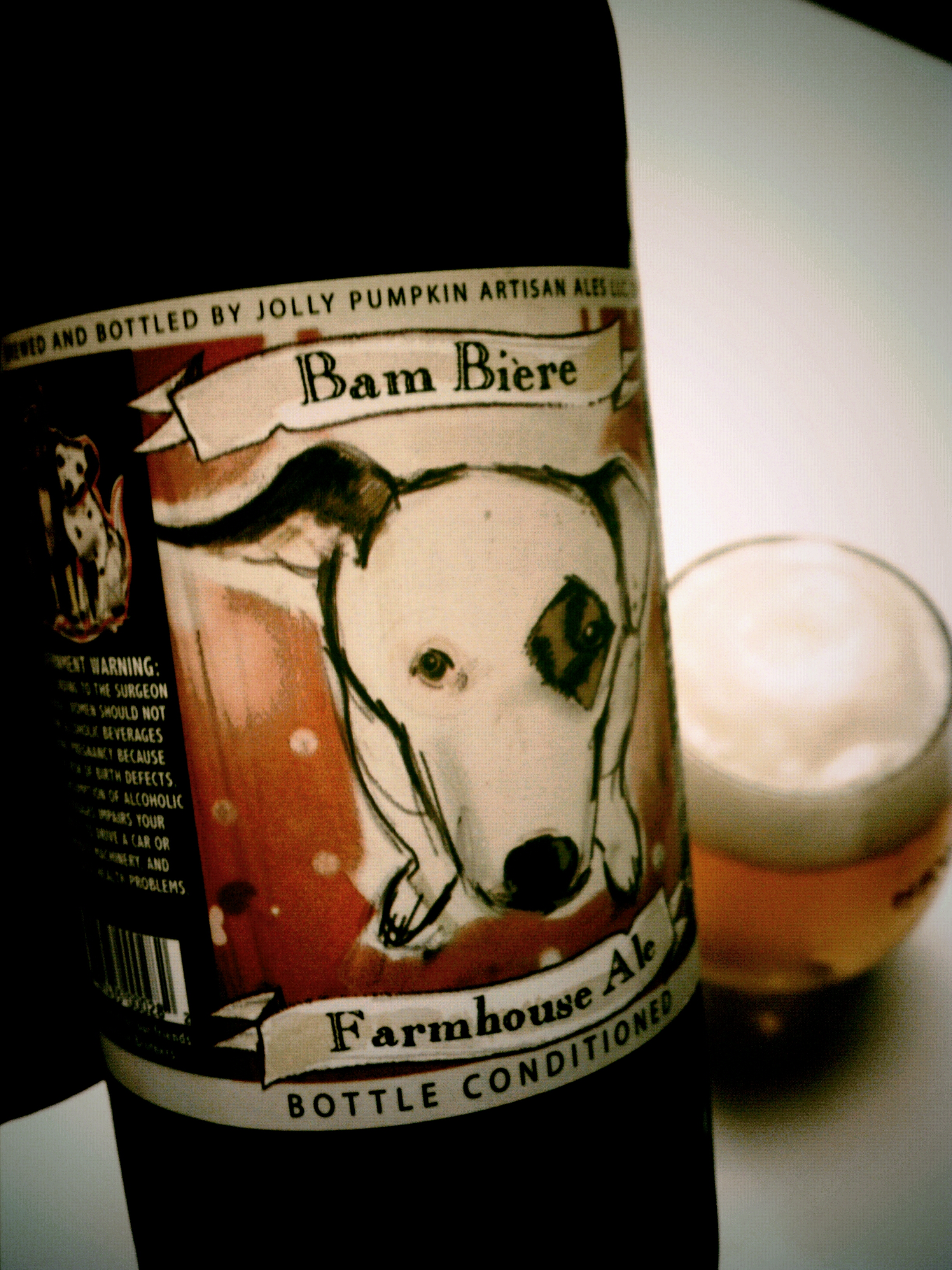
This delicious farmhouse ale is named for our Jack Russell, who struck by a car, bounced back in fine tenacious Jack Russell fashion, and is brewed for those of us who knocked down, have picked up, dusted off and carried on undaunted. Golden, naturally cloudy, bottle conditioned and dry hopped for a perfectly refreshing balance of spicy malts, hops and yeast. Please enjoy our beers in good health, And look both ways when crossing the street!
If there were ever a beer that proved it’s not necessary to have 100ibus and 9% alcohol to have layers of flavor and depth I think Bam Biere is it. Ron Jeffries and his team at Jolly Pumpkin have really packed a lot of flavor and aroma into this 4.5% beer. ( I didn’t use the photobox on this shoot, I got lazy)
Jolly Pumpkin Bam Biere Batch 448/449
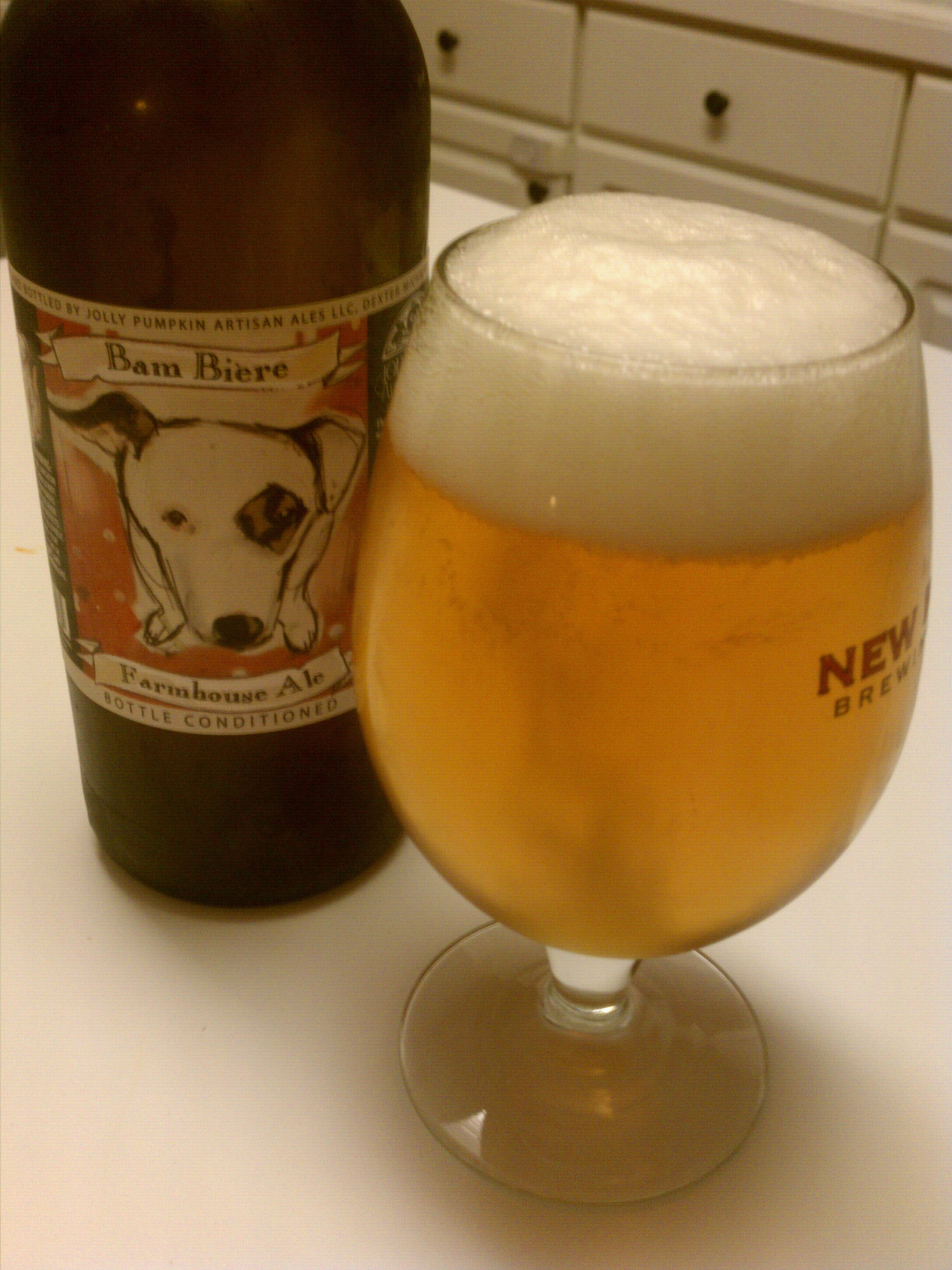
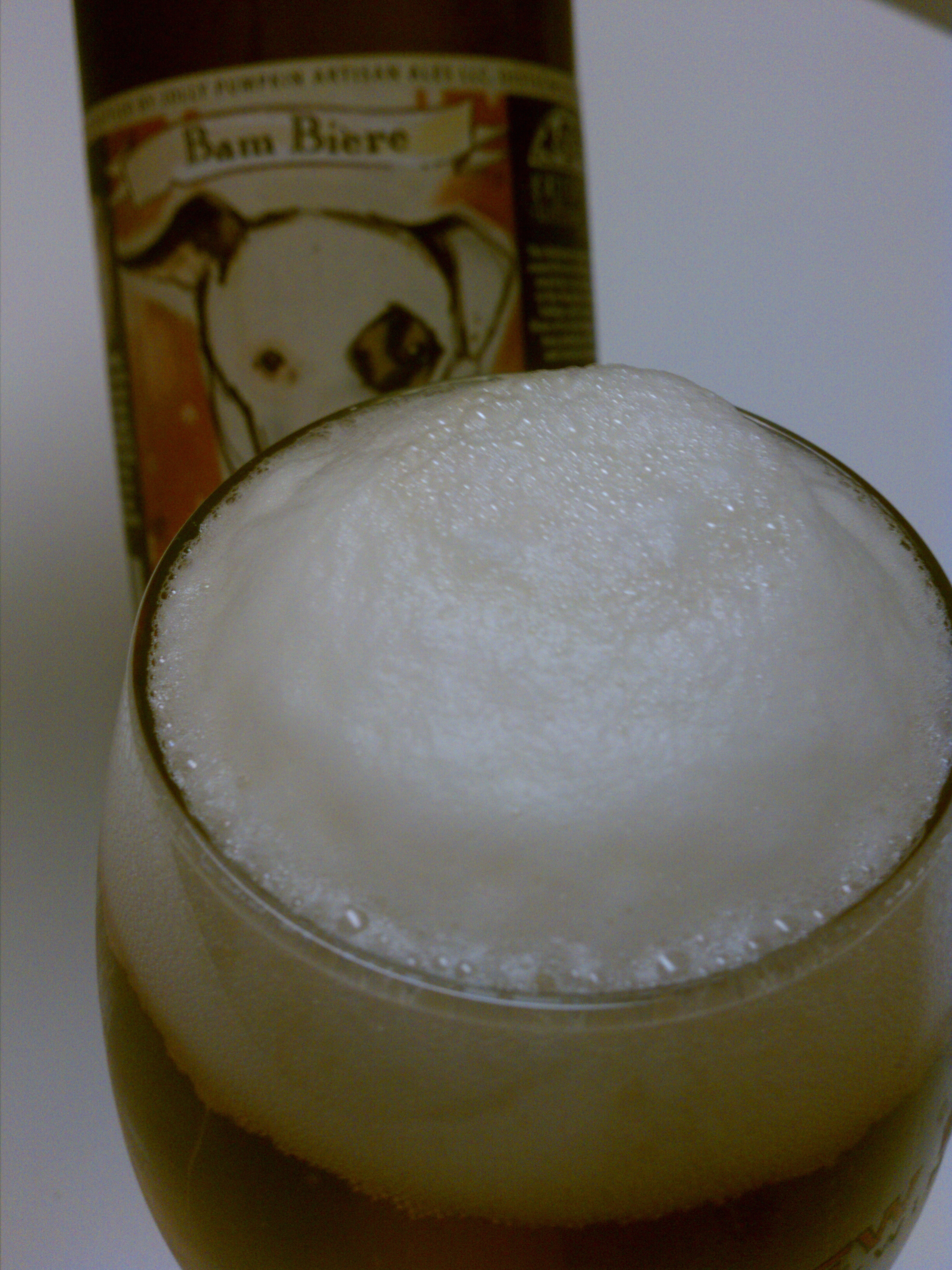
Appearance– A bit hazy, straw golden in color. Huge pillow white head that won’t die. Gets nice and rocky after a minute or so. Great fizzy bubbles cascading through glass. (It should be noted I used a New Belgian glass with etch marks in the bottom) Nice lacing after the beer is finished.
Aroma– Lemon and Citrus are upfront. Followed by a nice pleasing barnyard funk. In the finish a white wine, nutmeg and faint vanilla aroma. If I really searched for anything else I would say white grapes.
Taste– Again lemon and citrus first in the taste. This citric and lactic tartness along with the hop bitterness really wowed me from the first taste. Peppery and some cinnamon orange flavors come in near the end.
Overall– One thing I love about this beer is how dry it is. No sweetness which keeps me coming back for another sip. To me this beer is all about “drinkability”. I would go so far as to call this the apex of “Sour, Wild, Funky” session beers. It has enough lactic sourness , enough Brett, and enough Belgian yeast flavors to make your pallet happy while being able to enjoy multiple glasses.
One of my favorite sources for beer and brewing information is The Brewing Network. They have multiple shows that air through out the week. In 2009 they interviewed Ron about this beer for the show Can You Brew It? It’s a great listen on this beer and gives you more insight as to what goes into producing this great beer. They had awesome homebrewer Mike Mraz take on the challenge of cloning this beer. Here is the recipe based on the interview with Jolly Pumpkin, which can also be found here:
Grain/Extract/Sugar
% Amount Name Origin Potential SRM
—————————————————————————–
51.0 4.38 lbs. Pilsener Belgium 1.037 2
25.5 2.19 lbs. Pale Malt(2-row) America 1.036 2
13.8 1.19 lbs. White Wheat Belgium 1.040 3
6.6 0.56 lbs. Flaked Barley America 1.032 2
2.9 0.25 lbs. Crystal 80L America 1.033 80
0.2 0.02 lbs. Black Patent Malt America 1.028 525
(black patent is .25oz)
Hops
Amount Name Form Alpha IBU Boil Time
—————————————————————————–
1.20 oz. Crystal Pellet 3.80 18.6 60 min.
0.80 oz. Crystal Pellet 3.80 6.5 30 min.
0.50 oz. Crystal Pellet 3.80 0.0 0 min.
0.25 oz. Crystal Pellet 3.80 0.0 Dry Hop
Extras
Amount Name Type Time
————————————————————————–
0.30 Oz Oak Cubes Other 14 Days
Mash Type: Single Step
Notes
—–
.15 American oak and .15 French Oak
The oak cubes are boiled for 30 sec in the microwave to pull out some of the flavor and aromatics, also to soften the oak flavor. Pour off the water and add just the oak cubes. add the dry hop at
the same time.
you can dry hop with .25-.50 oz.
yeast can be from a fresh Bam Biere or
White labs wlp 550 then add Wyeast
5112 – Brettanomyces bruxellensis
5335 – Lactobacillus
5526 – Brettanomyces lambicus
to the secondary.
For this recipe I was worried about percentages so the amounts for the grain is odd feel free to round up if you like.
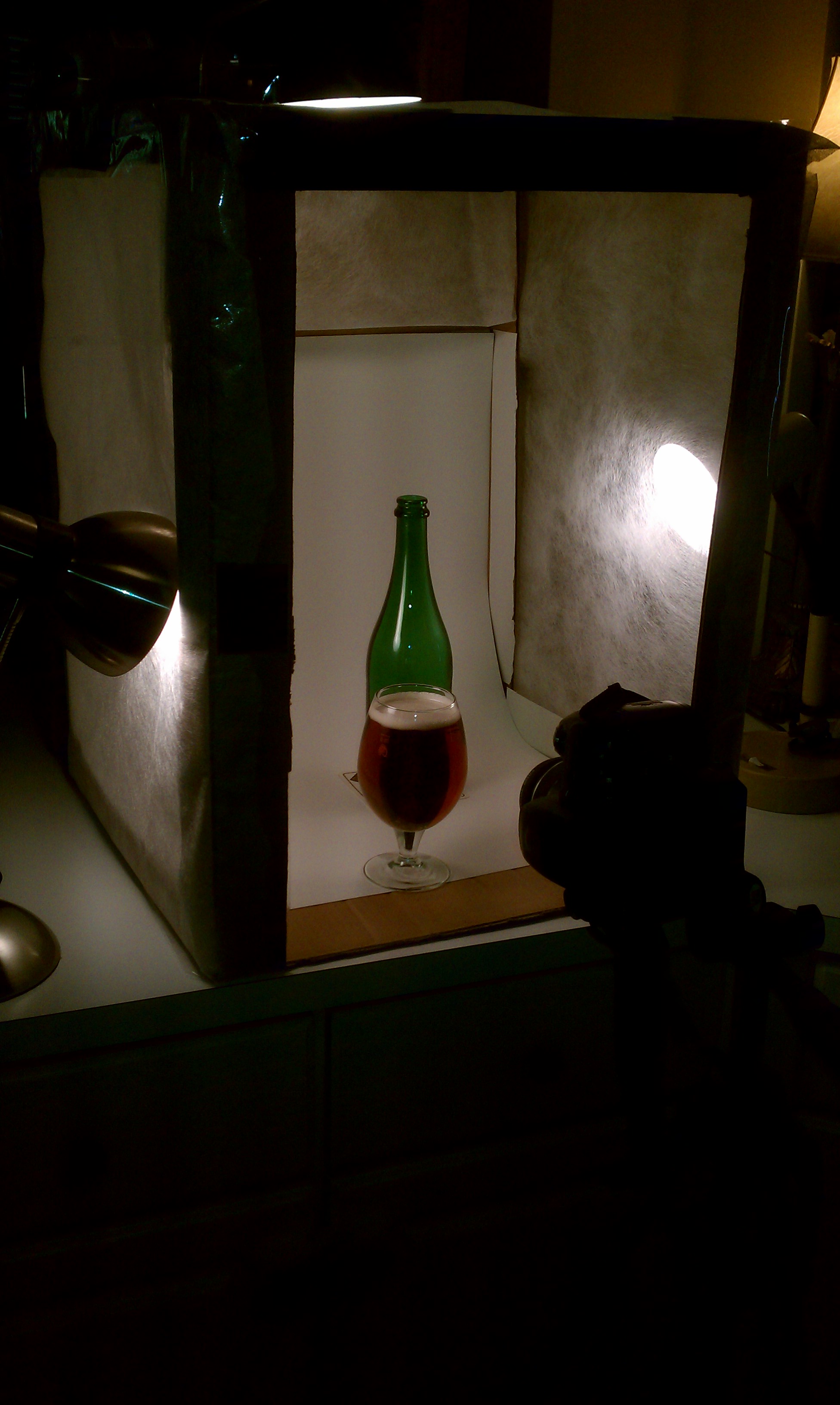
A few of you have emailed me asking what I shoot the sour beer pictures with. The equipment I use is pretty simple.
I use a Sony Alpha-500 camera for the main photo shoots. For the shots that have an effect I usually use my HTC EVO and I use an app called Vignette that creates the effects.
For the photo shoots I built a very inexpensive light box using the instructions here. There are three 60 watts desk lamps that surround the box for light. It works great for what I need to use it for. For those of you who want to get better shots of those hard to find beers or want to show off your home brew in the way you see it I would say build one. It’s very easy and improves your pictures. Below is a behind the scenes looks at the photo shoot today for an upcoming post. Oh one quick tip…use coasters so you don’t stain the white on the first day like I did!
Lager fans hold on to your glasses because new evidence suggests lager yeast is a genetic mutation of Saccharomyces cerevisiae and a wild yeast called Saccharomyces eubayanus. Yep those clean crisp clear lagers are the result of a wild yeast joining the party. This wild yeast is found to live on the outgrowth (galls) of the southern beech tree. The big question is how did those little wild yeasts travel all the way to Bavaria?
Galls are growths resulting from a fungal infection they grow on southern beech trees in Northern Patagonia (Argentina area).
When I was writing the post about Lactic Acid and Ph Post Ferment I had a hard time finding information about the ph of currently available commercial sour beers. Raj B Apte’s information was all I could find. I thought it might be helpful to everyone if I started recording the ph levels of some of the newer beers including American Style Sours. I will update the page as I am able to which you can find at the top of the home page on the Ph Readings Of Commercial Beers tab.



 Embrace The Funk