Hello everyone! 2 post in a month? That’s 2020 for you.
Recently I have been spending time on our pilot system at Yazoo fine tuning and developing a few passion projects 15-20 gallons at a time. Back to the early days of this blog. I’ve always strived to make this website a source for correct, easy to understand information and if possible let the brewer tell the story. It got me thinking what are my brewer and blender friends doing to keep their creativity and passion going during the pandemic? As I scrolled through different social media pages I noticed many are going back to their pilot systems or beginning work on some exciting small batch projects. With National Homebrew Day approching I though it would be fun to reach out to these incredibly inspiring friends to see what they are up to and if they would release a unique recipe or ingredient process. Let me tell you their genorosity with their time and process has been incredible!
I will be releasing the recipes and their thoughts over the next few weeks in new “Inspiring Recipes” series. I want to thank all the brewers who have emailed back with their information and all the brewers working to scale down their recipes. Y’all are the best and why I absolutely love what I do.
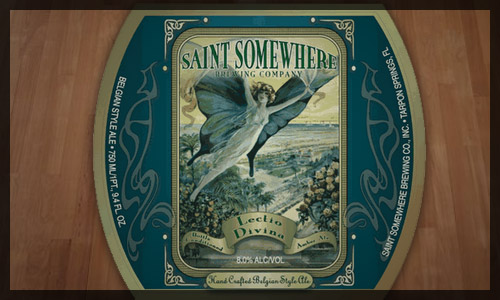
Our first two recipes and processes come from my dear friends Jeffrey Stuffings of Jester King Brewery out of Austin, TX and Bob Sylvester of Saint Somewhere Brewing out of Tarpon Springs, FL. Enjoy!
Jester King Wine / Beer Hybrid Recipe
1. Source your favorite variety of local grapes when they are in season. Contact a winery in your region you like. Chances are they’ll sell you the grapes you need. You’ll need 10# for a five gallon batch.
2. De-stem the grapes (for 10# it shouldn’t be too tedious to do this by hand). Crush the grapes (again, by hand is fine) and have a vessel to capture the juice. Put everything (skins, seeds, juice) into a 5 gallon carboy.
3. Let the must ferment spontaneously for 4-7 days. Once you see nice active fermentation, rack wort onto the fruit (enough wort to fill the carboy, but allowing a little space for blowoff). The wort should be very simple — for instance, just 80/20 pilsner malt and malted wheat. Add just a 60 min. addition of hops (virtually any variety) to impart about 10-15 IBU. Don’t pitch yeast, just allow the ambient grape must ferment do the work.
4. Let the primary co-ferment of must and wort ferment out. Once signs of active fermentation die down (typically after 7-14 days), rack the beer/wine off the fruit into your secondary fermenter. Let secondary fermentation go for a few weeks (or a few months). This is all very subjective. Just taste semi-regularly. Ideally, both primary and secondary will be at cellar temp. (around 60F).
5. When mature, rack into a keg and/or bottles and naturally condition for 4-6 weeks or until you’re happy with it.
“Lectio Divina”
Dubbel/Farmhouse hybrid
5 gallon batch
OG 1.060+-
FG 1.000+-
ABV 7%
85% Pilsen
10% white wheat malt
5% flaked rye
2.5oz Willamette 4.5AA+-
2lb table sugar
Straight Saison yeast of your choice as long as it’s NOT 3711!!
Mash all grains at 145F until conversion 40-60 minutes (yeah, sounds very low but we’re shooting for very high attenuation)
Sparge with 160F(again, low but not looking to de-nature the enzymatic action just yet) to collect 6 gallons.
Boil for 90 minutes
Add hops during final 60 min.
Please be very careful with the next step!!
Do this during the boil…before you’ve had any beer to drink.
Place 2lb table sugar in a dry pot, preferably on an outside burner as it will smoke…A LOT!
Crank heat up to high and walk away. Do not add water. After about 5 minutes the sugar will smoke and liquify at the bottom. Stir carefully as it will reach temps of 400-450F during the process.
Continue high heat until all the sugar is melted and small bubbles are forming at the top but not a rolling boil. You can very easily reach the point of no return and it will completely empty the pot onto the ground like a volcano.
It should look like your favorite American Imperial Stout at this point. Very dark with very fine bubbles on top.
Turn off heat and VERY CAREFULLY adding two cups cold water at a time, stirring between each addition until you’ve added a total 6 cups.
Wear heavy gloves and an apron as it will spit and sputter 400F molten sugar at you but the end product will be worth the effort.
What you’ve made is “Spanish Liquor”. Burnt sugar syrup and it’s glorious!
“Dark Candi Sugar” just won’t cut it, plus this is far less expensive.
Add the Spanish Liquor to the boil along with any remaining solids as they will dissolve.
Chill to 68-70F, pitch yeast and let rise to no higher than 78F.
Ferment to completion, preferably open ferment or a close approximation, to reach a final gravity as close to 1.000 as possible.
Second or third generation Saison yeast would be a great help to get you there.
Age in place minimum 3-4 weeks and package, preferably bottle conditioned or keg conditioned.
Only gets better with age. I recently had a 12yo bottle and it was outstanding!
Hello friends! Long time no write! Since most folks are social distancing it seemed like a good time to write a post I have wanted to for a while now.
The past 2 summers I have been fortunate enough to be invited to participate in Carnivale Brettanomyces. This incredible gathering of brewers, yeast lab owners and wild beer fans is held every June in Amsterdamn (sadly due to COVID-19 it has been cancelled this year). When I have finished my talks and tasting events in the Netherlands my next stop is Belgium to visit breweries that inspire me and hopefully learn more about their unqiue processes. Many of you know my sour beer epiphany moment was my first sip of the Flemish Brown “Liefmans Goudenband” 20 years ago. That beer set me on a course of learning as much as I could about sour beer: writing plus interviewing as many professional producers of these styles as I could and commericially releasing Zure Bruine. The Provisional Flemish Brown Ale I blend every few years.
In June of 2019 after Carnivale I finally had the opportunity to make the pilgrimage to the East Flanders city of Oudenaard where the storied Belgian brewery Liefmans has been located since 1697. My visit was setup to shadow one of their longtime employees for the day brewmaster Alfred. I have a great deal of information from my time with him for a much larger project, but something pretty incredible happened during my visit. A chance meeting with an amazing, tough and pioneering lady name Rosa Merckx aka Madame Rose ‘The First Female Brewmaster in Belgium’. I’d like to tell you about our time together and her importance to the world of sour beer. We did have a little help with translation during over conversation.
The day I visited Liefmans the entire country of Belgium was being hit with a massive heat wave pushing temps well above the normal for June. As Alfred and I begin our day we walk down the ivy lined brick buildings to their taproom alongside the river Schelde for a tasting of their core lineup of beers. You certainly need a nice refreshing baseline if you are going to talk products and process all day right? As we chat alone in the tasting room about his history at Liefmans I see a grin and he says “Oh wow you are in for a treat. Madame Rose is here.” Now as a fan of Liefmans I knew a bit about Rosa, but did not expect to meet her. She’s one of those people even at 95 years old who when they enter a room (even a room of 2 people) the room feels risen and certainly has an air of esteem.
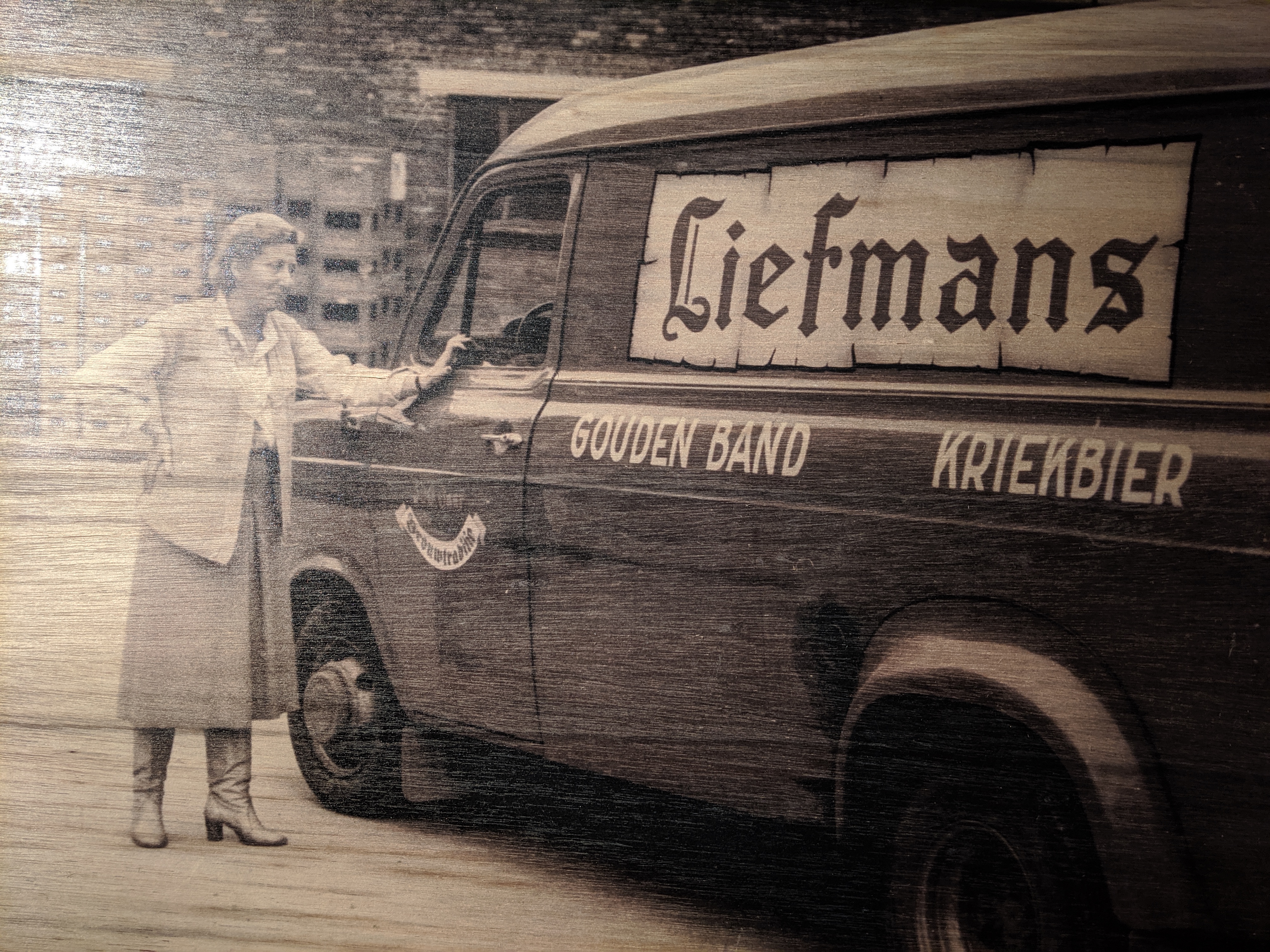
As Alfred introduces me to her and tells her about the purpose of my visit she immediately is served a Goudenband (pronounced How-den-bond). Her senses as sharp as ever looking at the color, smelling the batch and grining as she enjoys the first sip. “If the beer isn’t excellent I will say so…but where are you from?” she turns and asks I tell her Nashville, TN. She laughs “ahhh yes country music, it is everywhere there!” I decide this is a good time to ask for a full pour of Goudenband draft. As Alfred pours the perfect chalice of their flagship provisonal brown ale he reminds me the reason we are able to enjoy this beer in the United States is all due to Rosa’s hard work in 1972 by creating exportation avenues for Liefmans.
“If the beer isn’t excellent I will say so”- Madame Rose
“Some were good and some were just no good! Some [distributors] we exported to never paid. In America in that time you could just disappear, in Belgium you cannot, its a small country! haha” I ask her about the risks and reasoning for a small Belgian brewery to ship beer to the United States in the 1970’s. “Was this out of necessity or was there a market for these acidic ales in the US?” She quickly answers “Oh no, there was no market during that time. We could create the market. There was a group…a collective of Belgian brewers in the late 70’s and 1980’s with initatives from the Belgian government to create exportation. They would give money to export the product. But it was not so easy to do. We sent our beers to Antwerp and then had to find a ship that goes to America. Then when you one that goes to America its with people you don’t really know. If they are honest or not honest? If they work for it or not work for it. We did the same with Italy and one time it stopped, we don’t know why.”
Rosa seeing off a delivery. Photo courtesy Liefmans
Rosa asks me “Do you get the dark Goudenband in Nashville?” As I tell her about Funk Fest and about how excited I was to finally serve a keg of it a few months prior I can see she is enjoying the conversation and wants to tell me something more in depth. “In this country here there were several breweries known for Belgian brown beer. There was a time when brown beer wasn’t connected to sour. Brown beer was like a Trappist or and Abbey beer, it was always non sour. So its a little different with Goudenband it was different than the others because of the sourness. This gave it more complexity. Our beers are not Guezes, its not compareable. Though our brewing is open, it has to do with atmosphere and the area in which it was made in…the infection if you want to call it in our main fermentation is spontaneous.
Liefmans open active fermentation vessels during transfer
But of course when you make the same beer and you have re-use of your yeast a top fermenting yeast which already has a lot of lactic acid bacteria you collect it and reuse it for the next brews you maintain this balance between bacteria and yeast. The yeast is always at the same time but is never pure yeast always contains the lactic acid. The reuse in the open vessels infect the whole area.”
Alfred nods and says “Yes the whole area will get infected by these lactic acid bacterias. A few years ago we did a few studies on what type of lactic acid bacteria is present and most of the acid here is Lactobacillus Brevis. We need them. The behavior of the bacteria is different here than other breweries. The adaptation to the environment and way of brewing.”
As we talk about the history of the recipe and if its changed the subject turns to hops and IBUS. “The hops must be good quality, you still need good hops. You must have the best ingredients otherwise you won’t have the right results. Its a better taste.” Rosa says “You can find mediocre beer anywhere. I always used Saaz, the hops are in the start of the boil for one hour and a half.” They state Goudenband is a maxium of 10 ibus.
As we finish our beers together she’s off to fill a couple jugs of local brewery water rich in calcium…but her departure home is certainly not a departure from the brewery. She has influenced so much of the process and the Liefmans character since the first day she stepped foot onto the property.
Photo courtesy Liefmans
Starting as a secretary in 1946 and bucking the “stay at home until you find a husband” mentality this pioneer of Belgian brewing thought she would try Liefmans for “maybe a month.” After all these years she tells me ” The brewery is still the most special place for me. I’m glad I did it.”
A pivotal moment for Rosa came when she was asked by her boss Mr. Vonhilenwig to try a particular beer. “What do you think of it?” he asked…With the words “I’m sorry but it’s not good, too sour (ZERP is the local term)” she changed not only the direction of the brewery but her life. The recommendations from a gifted young Rosa proved to make the beer milder, rounder with a richer more plesant taste. As time went on her work ethic and passion for brewing lead her to a larger role in the production of Liefmans beers. Taking wort density measurements, fermentations temperatures, tasting and eventually brewing together with her boss.
A big change for Liefman’s and another solidifaction of Rosa’s importance came around 1956/1957 when the original name for their brown ale “Azenband became challenged. [Azenband meaning the iron rings, like the rings or hoops around wood barrels.] Another gentleman at a now defunct Belgian brewery took out a patent on the name Azenband. He informed Liefmans they would be sued and owe him for every bottle of Azenband sold. Knowing that would be a huge hit to their bottom line he called to Madame Rose “This is crazy! We are not going to do that! What are we going to do?” to which she replied “Yes. What can we do? You know instead of Azenband “Iron Ring” why don’t we call it Golden Ring? Goudenband?” Mr Vonhilenwig loved the idea and said “Yes let’s go with that!” Luckily he took the proper legal steps to secure the name Goudenband cementing the name in history.
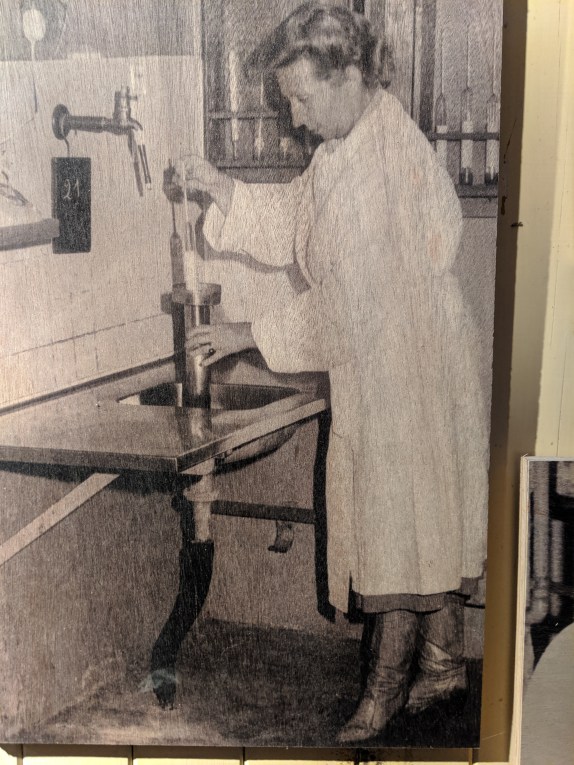
In this picture you see Madame Rose wearing the white lab coat of Mr Vonhilenwig. To feel more comfortable she would wear the coat to feel like her mentor and friend was still with her and guiding her during the daily tasks as she managed the brewery by herself. Photo courtesy Liefmans
When her boss suddenly died in 1972 Rosa became the first female Belgian Brewmaster and at the request of his family she took over the brewery until 1990 when it was purchased by Riva. In 2002 Riva was out however the brewery went broke but was revived in 2008 by current owners Duvel-Moortgat. Even though she has retired her mash paddle and stepped away from running the company make no mistake about it Rosa is very much involved in the continued development to this day tasting every new project that leaves Liefmans doors. Madame Rose a trailblazer not only in Belgian beer but her accomplishments recognized by generations of brewers looking for inspiration decades later. A truly remarkable lady whose importance in Flemish brown ale history cannot be understated.
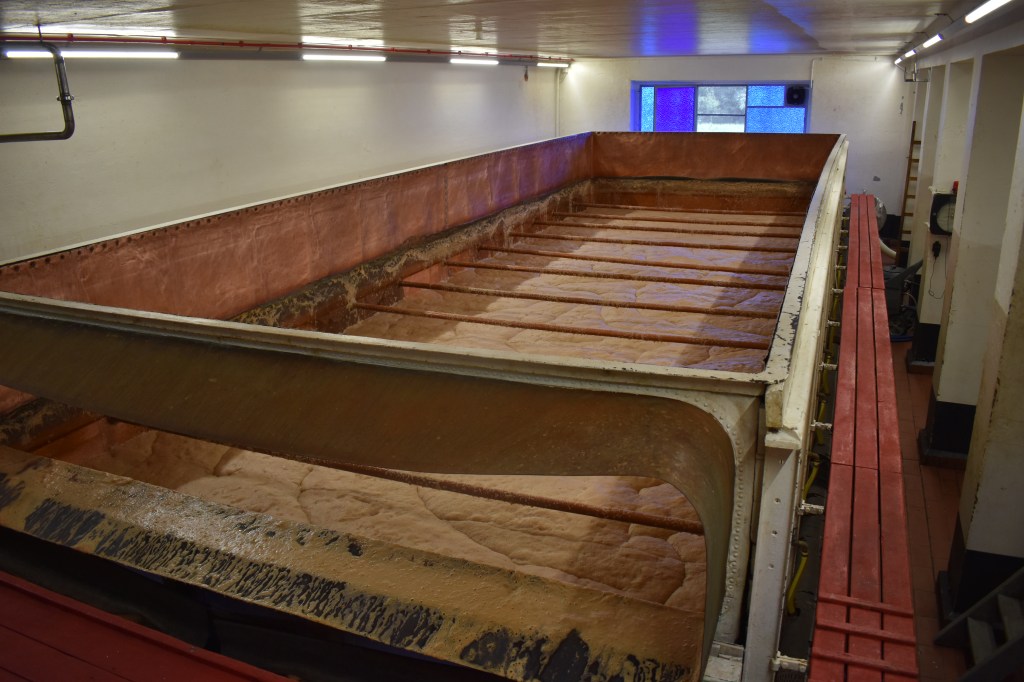
So after months of waiting our custom built coolship finally arrived on February 21st! I have been extremely excited about adding this piece of equipment to the ETF program since I made our first 100% Spontaneously fermented beer back in 2012. “Clarence” was the name of that beer and despite only making about 15 gallons to sell in the taproom and serve at Funk Fest that beer went to the medal round of GABF in 2014. Since then I’ve done some other Spontaneous/Coolship at Yazoo. We do have some older spontaneous beer hanging out in a single barrel that will be released at some point. But now we have the ability to produce alot more spontaneous!
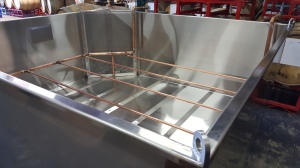
Shown with a removable wort chiller to use when ambient temps are a bit too warm.
Before I tell you about the brewday and our coolship, I want to thank a few people who were a big help with education, techniques, design and most importantly inspiration: Jeffery Stuffings, Sean Spiller and Averie Swanson of Jester King, Jean van Roy of Cantillion, Jason Perkins of Allagash, Vinnie Cilruzo of Russian River Levi Funk of Funk Factory, Chad Yakobson of Crooked Stave, James Howat of Black Project and Chase Healey of American Solera. All these fine brewers were very helpful and forthcoming with what has worked for them and even what hadn’t.
Our 600 gallon coolship is designed to be mobile. It has to be transported from our off site barrel cellar to the main brewery on brewday and fit within our space upstairs to cool, so with those limitations in mind we also designed it to fit a trailer with 2 “Tote Tanks”. Why that setup? Well my hope is that we can take our coolship out to some of the local fruit farms and our hop field to inoculate the wort.
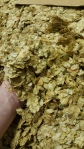
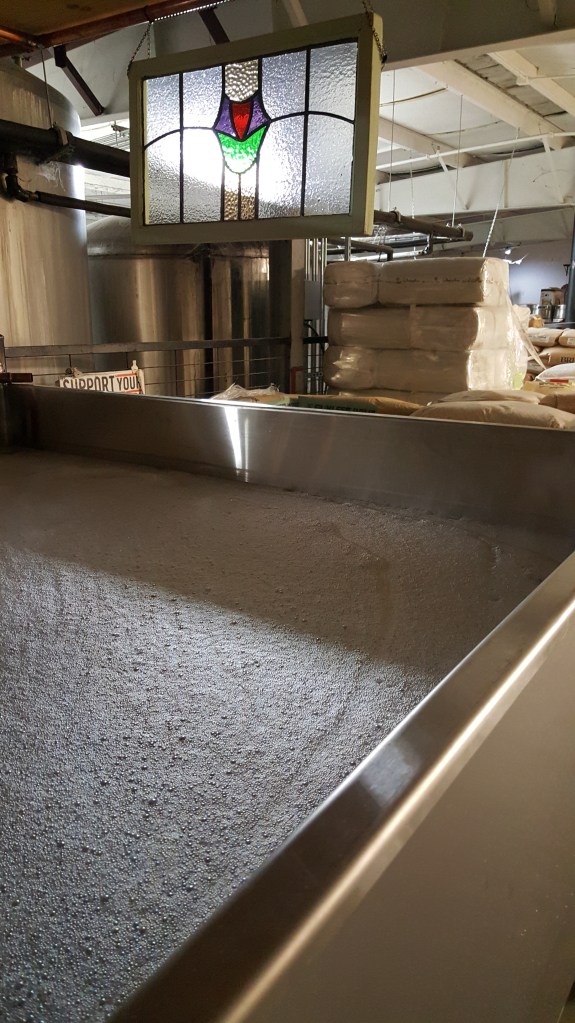
Brewday! We followed a traditional Turbid mash schedule to create a starchy strong wort to boil for 3 hours. Our grist consisted of 70% Pale and 30% Raw wheat grown locally in the Nashville area. We aimed for a gravity of around 10 plato.
We have been aging hops for a few years and use aged hops in all of our “sour blondes”, so I have plenty of whole leaf hops to select from. We had some 2011 East Kent Goldings that had aged very well that I hopped with at a rate of 1/2lb per bbl of wort. Our batch sizes are 40bbl so we used 20lbs of hops. Our normal aged hops rate is around 1lb per bbl, but for the first batch I opted to see what sort of “sour level” we would get with 1/2lb..
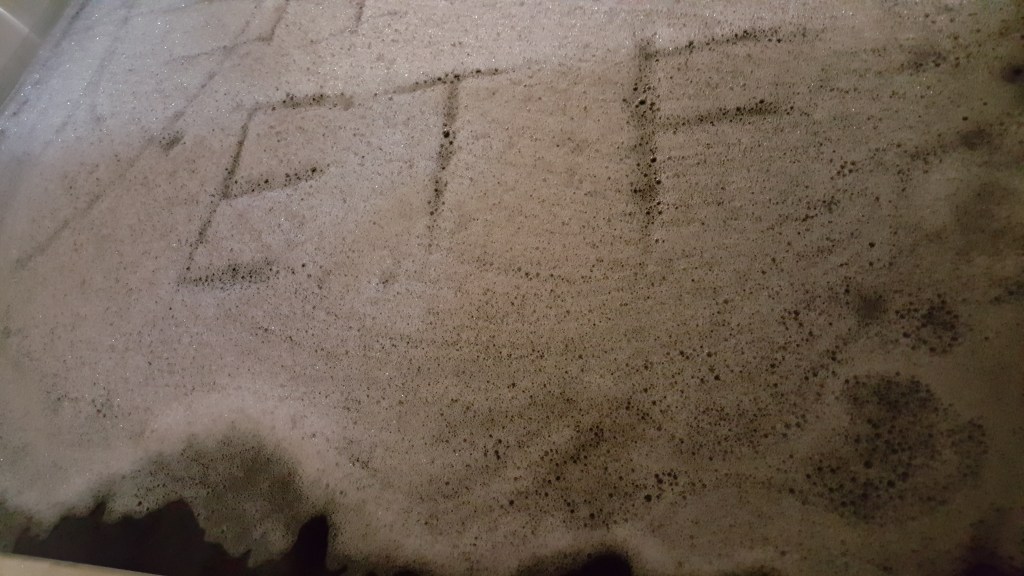
After a long 3 hour boil and some spicy pepper pizza it was time to transfer into the coolship to allow the wort to cool down overnight and become inoculated with the native and wild microbes in the air. The next morning the temp of the wort was around 70f and 68f by the time it was in neural oak. We had a 4 1/2 day lag time before visible fermentation started, which for our first time on a large scale I feel like it really really good. I don’t expect that every time. I know Cantillon has had barrels finally take off months later. Below are some pics of the brewday. Hope you enjoy!
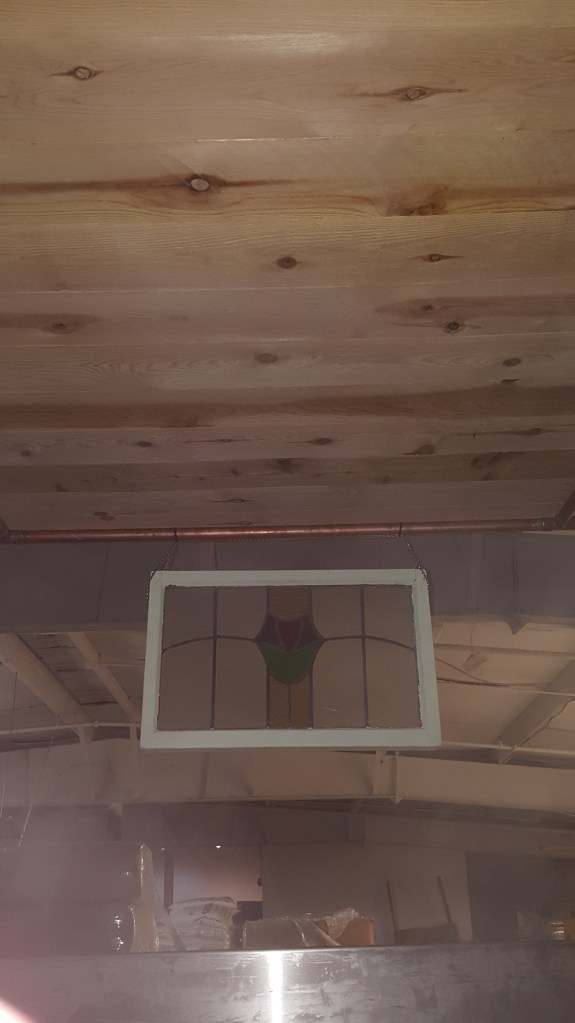
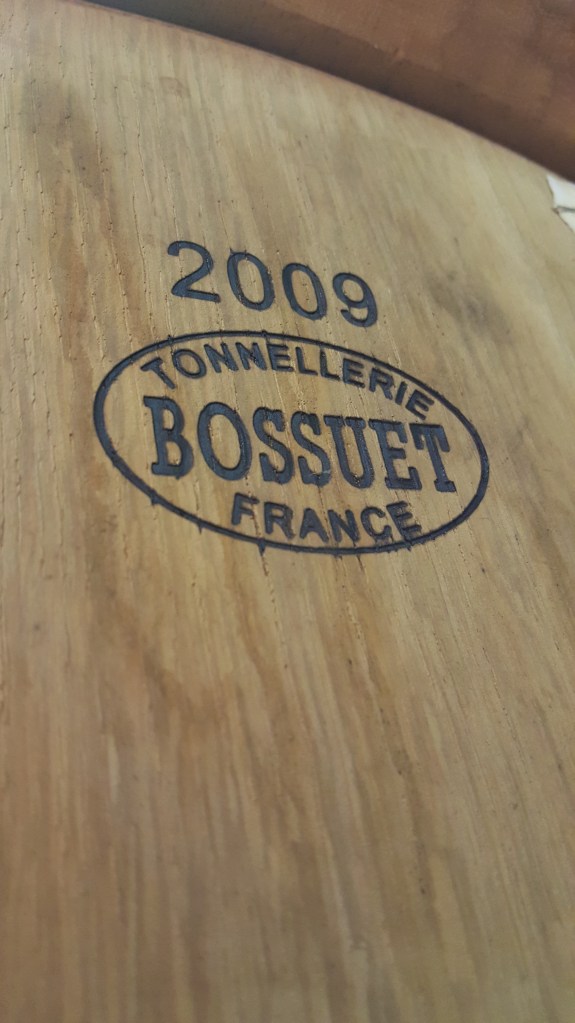
Locally grown Raw wheatCoolship on the maiden voyage and some stained glass for good luck!We built a removable roof made from Tennessee Cedar planks. This helps to absorb some of the steam.Linus and me toasting the awesomeness of the day
Below video shows the wort movement as the airflow moves by
We’ve got something fermenting!French Oak barrelsSome delicious Spontaneous beers were enjoyed on brewday. The bottle on the right is the 2nd to last one of 2012 Clarence.
Hey folks! I am very excited to announce that Jay Goodwin of The Rare Barrel and I have cooked up a crazy idea: Crowd Source a Sour Beer to be brewed and sold! Yes this is a beer YOU can be directly involved in creating! He and I have 2 great platforms to educate and reach people interested in sour/funky beer. I’ll be on The Brewing Network Wednesday 11/9/16 at 5pm PST to talk discuss this project in depth, in the meantime below is the initial info on what we have planned.
Our main goal with this project is to drive discussion of sour beer making techniques and philosophies. From brew day, to fermentation and aging, and all the way through packaging and bottle conditioning, you’ll be able to not only follow the process with unprecedented access, but actually be able to influence the final outcome of the beer! What? That’s crazy. We know this beer will be a Logistical Nightmare (
Yazoo Brewing Company and The Rare Barrel are thrilled and proud to announce we’re embarking on a very exciting new collaboration project. Joining together our resources as sour blenders, we plan to enlist the help of the sour beer community to create what we believe will be the very first crowdsourced sour beer! With input from other pro brewers, home brewers, and sour beer lovers, we plan to open up the entire process of collaborating on a sour beer to the public. This unique collaboration joins together two sour programs in Embrace the Funk (Yazoo Brewing Company) and The Rare Barrel, but also two sour beer communities very close to those programs: Milk the Funk (the online sour beer community Brandon Jones of Yazoo helps run) and The Sour Hour (the Brewing Network podcast hosted by Jay Goodwin of The Rare Barrel). “When Brandon and I started cooking up this idea, it seemed a little crazy. It still seems crazy” said Jay. “The sour beer community is a really involved and active community though, so we thought they’d have a blast participating in this project and that’s when we decided to just go for it!”
When Brandon was asked why he’s interested in this collaboration, he said “I think one of the neatest aspects of this project will be the education during the different steps of the recipe creation process. The ability to reach an engaged audience plus have them involved in what brewhouse limitations, considerations and legalities we as commercial sour brewers/blenders see on a daily basis will provide a unique global learning experience.”
Through Milk the Funk and The Sour Hour, the sour beer community can follow along and participate in the creation of this beer from scratch. From brew day, to fermentation and aging, and all the way through packaging, passionate sour lovers will be able to not only follow the process with unprecedented access, but they’ll actually be able to influence the final outcome of the beer.
For more details, make sure to follow @YazooBrew, @TheRareBarrel, @embracethefunk, Milk the Funk and The Sour Hour!
About The Rare Barrel: The Rare Barrel is an all-sour beer company located in Berkeley, CA. Established in 2012, The Rare Barrel has continued to aged 100% of their sour beers in oak barrels. Jay Goodwin, co-founder at The Rare Barrel, is also the host of The Brewing Network’s podcast called The Sour Hour. For more information, visit http://www.therarebarrel.com.
About Yazoo Brewing Company: Yazoo Brewing Company opened in 2003 and is located in Nashville, TN. In 2012 Brandon Jones and owner Linus Hall teamed up to start the state’s first dedicated sour/wild program named Embrace The Funk after Brandon’s popular funky beer blog. For more information, visit http://www.yazoobrew.com or http://www.embracethefunk.com .
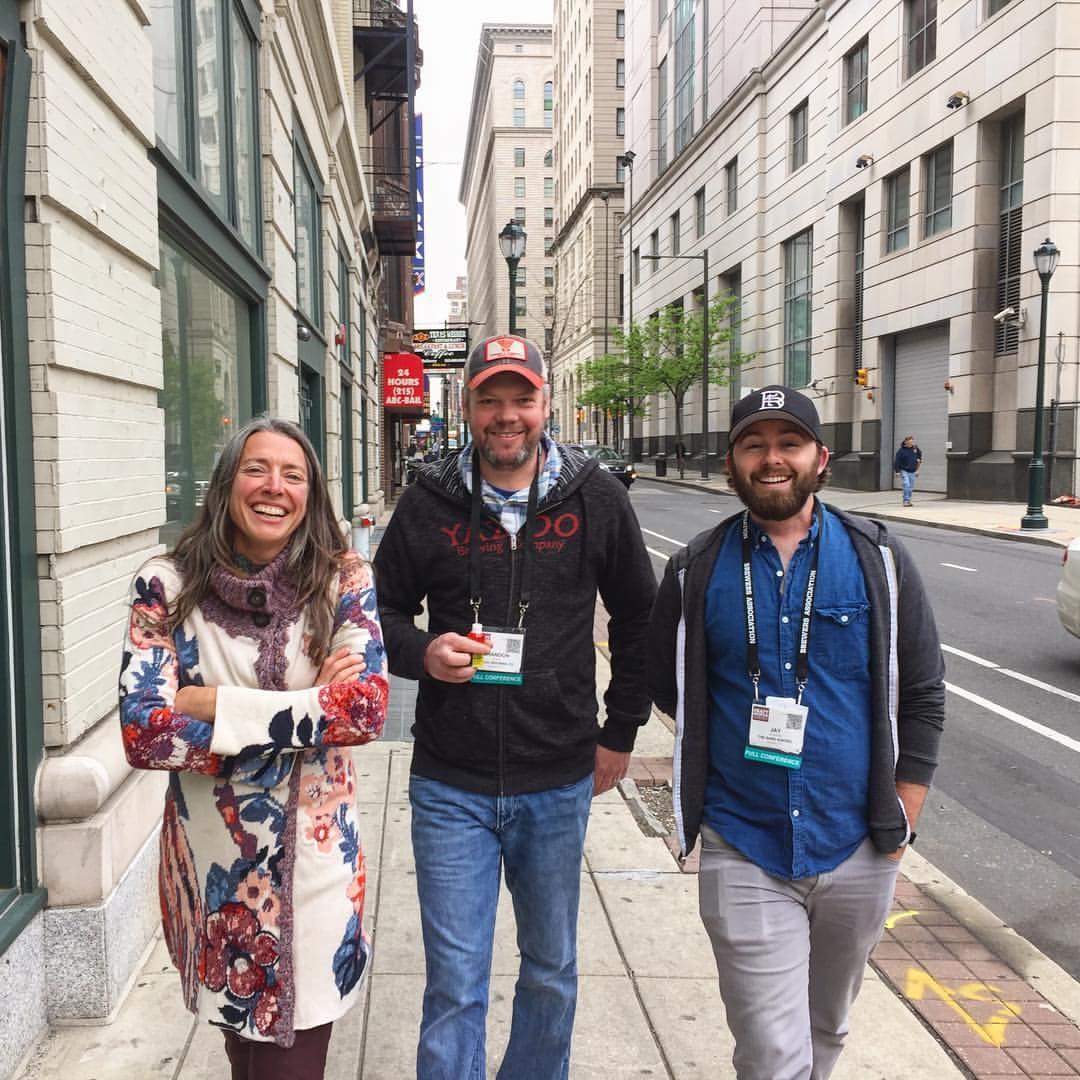
Lauren Salazar, Brandon Jones and Jay Goodwin at CBC 2016
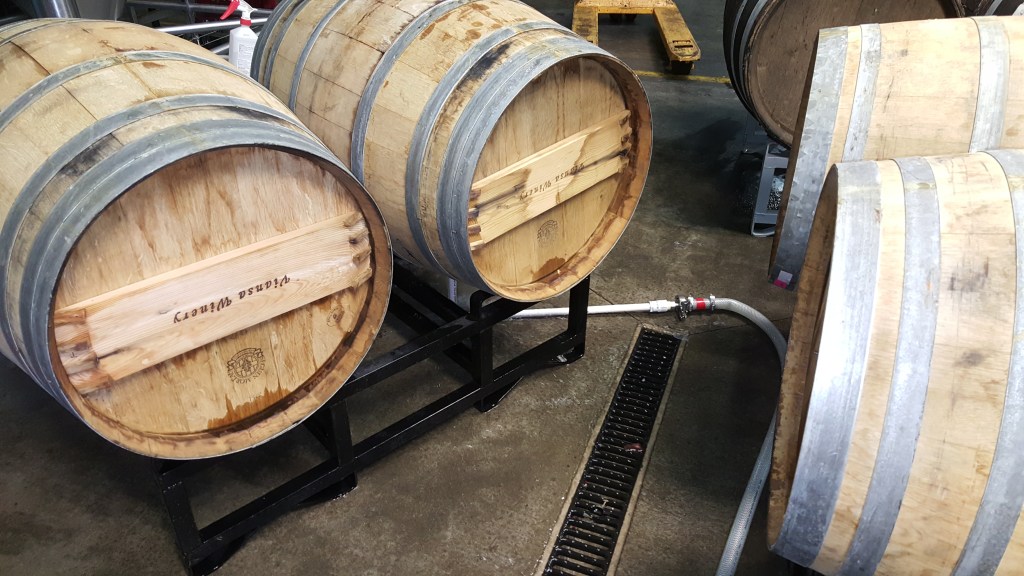
One question I get asked a lot is how I clean our barrels and how much cleaning I actually do after aging a beer.
I’ll start off with the second question first…truth is I don’t do much cleaning to the barrels after aging. We try to refill our barrels with a new beer within a few hours of emptying and never let them sit empty. By having as little downtime in the oak as possible it keeps your resident microbes happy and ready to eat which in my experiences have lead to brighter, healthier, more rounded beers with less aging time needed. *If we need to store a barrel we use the holding solution amounts described in this previous post.
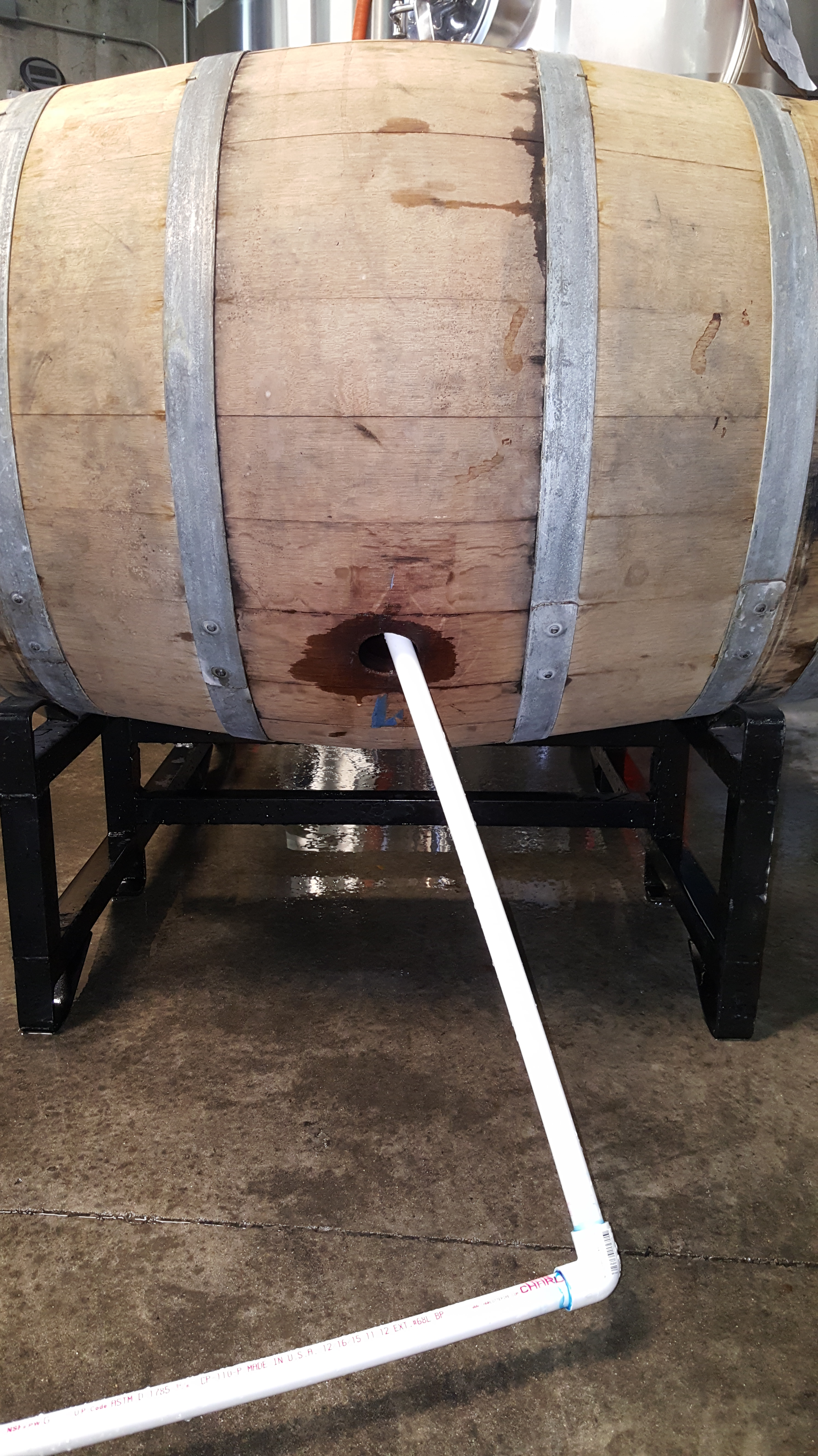
So what do I use to rinse/wash our barrels? This cheapo wand has served us fairly well, saved my back and is easily built for under $50. I will preface this tool build by saying it’s probably better served for brewers who only have a few barrels in their program. Believe me trying to use this to rinse 20 something barrels every empty/re-fill works, but depending on the size of your wetpad it can take a good bit of maneuvering.
It’s a simple build that most could probably just look at the picture and figure out but here you go:
2x 24″ 1/2 PVC pipe ( I chose PVC because I already had it)
1/2″ Elbow PVC
1/2″ Male adaptor PVC
1/2″ Female adaptor PVC
Thread tape
PVC Cement
I’m confident by the pics below you can assemble the project. I’ve never had an issue with it falling over during rinse. I usually do a burst rinse twice and let the water drain completely then run it for about 45 seconds to a minute. Again in our process we refill barrels same day and try to keep our resident oak microbes living. Our water pressure is good enough to spin this small spray ball, but you can easily use a pump inline. Hope this helps my fellow barrel brewers. Due to the amount of barrels I now use we are probably moving to an in place pump style barrel cleaner that evacuates the dirty water, but this has done a fine job on quite a few barrels.
Rinse in processRotate the barrel slightly to the side to insert the rinse wand. Then rotate barrel so the bunghole is directly over the floor and guide the wand until it stands up.The cheapo rinse wand in all it’s glory.Sprayball connectionWater In connection
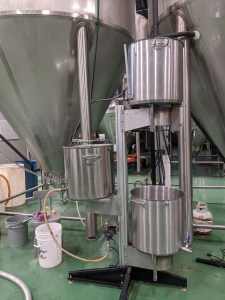 Recently I have been spending time on our pilot system at Yazoo fine tuning and developing a few passion projects 15-20 gallons at a time. Back to the early days of this blog. I’ve always strived to make this website a source for correct, easy to understand information and if possible let the brewer tell the story. It got me thinking what are my brewer and blender friends doing to keep their creativity and passion going during the pandemic? As I scrolled through different social media pages I noticed many are going back to their pilot systems or beginning work on some exciting small batch projects. With National Homebrew Day approching I though it would be fun to reach out to these incredibly inspiring friends to see what they are up to and if they would release a unique recipe or ingredient process. Let me tell you their genorosity with their time and process has been incredible!



 The day I visited Liefmans the entire country of Belgium was being hit with a massive heat wave pushing temps well above the normal for June. As Alfred and I begin our day we walk down the ivy lined brick buildings to their taproom alongside the river Schelde for a tasting of their core lineup of beers. You certainly need a nice refreshing baseline if you are going to talk products and process all day right? As we chat alone in the tasting room about his history at Liefmans I see a grin and he says “Oh wow you are in for a treat. Madame Rose is here.” Now as a fan of Liefmans I knew a bit about Rosa, but did not expect to meet her. She’s one of those people even at 95 years old who when they enter a room (even a room of 2 people) the room feels risen and certainly has an air of esteem.





 Brewday! We followed a
  We have been aging hops for a few years and use aged hops in all of our “sour blondes”, so I have plenty of whole leaf hops to select from. We had some 2011 East Kent Goldings that had aged very well that I hopped with at a rate of 1/2lb per bbl of wort. Our batch sizes are 40bbl so we used 20lbs of hops. Our normal aged hops rate is around 1lb per bbl, but for the first batch I opted to see what sort of “sour level” we would get with 1/2lb..


 So what do I use to rinse/wash our barrels? This cheapo wand has served us fairly well, saved my back and is easily built for under $50. I will preface this tool build by saying it’s probably better served for brewers who only have a few barrels in their program. Believe me trying to use this to rinse 20 something barrels every empty/re-fill works, but depending on the size of your wetpad it can take a good bit of maneuvering.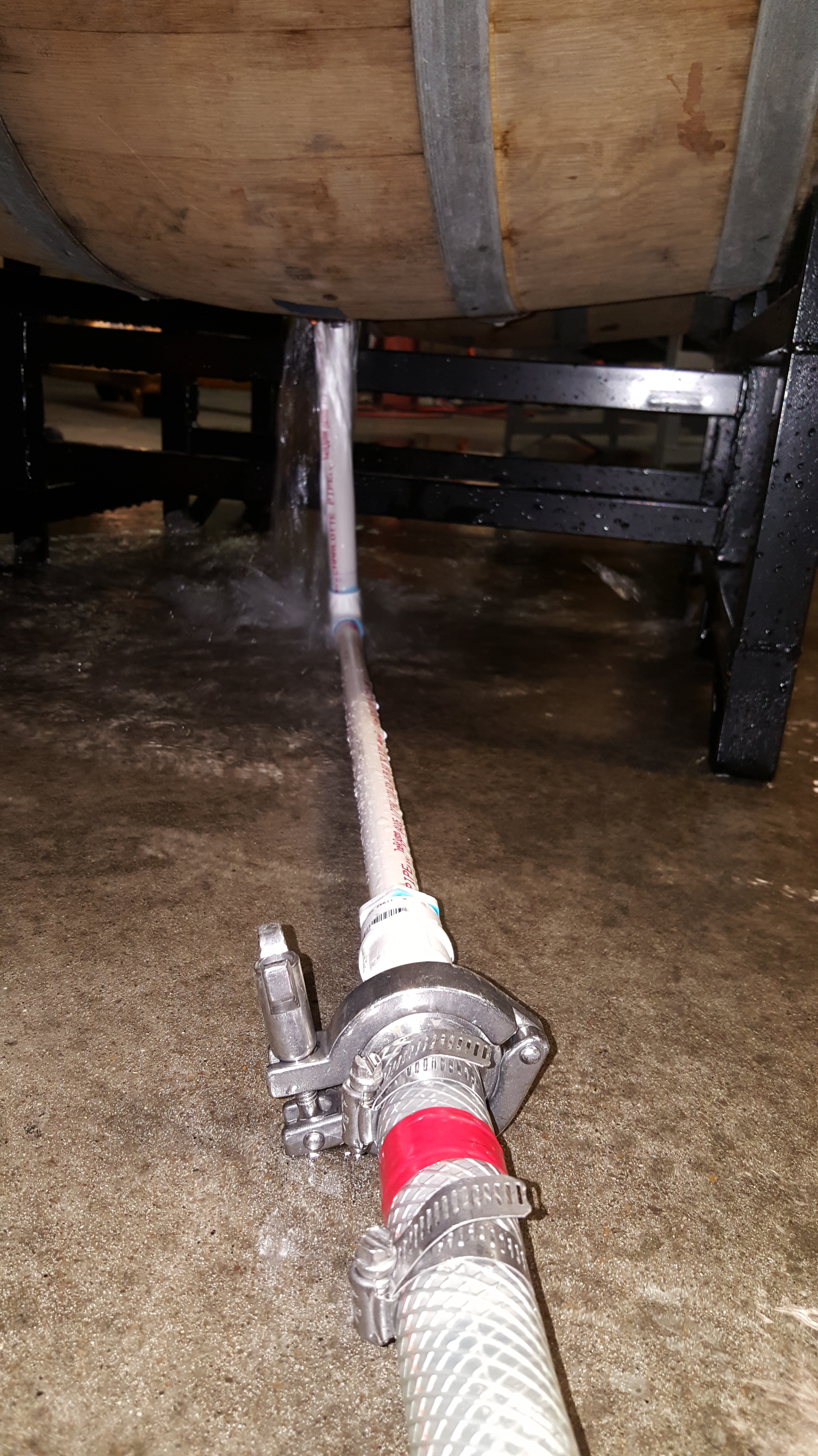


 Embrace The Funk