• There are times when using barrels or wooden casks in your beer program will require you to remove the “head” of the barrel. It could be for something as simple as removing large whole fruit that won’t easily drain out through the bung hole, to remove Potassium Bitartrate / Wine Crystals or for repair purposes. As the saying goes “There is more than 1 way to skin a cat” so this post is just some of my observations and techniques that I have used.

    First a barrel has 12 different parts of anatomy. Here is a picture courtesy of Wine Maps that shows the different parts and proper names. 62c182ee897e5e8fe666d57e15c014d0

    The main parts we will deal with are the: Head Hoop, Quarter Hoop, Bilge Hoop, Head, and Croze.

    Equipment can be very basic. You could use a workshop hammer and a screwdriver, however I would not recommend using those tools. If you have invested in a barrel and a barrel program then please purchase tools that can help you get the job done safely and correctly.

    Most professional Coopers’ barrel tools are a heavy hammer and a “hoop driver”. You can purchase both of these from multiple outlets on the internet. At Yazoo I have a few items that could easily be purchased at Harbor Freight or any big box construction retailer. Most of the tools I already had from other projects or we use them occasionally for brewery related improvements. These items are pictured below:

    • 3lb Wood Drilling Hammer
    • 20oz Rip Hammer
    • 10″ Brick Chisel
    • 4″ Brick Chisel
    • 7″ Pry Bar
    • Padded Gloves and Safety Glasses

    wp-1454454254529.jpg


    Assuming most people already own a claw hammer, you probably won’t need all these tools. At a minimum I would suggest a 3lb Hammer and wide brick chisel. On the inexpensive side this should cost around 15 bucks for both.

    Now that you have the tools removing a barrel head is pretty simple.

    First check to see if that hoops have been secured with brads or nails. These “T” type are pretty common.

    wp-1454456763374.jpg

    wp-1454456607597.jpgThey can easily be removed with a claw hammer or by tapping a pry bar into place. Make sure you save these to re-install!


    Stand the barrel on it’s head and draw a small line from the Chime to the Cant. This will help you align the head back when you re-install.

    The next step is removing the hoops. I like to start with the Quarter hoop. Position the chisel or hoop driver at an upward angle and give a few solid taps to knock the hoop loose. (Pic shows a re-install angle, just hit the hoop on the other side and upwards). Now is a good time to say why I like using a masonry brick chisel. See the red rubber square? It is going to save your hand from the inevitable hammer miss hand hit. Trust me, some of these barrel hoops are not going to pop off very easy and you will need to use a good hammer swing. You will miss at some point.

    wp-1454454273488.jpg

    After you remove the Quarter hoop use the same process to tap the Head hoop up until it is loose enough to remove.

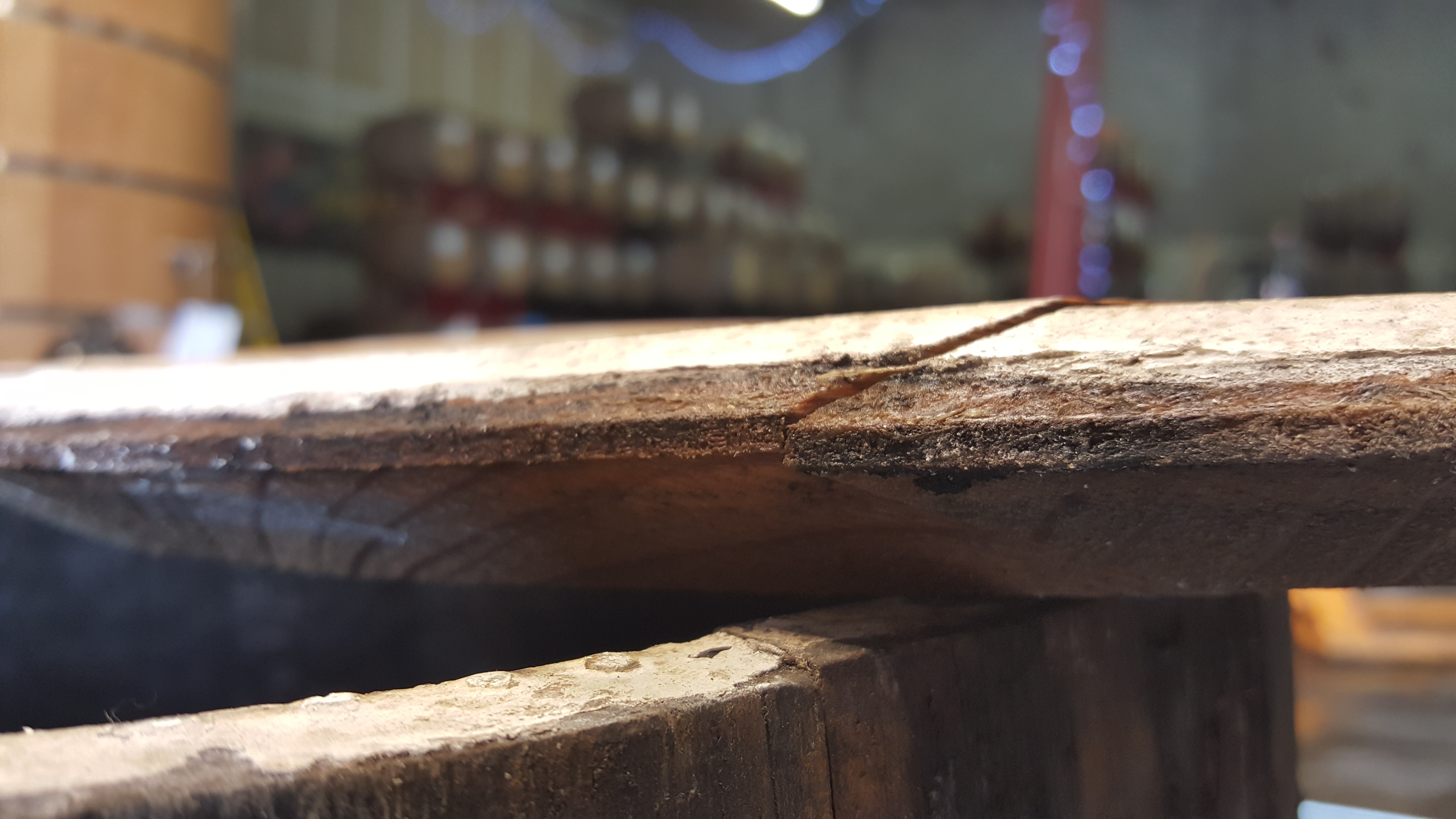
    In my experience many times the Head can be removed by just popping the Quarter and Head hoops off. At this point there should be a gap between the Croze and Chime. You can use the small Pry bar or a Cooper’s “Key” to get between the Croze and Chime and hook the Head to keep it from galling inside the barrel…if there is enough space. Don’t hammer either of tools in between, this can damage the groove. Sometimes you will need to remove the Bilge Hoop. It’s not uncommon, but I’d certainly try to remove the head before loosening the Bilge Hoop. Before you completely remove the Bilge Hoop try tapping it up 1/2″, this might be just enough pressure release to save to you from removing the Bilge Hoop completely.

    Most of the time having enough of a gap between the staves for a credit card to fit through is what you need to remove the Head.

    Once the head of the barrel has been popped out be careful to not set the inside barrel side on the dirty ground.
    wp-1454460996603.jpg

    wp-1454454302682.jpg

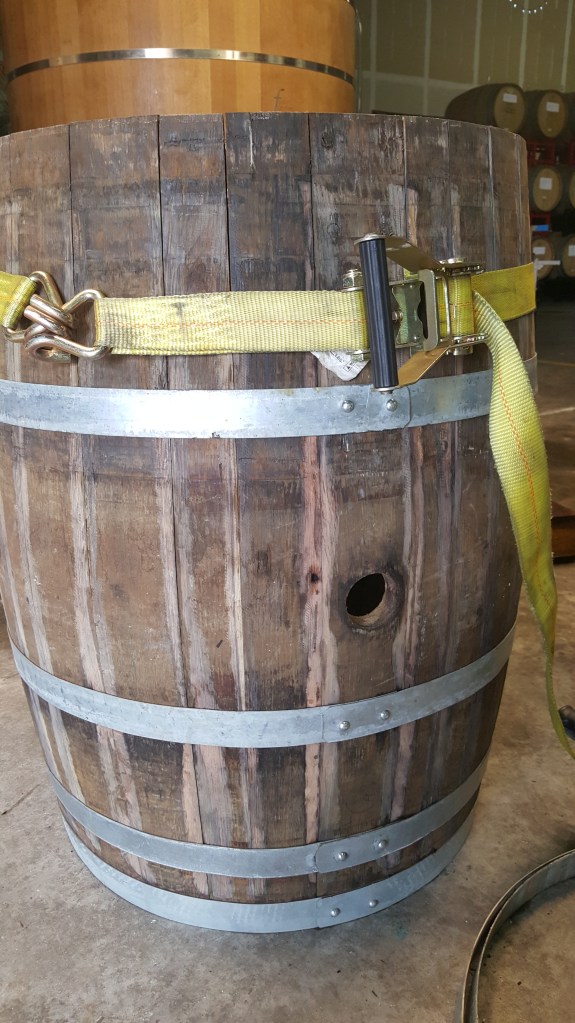
    To reinstall after cleaning or repairing it is sometimes helpful to use a ratchet strap to slightly tighten the staves back up. This can aid in hoop re-install, but I would caution to not over tighten the strap. The staves can be seriously damaged or even turned out of position enough to cause leakage problems.

    Putting the barrel back together is simple but usually takes just a bit longer than taking it apart.  Some brewers will coat the edge of the barrel head with beeswax so when it is re-installed there is a nice seal into the Croze. This is optional.
    wp-1454462437895.jpg

    Loosely put the Quarter Hoop back on the barrel with some slight pressure against the staves. Then using the pry bar or barrel key to assist, position the head back into position using the small mark you made earlier for alignment. While holding the Head in it’s proper position tap down on the Quarter Hoop. This should begin to close the staves back up enough to set the Head Hoop back on. Tap the Head Hoop down about a 1/4″ using 12 o’clock, 6 o’clock, 3 o’clock and 9 o’clock hits to evenly apply stave closure pressure. I would suggest using a 2×4 or some other piece of wood and not hit the Head hoop directly. Using the Brick Chisel or Hoop Driver repeat the above tapping order on the Quarter hoop until it is back into it’s original position, then repeat for the Head Hoop.

    Once you have leak tested the barrel then hammer the “T” brad/nails back in.

    There you go, pretty simple process but it is understandably a bit daunting the first few times. Once you do this a few times you will find your own groove and what works best for you. For more info on barrel care check out these to posts:
     

  • I’m still here and having more fun than ever. Recently I’ve been able to mess around with some small batch brews again! Mostly it’s for research and to prop up some new microbes for larger batch use, but hey we do get some beer out if it!

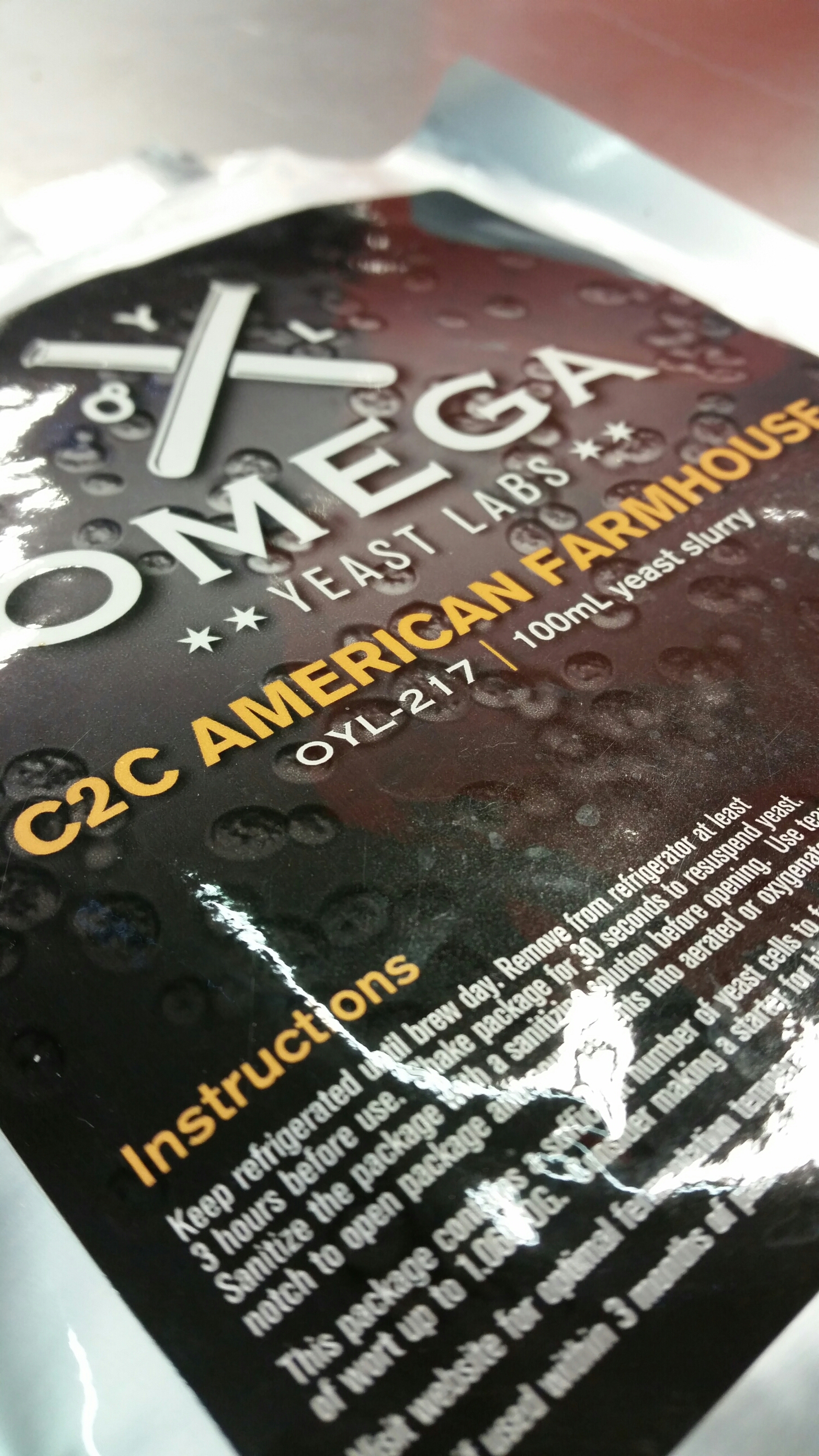
    2 new ones I kicked off last week are from Omega Yeast Labs: American Farmhouse and HotHead.

    image

    The Coast to Coast American Farmhouse is a blend of a Saison strain from the Northeast and a Brettanomyces from the Northwest. It’s pretty obvious to me the sources, especially when I smell the Saison fermentation. The test batch I did with this blend used Pils, Wheat and a little bit of acid malt. Hopped to 18 ibus with a German Noble hops.

    image

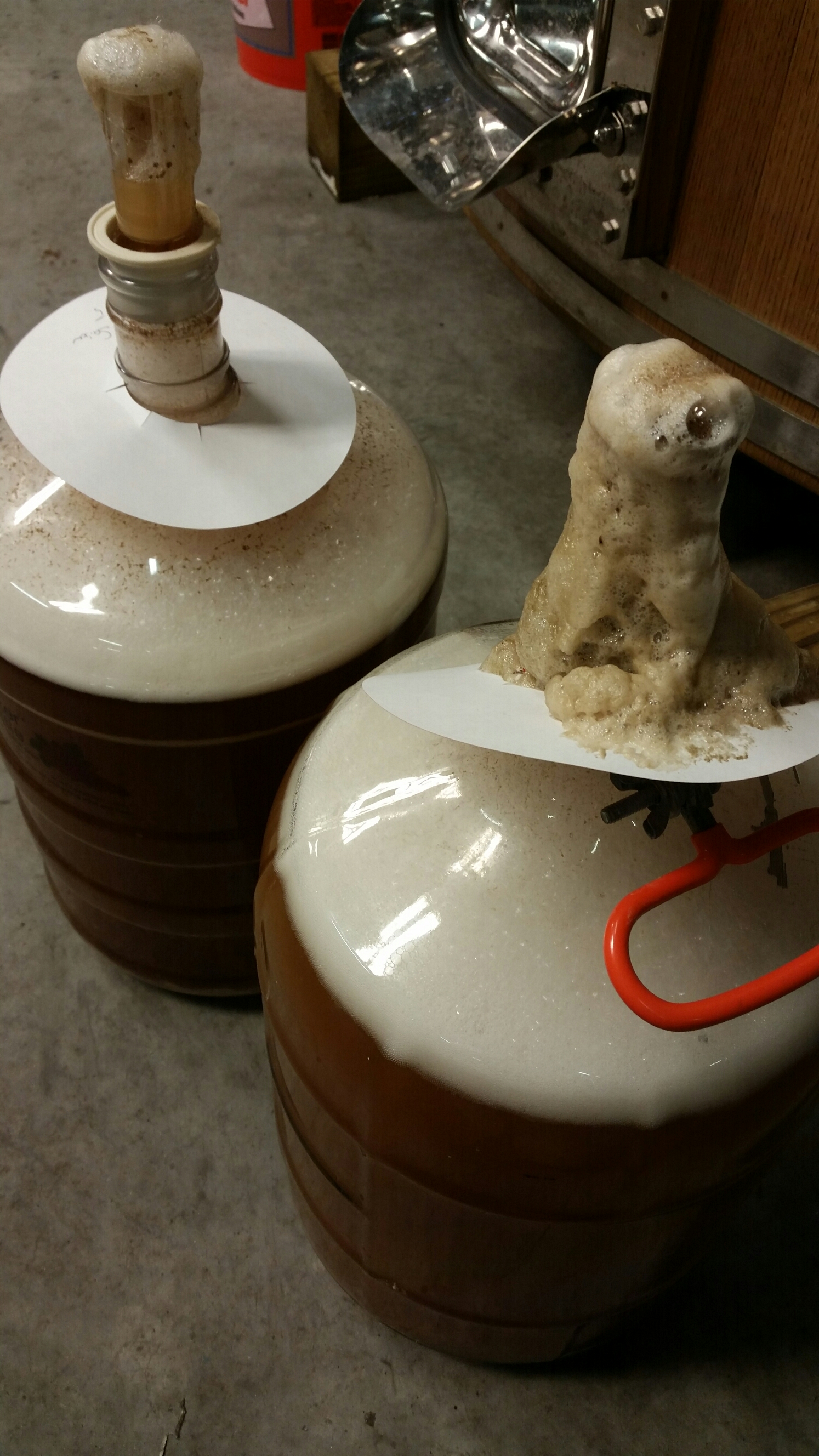
    I pitched at 65F and it self rose to 71F in 2 days while foaming out of the airlocks. The ambient temp is 66F so fermenting in day 5 has slowed down, but continues to bubble the airlock 1 or 2 times a second. OG was 1.053 and it currently sits at 1.022. This beer is very very young but the aromas of citrus, bubblegum and clove remind me of my beloved strain from Blaugies. It’s still too young to detect and Brettanomyces, but I’ve been told this particular one shows up fairly young.

    The other strain I’m testing is called HotHead using the same wort as above. I don’t have a picture of the packet because it wasn’t available when Omega sent it to me. It is now available for homebrewers. The story on this Norwegian sourced strain is it ferments at almost any temperature with a fruity character. They list a range from 62 to 98f, however I decided to push the low end and pitch at 48F. It self rose over the course of 2.5 days to 69F. When I check on it Monday I could see krausen marks into the carboy neck, so it did kick off even at the low pitch temp. Krausen has mostly fallen on day 5, but still shows co2 off gassing in the airlock. Current gravity is 1.020 and tasting fairly clean with no off character such as sulfur. Which I was concerned about given the low temperature.

    image

    This is a very interesting strain that I’m looking forward to tasting again
    In a few weeks.
    Have you found any fun new strains lately?


    ****UPDATE****

    wp-1452301041104.jpg

    I broke out the floor corker and bottle carb’d the C2C Saison today. It finished at 1.003 SG . Peppery and Pear plus a pineapple/leather funk while it was flat. I added enough sugar to get to 3.5 volumes of co2. I’m looking forward to tasting this carbonated in a few weeks. So far I’m pretty darn pleased with this blend.

    wp-1452301063346.jpg

    Here is the bottling setup. Since we have plenty of co2 I use 1psi to push the the beer into the co2 purged bottling bucket. While I am bottling I run a 1psi stream into the bucket to blanket the top while I’m filling bottles.

    wp-1452301053199.jpg

  • STREAM OF CONSCIOUSNESS POST! Disclaimer of poor grammar and misspellings*

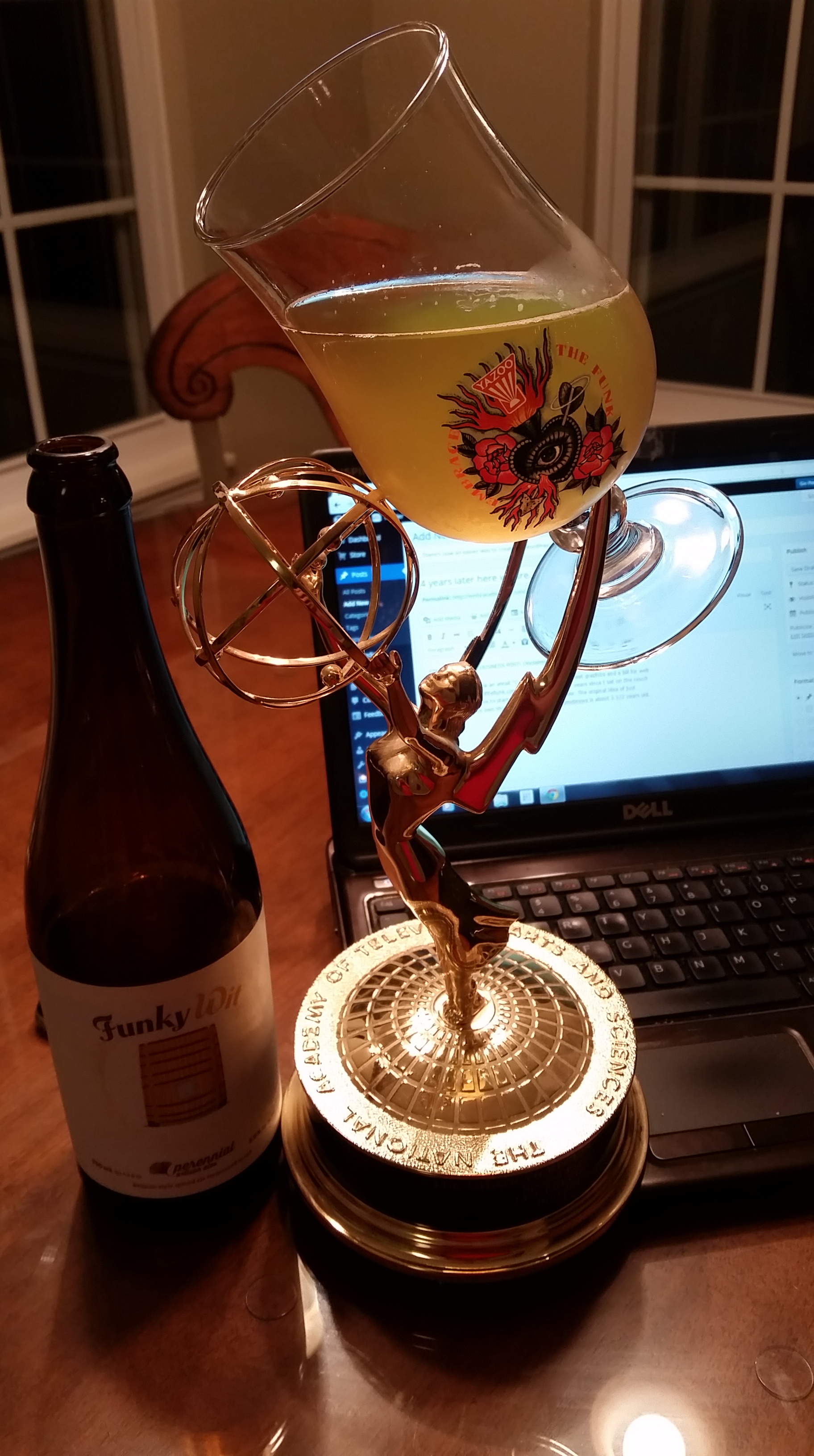
    WordPress tells me via a Congrats email with some sweet graphics and a bill for web hosting that embracethefunk.com is 4 years old. I’m reflecting on my time as a television director moving entirely into brewing and lucky enough to have an unusual glass holder.

    Perennial Funky Wit with my Emmy I won with Michael McDonald
    Perennial Funky Wit with my Emmy I won with Michael McDonald


    Wow 4 years since I was sitting on the couch and my wife urged me to start a blog on sour/funky beer. The original idea of just keeping up with my own thoughts and records on homebrews is 4 years old,but ETF took off about 3 1/2 years ago. Why the time difference? Well this blog really took off when I posted an a quick Q and A with 2 of my mentors Vinnie Cilurzo of Russian River and Jean Van Roy of Cantillon . I sit here and wonder why did those two world class 100 point brewer style masters even bother to talk to me back then? I sorta kinda minus 10 knew Vinnie through a generous donation he did of an empty barrel of Consecration Batch 1 to myself and some other local homebrewers years before, plus a some questions  on sour brewing I had. For the Cantillon part, again I had emailed JVR a few questions in past. really basic questions, but he was always kind enough to answer me back. But for whatever reason I these were the 2 guys I decided to ask some more of…and they delivered awesome bits of info not revealed anywhere else. I could never give enough thanks to either of those gentleman for what their few minutes of reply did for this site and my life and years later leading me to this point of running a sour/wild program with my friend Linus Hall at Yazoo Brewing Company and walking across the stage at GABF.

    Back to the title of the post. 4 years later and here we are…what have I learned? Is this all inclusive? Nope.
    Just some things on my mind in absolutely no particular order except #1.

    1. Everyone that has believed in me and my ideas of locally made sours in Nashville plus spreading the knowledge  worldwide on how to make better beer you are awesome. I wouldn’t be in this position without your shares, likes, comments etc…
    2. Make sure the stars are what you aim for, you will make mistakes, don’t worry its journey…enjoy the ride.
    3. When you make mistakes some are fixable, others are not. You need to learn the difference between a beer that is good and wasn’t what you expected as opposed to one that needs to be dumped
    4. Put your pride to the side, don’t sell it or serve it to your friends if you wouldn’t enjoy multiple glasses.
    5. EVERY BREWER WORTH A FLIP WILL TELL YOU THEY DUMP BARRELS AND PULL BARRELS OUT OF COMMISSION THAT DIDN’T TURN OUT.
    6. Stop trying to step up bottle dregs from the awesome .rar brewery of the month or old Lambic producer for a 500 gallon batch. Most got their microbes from Wyeast, White Labs, ECY, Omega, RVA etc… Talk to the lab about your recipe and buy a healthy solid pitch. I assure you they want you to make great beer.
    7. Use lager or hybrid pitching rates when brewing 100% Brett beers.
    8. Kettle Souring and Natural Souring can both make yummy beers. We get it already on both sides of the argument already. Neither are the absolute way. They are simply techniques brewers can use in their settings.
    9. After all these years Brettanomyces only still doesn’t produce what a lot of consumers/rating bros consider a “sour”beer to be. HELP THEM UNDERSTAND WHAT BACTERIA VS WILD YEAST IS ALL ABOUT.
    10. Don’t beer condescending to the above situation. Sour beer is still VERY foreign to even the average non BMC drinker. Try to relate familiar character. For example what Lauren Salazar from NBB says about introducing a Flanders Red “Are you a fan of Granny Smith Apples? Do you like tart cherries and plums? Do you like cherry cola? Almonds?”
    11. Treat everyone like they traveled 1,000 miles to taste your one beer, because sometimes they actually did.
    12. You must have a way to test gravity AND pH (or TA if you are feeling adventurous).
    13. Don’t take too many readings
    14. Do you ferment in barrels? Buy steel toed muck boots and work boots
    15. Your barrel aged beer will take more time than you expected.
    16. Your barrel aged beer will take less time than you expected. Have something ready to fill the barrel or the chemicals for a holding solution
    17. Make friends with your local or regional winery/distiller. Most likely a lot of people buy their products so some familiarity in character will go a long way in introducing your funky beer.
    18. If you can’t do the above then find a reputable barrel broker. Ask a few of your favorite brewers who they use, some will tell you some won’t. But that one answer will mean all the difference.
    19. Don’t be stupid, wear gloves and protective eye wear when dealing with acids/chemicals. Zero brewing street cred points are awarded to half blind and chem burned workers who chose to ignore the chemistry of what these compounds do
    20. If you are building a barrel facility then invest in good sloped drainage AND a good mop/bucket/stereo.
    21. Use 17% more Co2 to purge than you think is necessary ( this number may or may not be exact, point is when dealing with sour beer don’t skimp on co2).
    22. Temp has ALOT to do with how good a spontaneously fermented batch ends up. With the exception of some hot states in the USA ask yourself “Is Cantillon brewing now?” (Sorry at 1am the extent of my climatology is limited to CONUS)
    23. Even a few hours of spontaneously innoc’d wort or isolated local wild yeast via a kit is a great way to add a twist on your beer
    24. Buy good barrel racking equipment and hoses
    25. Clean all your soft equipment doubly good
    26. Error on the side of less than what you expected when dealing with new microbes. Most will continue to develop into something more. Its OK to take your time.
    27. Don’t try to make the phrase “pLambic” happen
    28. If you brew clean beers invest in some red tape for any soft  equipment that touches funky beer
    29. Keep a stick of canning wax and lighter on hand
    30. Some barrels just won’t seal up
    31. Don’t worry about what that person on Untappd said bad about your beer
    32. Don’t stand too tall about what that person on Untappd said awesome about your beer
    33. The Internet can be wrong on any and all aspects, good and bad
    34. If you think a certain beer is incredible and nails it then ask the brewer anything but exacts on how they brew it
    35. Its cool to make a few hundred bottles of great rare funky beer available to some local people
    36. Its cool to make a great funky beer available to thousands of people that find their next favorite style as a shelf drinker
    37. Revisit your “perfect” recipes and techniques often
    38. Investigate and Employ techniques that make the best beer possible in your garage, kitchen, patio or brewery. Don’t just simply buy into one thing fits all. I assure you techniques that work at one world class brewery do not directly translate to another world class brewery.
    39. However…take some calculated risks…or don’t.
    40. “We are all just apprentices in a craft where no one ever becomes a master” – Ernest Hemingway
  • I’ve had a lot of emails, Tweets and in person questions over the past few months about what’s up with this website? When are you going to update it again? Let me start by saying I appreciate those questions and everyone’s desire for more content! So what is going on with Embrace The Funk? Well a whole heck of a lot that’s for sure.

    I think most people know that I am the guy behind the sour/wild program at Yazoo Brewing Company in Nashville, TN and the assumption is that’s what I do. Which is mostly true, it’s not my only gig.
    For the past 22 years I have worked in Live Television Production and since 2000 I have been a live newscast director at the #1 rated station in Nashville: WTVF Newschannel5. That is my main 40 hour (many times more) a week job. Since 2012 I have been working with my friend Linus and the awesome crew at Yazoo building the Embrace The Funk line of beers. We have grown the ETF line from literally 1 single barrel in the upstairs corner of the brewery grain storage area to a GABF Award Winning program with it’s own Festival (that sells out each time), a separate building, bottling line and tanks.

    Barrel One
    Barrel One

    With all this fantastic growth comes time out of the day to manage the program while working 40 hours a week elsewhere and still being a dad to 2 awesome kids. I am very proud that it has reached a point where this business I have been a part of building needs full time attention. So by the end of this summer i will dedicating 100% of my work efforts to the Yazoo Embrace The Funk line of beers.


    From starting this blog on my couch and brewing in the garage this growth has been nothing short of incredible to me. So thanks to everyone who has supported this thing from those days until now! I’m looking forward to ramping up production and having the time to write informational blog posts for you again.

    Also this weekend June 5th and 6th I will be in Washington, DC for the annual SAVOR event. We are bringing Deux Rouges (Our Flanders Red aged in Merlot Barrels) and Yazoo Sue (Cherrywood Smoked Porter) to serve during the event both nights. On Friday night we are debuting our collaboration with our friends at Upland Brewing Company. This will take place in the Salon area at 9:30pm with Caleb Staton and myself. We will talk about barrel blending and sour brewing. A fun side note…I interviewed Caleb for this blog back in 2012! You might be asking what is the collaboration? Here is the cool thing… the collaboration is actually 2 very different beers produced in 2 different states.

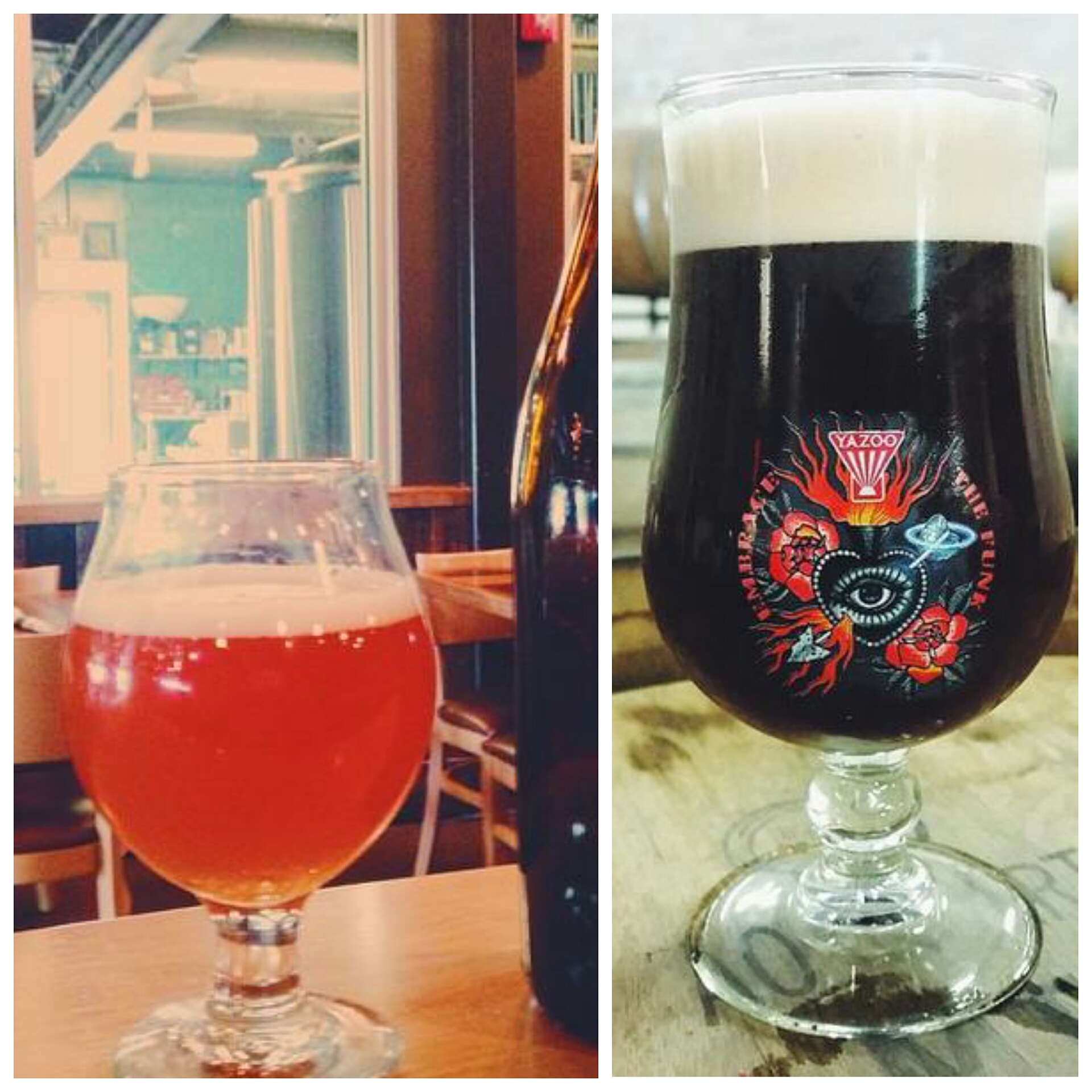
    • At Upland we made “3 Degrees North”. It is our tropical-ish sour blonde ale blended with their Kiwi and their Cherry ale.
    • At Yazoo we made “3 Degrees South”. It is our Sour Brown Ale aged in Red Wine Barrels, Our Sour Brown Aged in Bourbon Barrels, their Dantalion ale and their Cherry ale.
    3# Degrees North on the left /  3 Degrees South on the right
    3# Degrees North on the left / 3 Degrees South on the right


    Both of these beers will be released in bottles in the near future. Stay tuned for details on the release parties.
    If you are going to be in DC for SAVOR let me know, I’d love to meet up with as many people as I can while I’m in town.

    Cheers!

  • This is a tricky post for me to write, but being that I have a background in TV News I do think this is a story that professional brewers and home brewers need to be aware of.

    Is WLP644 Brettanomyces Trois actually Brettanoymces? This is a question that was raised in a discussion group I am a part of for wild yeast and bacteria brewers. It’s a discussion that I have pretty much stayed out of, but have watched unfold with much interest. I am going to post this entry as a basic timeline overview of the events so far. I feel like it is in the best interest of brewing if there is a page that had all the info accurately listed from the beginning. Hopefully this will curb “the telephone game” effect as more people research and discuss.  I won’t be making any comments on to use or not to use this strain. It is not my place in this story. I am only providing this information so you can make an informed decision.

    The background:

    On December 7th Omega Yeast Labs which is based out of Chicago posted on the company Facebook page
    “Some news relating to our Brettanomyces blends. We had the two primary strains in all three blends sequenced to learn a little more about them and it turns out that the sources of these two strains inaccurately classified them as Brettanomyces. They are in fact Saccharomyces cerevisiae. Thus, Blend #1 currently contains no Brettanomyces species, while Blends 2 and 3 are currently blends of Saccharomyces and the Brettanomyces strains listed in the descriptions. Rest assured that the blends do create the results advertised, however. Future lots of Blend #1 will include some new mild Brett strains that we are isolating from various sources in addition to the two Saccharomyces strains currently comprising the blend.”

    On that same post a brewer asked “Is it the well known tropical fruit oft-used 100% Brett IPA strain?”, to which Omega confirmed “That’s the one”.

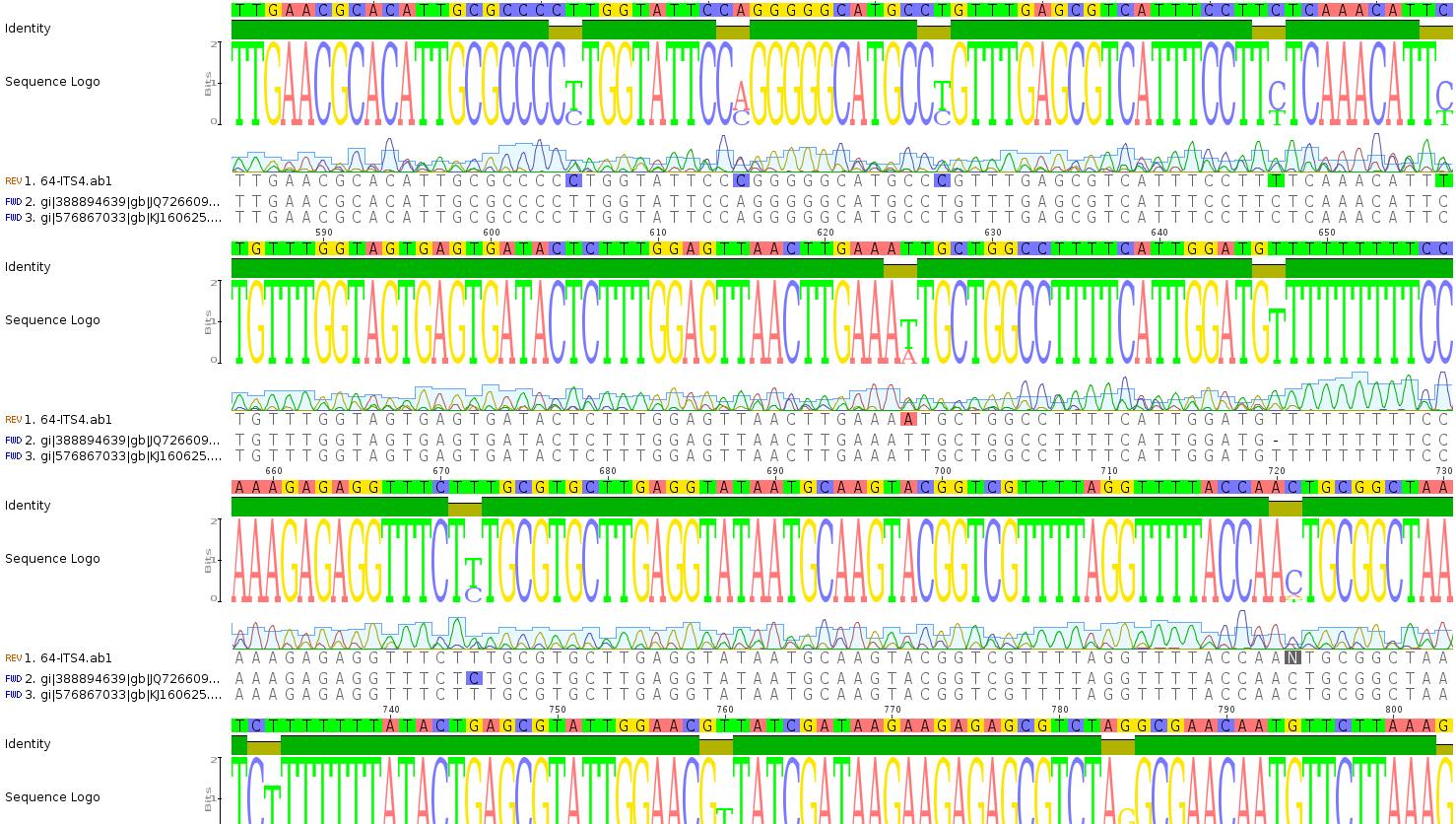
    The following day news of this hit the discussion group. People asked is it was WLP644 and the answer was yes. This group includes multiple chemists and biologists with many years of experience. They immediately started doing, well what any scientist does: breaking everything in the experiment down. How was the sample prepared? What was the source of the sample? Comparing sequences and looking at chromatograms. A few Seq graphs were posted, with mixed views on the accuracy of these readings.

    SEQTROIS
    Brett Trois ITS4 sequence (64-ITS4.ab1) and two Sacc seqs. Courtesy: Samuel Aeschlimann Eureka Brewing

    The next day (12/10/14) Lance (owner of Omega Labs) posted he had sent Brettanomyces Bruxellensis Trois (WLP644) lot number 1010492 to Charles River Laboratories to use their Accugenix Microbial ID and Strain Typing service.

    On that same day Chris White and Neva Parker posted an update to the White Labs website about WLP644:
    “We have received some questions as to whether White Labs WLP644 Brettanomyces bruxellensis Trois is not a strain of Brettanomyces. We obtained the original culture from a reputable source,​ ​identified ​as​ ​a species of​ ​Brettanomyces.
    We have been doing experiments on this in-house and sending the strain to​ ​independent​​ ​laboratories​ for some time. When we have a definitive genetic answer we will be happy to share that information.
    In addition, we have had a​​ 2-year collaborative research project​​ to completely sequence more than 96 of our yeast strains, both​ ​Brettanomyces and Saccharo​myces, which we hope to begin publishing in 2015. The complete sequencing of brewers yeast strains in this magnitude has never been done before, and we expect it will change the way many yeast strains, this​ one​ included,​​ ​are currently categorized and understood.
    Chris White and Neva Parker, White Labs”

    Today (12/11/14) An update on the Microbial ID and Strain Typing was posted by Lance, the results for the sample of WLP644 Trois that were sent to the independent lab read “Saccharomyces cerevisiae”.

    Trois ID-page-001

    I am looking forward to seeing the results of Chris and Neva’s project at White Labs. I would ask this of people reading this article: Please don’t bombard White Labs with messages or calls about this. They are very much aware of this story and are working to get a definite answer on their end.